Tell It Again
by Kayla Joy
Horrific Scribes Extremity Rating:
“Tell it again.”
I inhale sharply, my elbows slipping on the roughly hewn table. I dozed off for a few minutes. It’s a pity I woke up, but dying in my sleep is a kindness I do not deserve.
I wince at the ache in my neck as I look around. I am all too familiar with where I am. The large cooking pot hanging over the fire was given to me by my mother when I was newly married. The broom leaning in the corner was made by my own hand when Sigrid was a baby. The table I sit at was crafted by Ivar as a first anniversary gift, but this place no longer feels like a home.
The wood crackling on the fire is the only sound inside the four walls save for my staggered breath, but outside the forest lives and listens. I try to breathe in slowly, but I inhale the tangy, organic scent of blood hanging heavy in the air. I gag, and a soft chuckle answers. I lift my head to look at the child seated across the table.
He’s drenched in shadow, and I can only make out the vaguest outlines of him. Despite the dark, the inscrutability of his features seems unnatural. I shudder and try to swallow, but my mouth is dry. I choke instead, coughing weakly. I wish he would end this.
Out of the corner of my eye, I glimpse Sigrid’s crumpled form, entirely still. My eyes burn with the want of tears, but I have nothing left to give.
“Mummy, tell it again.” His whisper is grating and too loud. I wince.
I smack my lips together, my tongue swollen. I close my eyes and pray. I pray for death’s swift mercy. I pray for the soul of my daughter. I pray for water, because though everything is falling apart around me, I can barely think past my thirst. I just pray.
“Tell it again now.” He’s becoming impatient, insistent. I can feel it in the air, a physical sensation that crackles, heavy and disorienting. It makes my head ache and dredges up things I’d rather forget.
I think of Sigrid. How she came into the world seven years ago, slippery with blood and wailing in indignation. I think of her last moments a few days ago, how they were much the same. My stomach roils, and I let out a low moan.
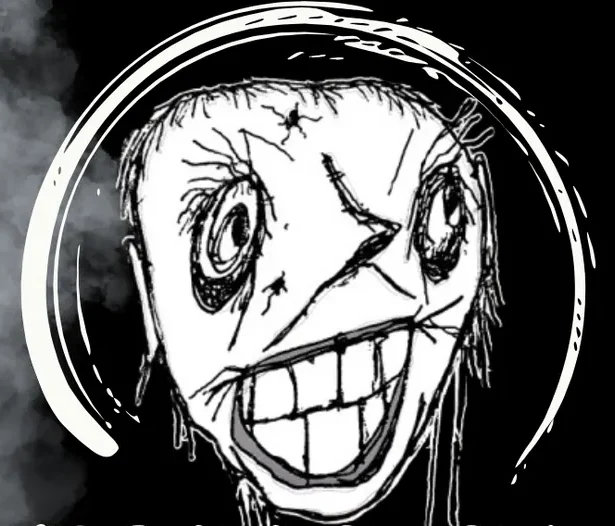
Peder leans forward and runs his tongue over his teeth, something that should be silent but instead comes with a sharp thwiiip, like a blade being drawn from its scabbard.
“Now, Mummy.” The throbbing in my head reaches a crescendo, and I know the only way to ease it is to do what he asks.
So, I’ll tell it again.
“Four winters ago, Papa and I wished for a son.” The words come out garbled from my dry mouth, but Peder understands me. He sits back, folding his small hands before him on the table, listening intently.
“We hoped and prayed for a boy to carry the family name. Sigrid…” I squeeze my eyes shut and try not to scream. “Sigrid wanted a baby brother, so she prayed, too.”
Iver and I delighted in Sigrid. Her downy blonde hair, her blue eyes like a clear winter’s morning. The way she looked out at the world with the expectation of enchantment. She wandered through the forest as if it were a part of her very soul, no true destination in mind. She was perfect
We had hoped to have many children, but we had taken years to become pregnant with Sigrid. By the time she was three years old, we felt it unlikely that our hopes for a houseful of scampering feet would be answered. Instead, we shifted our focus to hoping for just one son.
For a few months, we were hopeful. Candles were lit at church, neighbors called out their well wishes as we walked through town, and we felt certain we’d get our wish. But more time passed, and it became clear things would not come so easily.
I eventually sought advice from a klok kone who gave me rituals to try and teas to drink. I knew that her practices were frowned upon, that my neighbors could suspect me of cavorting with a witch, but my desire overpowered my fear, and I’d sneak to her cottage anyway.
Still, I was barren. At length, I grew frustrated with my womb, blaming myself, my very soul, for its emptiness.
One night, I grew desperate and did something I should not have done. I beseeched a darker force and performed a ritual that demanded great cost. The klok kone warned me to stay away from such things, that it would bring ruin, but I was frantic to give Iver his son. I was so eager to prove my worth as a wife and mother that there was no price I was not willing to pay.
“One night, I felt called to the woods.” The edges of my teeth scrape my tongue as I speak, and I taste blood. “I walked deeper as darkness fell, beckoned by something I did not yet know.”
My eyes snapped open and I felt a pull from within, equal parts frightening and unavoidable. I slipped from the bed that I shared with Iver and Sigrid and wrapped myself in my winter cloak. The pull drew me outdoors, a steady thrum reverberating within my skull.
It was cold that night. Snow covered the ground like a mask, disguising the markers I’d normally use to find my way. I felt lost and disoriented, but I could hear a low humming guiding me, growing louder the further I walked.
I was led deeper into the forest than I’d ever gone, and in the middle of a clearing stood an old, gnarled tree. Its center had rotted through, resembling a doorway, one I could have easily slid my body into. The humming was coming from inside this tree.
I was still for a moment, unsure what I was to do. I remember a terrible smell; the petrichor and pine of the woods had been replaced with something fleshy and rotting.
“As I stood there, two hands emerged from the tree.” I whisper, my voice grating and pained. “The hands were pale and frail, the fingertips stained black as ink.”
I hear the thwiiip of Peder’s tongue on his teeth again and I catch a glint of white in the firelight. He’s smiling.
“In these hands was cradled a babe. Naked, red faced, and crying.” I close my eyes and remember it. I wasn’t afraid, I knew this baby was meant for me. This was the baby I had struck the deal for. The unnatural scene did very little to quell my excitement. My wish had come true.
“I took him, bundled him under my cloak near my breast, and I walked away as the hands retreated back into the tree. I had my son.”
The trek home had the bewildering sensation of floating through the stars. The moon was invisible behind the clouds, and it was snowing, the fat white flakes the only things I could see. During some moments I might have lain down and died in the soft drifts if not for the baby against my skin. When I felt close to collapse, he would stir, and I’d feel pushed onward. I was delirious from exhaustion and numbing cold, and by the time I found the cabin again, I felt as though I’d walked for days. When I finally saw the light from the cabin’s windows, I sobbed, shouting for Iver.
“Papa came because he heard my cries. He ran with a lantern, his eyes wild with fear. He’d woken to find me gone, and he feared me dead.”
“But you didn’t die,” Peder interjects, his voice wet and thick. “Not yet.”
I shiver at his words. “No, not yet.”
I held my cloak open, revealing the top of Peder’s head to Iver. The dark hair that grew there was so different from ours, but otherwise he was simply a baby. His little forehead wrinkled in discontent at the bitter air, and he let out a hearty bawl that made Iver and me laugh.
“How?” Iver asked, stroking the boy’s head with a large, calloused finger, tears in his eyes. “Where did he come from?”
“Our prayers have been answered,” I responded simply, choosing in that moment never to tell Iver what I’d given for this child, the dark promises I’d made. I deluded myself into believing that perhaps I’d never have to pay what was due, that maybe my prayers had been answered, simple as that.
“We took the baby into our home and called him Peder, after Papa’s grandfather. He was our son. You.”
Peder lets out a high pitched peal of laughter, a facsimile of a toddler’s delighted giggle. Almost. Underneath, I detect the parts that sound wrong. Perhaps only because I am his mother, I sense the incongruity.
We lied that Peder was the son of a relative who’d fallen ill and could no longer care for him, so he’d come to be ours, a tiny answered invocation. Our friends and neighbors were thrilled at our luck. We were surrounded by support and love immediately, women from the church even volunteering to nurse Peder alongside their own children. In this way Peder became the village’s baby. He was doted on, passed from hand to hand and offered many blessings. Never had a baby been so doted on.
Sigrid was the happiest of all, staking ownership over her new brother and following him wherever he went. When he was being nursed, she sat at the knee of whomever was doing the task, keeping a keen eye over the whole affair. As he lay in his crib, she watched him sleep. She loved him so much.
“You were a perfect baby, so small and quiet. You slept a lot.” I close my eyes, remembering tiny, newborn Peder. His warm, fuzzy skin. The milky smell of his breath.
“But that changed,” Peder whispers from across the table.
“Yes,” I respond. “That changed.”
As if he were transformed in the night, replaced entirely by a different child, he became inconsolable and irritable, crying at the slightest inconvenience and refusing to relent until the entire household was on edge. He began biting the breast of whoever was nursing him until they could no longer be persuaded to continue. One of the women came down with an infection from one such bite and lost her ability to nurse her own child. She never looked at Peder, or me, the same again.
Though he barely had his milk teeth, he was vicious with them, biting even me and Iver with such a ferocity that he left scars. Poor Sigrid didn’t know what to do. She loved her brother dearly and wanted to be near him, but he would bite until he drew blood. Only in the moments that he’d reduce her to tears would he calm and smile.
I had to feed him with soak rags in milk once the wet nurses all closed their doors on us, and he’d gnaw them to shreds. I felt deeply troubled watching him grind his teeth and gums, the anger in his eyes unbefitting such a beautiful child.
As Peder grew, so did his intensity. He was prone to violent tantrums and fits, particularly in church. Oh, how he hated church. A dark demeanor would come over him as soon as we crossed the threshold. The disruptions became so bad that I was asked to stay home with him on Sundays, something he seemed to love. He’d spend these hours pressed against my side as I read from the Bible, staring up at me with a vacant smile, unwilling to engage in anything besides tracking me with his dark, depthless eyes.
“One day, something bad happened to Papa,” Peder cues me, leaning forward so I can see his grin.
“Yes. When you were three years old, something bad happened to Papa.”
Iver had grown tired of Peder’s behavior but was at as much of a loss as I was. No manner of discipline affected the child. He would just stare up at us with cold, despondent eyes. He refused to cry or plead his case. He would simply stand there and take his punishment, and though Iver wouldn’t say it, I know it distressed him.
One warm day last summer, Iver came to me and told me he planned on going away with Peder for a few days.
“Perhaps what he needs is some time alone with his Papa, man to man. I’ll take him hunting, let him get his hands dirty.”
Though I hated to admit it at the time, I was thrilled by the idea of being away from Peder. I looked forward to a few days alone with Sigrid, just the two of us. I thought of all the things we would do without the disruption of Peder’s mercurial nature.
“Papa wanted to take you hunting, to sleep outside. He wanted to teach you the things his Papa taught him.”
Sigrid and I watched as the boys walked into the forest hand in hand, Peder’s hair black as pitch and his little legs unsteady on the uneven path. It was the last time I’d see Iver alive.
I spent two days with my daughter, days I’ve thought about often in the past hours. We baked bread, I taught her embroidery, we read together in the rocking chair and talked about all things. I took long, intoxicating sniffs of the top of her head as she slept, and I studied the way her eyelashes rested upon her still, rounded cheeks. If I could have stopped time then, I would have gladly. But all good things come to an end.
“On the third night, the night before you and papa were supposed to come home, you arrived by yourself.”
I jerked awake at the rapping of a fist on the wooden door. My heart was in my throat, thinking perhaps someone with ill intent had learned that Sigrid and I were home alone. When I peered through the curtain, I realized it was too dark to make out who stood there. As I agonized over what to do, a tiny voice said,
“Mama! Let me in.”
“It was me,” Peder says with a knowing nod.
“Yes. It was.”
He was at the door alone, covered head to foot in blood that wasn’t his.
“Where is Papa?” I wailed, but he’d stared blankly back at me.
I didn’t bother to wash him up. I grabbed Sigrid and Peder, threw them onto our horse, and rode to town screaming for help. Sigrid was petrified, crying the entire time. But Peder was atypically calm.
Eventually, the men heard and understood my frantic calls and came out of their houses with their rifles and lanterns, running or riding into the woods to find Iver.
The women took me and the children into the church to wait, Peder grumbling and still crusted with blood. No matter how many times I asked or begged for answers, he only grinned up at me, his dark eyes shining through the gore on his face. Eventually, one of the women took a rag to him, wiping the blood away, but he grew so violently opposed that she gave up and left his arms and legs streaked with blood.
The men returned at dawn, their faces pinched and drained of color.
“An animal attacked him,” they said. “It’s best if you don’t see the body.”
But I insisted. I had to understand what happened. They led me outside where Iver lay beneath a blanket. I pulled it back and promptly spun away to be sick. He had been shredded to ribbons. Entire flaps of his flesh had been torn away, revealing the viscera beneath. Only his face was untouched, frozen in a mask of fear and agony. Such an expression seemed impossible on Iver’s countenance, normally so peaceful and patient.
Most disturbing of all were the distinct child-sized bite marks on his arms and ankles. They seemed fresh.
“Then it was just the three of us, after the bad thing happened to Papa,” Peder prompts, cocking his head meaningfully towards Sigrid’s body. “And you started being very naughty, Mummy.”
After the burial of my husband, I became deeply distrustful of Peder. I tried to keep him away from Sigrid at all costs, something he recognized at once and resented. Every time I turned my back, I’d find him inching closer to her, a look in his eyes I didn’t like. Months passed in this way, and I felt constantly paranoid and afraid. I had trouble attending to the house, the animals, even sleeping. I thought he’d hurt her if I closed my eyes for even a second.
I began thinking about the ritual I performed, the one that brought us Peder. The promises I’d made, if only I’d have a son. These covenants were too great to keep, so I decided I needed to rid myself of Peder once and for all. I admit, I was half mad from exhaustion, but I felt that I had a chance to be free of the malediction I’d afflicted myself with.
“Mummy decided Peder had to go back where he came from,” I whisper through my sore, aching throat. “Mummy tried to take you back to the tree.”
I naively thought that if I returned Peder, everything would return to normal for me and Sigrid. Yes, Iver would still be gone, but that was the price I had to pay for asking for too much. I took Sigrid to a neighbor’s home and told them I was traveling with Peder to visit his other relatives, that perhaps he’d be going to stay permanently. I had no intention of walking out of the woods with him again.
The trek to the tree took hours. I became disoriented more than once and lost my way. By the time we arrived, the sun was setting, and it was becoming very cold. Snow began to fall gently, much as it had the night I found him. It felt right in a way, poetic even.
The tree stood just as I remembered it. Tall, imposing, and rotting from within. The outer bark had flaked off entirely, leaving what remained smooth and unnatural. I peered into the void within, a darkness that seemed both too deep and too absolute.
“Get inside,” I commanded Peder. He stood staring at me, wide-eyed and shaking. It was odd, but it was the first time since before Iver’s death that I’d even recognized him as a child. He’d become something else entirely in my mind. But as he stood before me, he looked every bit of the toddler he was. Helpless, and so afraid of me.
My stomach clenched with guilt and fear, but I grabbed him roughly by the arm and began pulling him towards the tree. Though he was tiny, he fought me every step of the way. He kicked, screamed, scratched, and wailed. When I’d finally dragged him to the opening, he used his hands and legs to resist being shoved inside.
“Peder, quit it!” I yelled, pushing hard enough to leave bruises. “You must go back. Your real mama is waiting for you!”
“You are my real mama!” he shrieked, fighting for his life. “You are my mama! I am your Peder!” Snot and tears coated both of our faces as we wrestled. The cold weather had sunk deep into my bones, and I weakened as his resolve grew stronger. Eventually, I let him go, and we sat panting, staring at each other.
Beneath the band of my skirt was a sharp hunting knife, one meant for gutting and the removal of pelts. I’d hoped it wouldn’t come to it, but I was resolved to leave those woods alone. I pulled the knife free. It caught the glint of moonlight, and I saw Peder’s eyes widen in understanding.
“No, Mama!” He cried, his voice shaking. “I am your son!”
“No, Peder. You came from this tree,” I told him. “I should have told you long ago. You’re different because you’re unnatural. I should never have asked for you.”
I stood, towering over the boy in the woods. My hand was shaking, but I was determined.
“Tell me, Mama! Tell me where I came from!” He walked backwards until he hit the trunk, holding his tiny hands up before his face. He was so desperate to live.
I was finished talking, though. I conjured Sigrid’s face in my mind and fell upon the child. I couldn’t bring myself to comprehend what I was doing. My head was quite gone. It wasn’t until he’d fallen still that I stepped back and recognized myself for what I was: a devil and a murderer.
I dragged Peder’s limp, bloodied form into the tree and left it there. Part of me hoped that whomever had given him to me would retrieve him, take him back to where he came from. I thought maybe he could be healed and could go on living with his people.
Honestly, though, the farther I walked from the tree, the better I felt and the less guilt I carried about what I’d done. It felt justified. I was certain he’d murdered my husband. Who knew what would have happened next?
I went home, cleaned myself up, and took a nap. I slept better than I had in months, maybe even years. When I awoke, I went and picked up my daughter. I wrapped her in my arms and lavished her with kisses. I explained that Peder had gone away and that it would be just her and me forever. The smile melted from my face when I realized she would not take the news in stride. Sigrid was disconsolate.
“I just wanted to keep her safe,” I murmur.
“It was a very bad thing you did, Mummy. You hurt Peder.” His tiny voice quivers in indignation, and I feel the icy grip of guilt squeeze my heart.
I look over at the dark corner where Sigrid lies in a heap, cold and gone forever. I’d made a terrible mistake.
“I’m sorry Peder,” I choke, “I should not have done what I did. I only wanted…”
“Wanting is what got you here in the first place,” Peder says matter-of-factly, with an astute shake of his head. “Now it’s too late for you.”
I spent the last day of Sigrid’s life begging her to forgive me for the loss of her brother. She couldn’t understand why I’d taken him away, why he had to go live elsewhere. She demanded to know if I would abandon her as well.
“Of course not, Sigrid!” I pleaded emphatically, holding my hands before me. “You are mine!”
“Peder was yours, too,” she accused, hiccoughing from sobbing for so many hours. She rolled over and fell into a fitful rest. Naively, I assumed that the following days would come easier. Sigrid would settle into life without Peder and would see that things were better now. I’d have so much more time and attention reserved just for her without him around to command it all. I consoled myself, and then I, too, fell asleep, curled around my beautiful daughter.
I woke while it was still dark, something unpleasant yanking me roughly from sleep. The fireplace was the only source of light and warmth in the room, and Sigrid’s body was no longer pressed to mine. I needed a moment to realize that what I was hearing wasn’t possible. I could hear Sigrid and Peder talking and laughing together somewhere in the darkness.
I jumped out of bed, my eyes adjusting quickly in my panicked state. I saw them seated at the dining table holding hands. Peder was covered in his own blood, knife marks slashed roughly through his clothing. Several of his wounds still bled, but Sigrid didn’t seem to notice or mind.
“Mama! Peder came back!” she called gleefully, jumping up from the table in her excitement. Ice filled my veins, and I felt as though I was going to faint. Behind Sigrid, Peder glared at me through unnaturally dark eyes, his mouth turned down in displeasure.
“Sigrid,” I whispered. “Sigrid… get away from him.” I put my arms out to her and watched in horror as she stepped back towards him instead, her little brow furrowing in confusion.
“No, Mama. Peder said you hurt him. That you will hurt me, too.”
I shook my head, tears streaming down my face.
“I would never hurt you, Sigrid. Please… you must listen to me.” I stepped forward as if to grab her, but Peder grabbed her first.
The moments have played over and over in my head since, warping, spinning out, stretching, becoming prolonged when in reality what happened only took a few seconds. I still can’t quite comprehend what occurred.
I saw Sigrid’s eyes widen, first in confusion and then agony, before her own blood began pouring from numerous and deep wounds on her body, wounds that mirrored the ones on Peder.
She screamed, a sound that has echoed in my ears since, before falling suddenly silent. All the while Peder’s arms were wrapped around her, his smiling face peering at me from behind her back.
When it was finished, he flung her into the corner. I fell to my knees, my screaming so loud it deafened me. I watched Sigrid’s blood snake across the floor, forming tributaries and puddles on the wood that Iver had painstakingly sanded himself.
I don’t know how long I screamed, or for how many hours I stared at Sigrid’s still body. Eventually, I became exhausted and felt wrung out. It was at this time that Peder crossed the floor, crouching down beside me.
“Finally,” I thought, “He’s going to kill me, too.” But of course he wouldn’t make things so easy.
“Now that she’s gone,” he whispered, “You can tell me where I came from.”
And I did. I told him once, twice, half a dozen times. I told him until my lips cracked and bled, until I’d fallen asleep only to be torn awake time and time again. I told him for hours, and then days, time sinking into endless and meaningless oceans.
“And that’s the story,” I say with finality, lowering my head to lie upon the table. I am less than half alive, ready for the darkness to come. I begin to doze off, my muscles easing into rest, and I dream of a tiny baby Sigrid, coming to me in bursts of light and laughter. It isn’t until I’m fully lost in the memories, warm and relaxed, that Peder slams the table with a small fist. I jerk awake, my breath hitching in my chest. It takes me a moment to recognize Sigrid’s body, beginning to rot and mottle, to remember what’s happened. I sob tearlessly, the corners of my mouth cracking with a painful sting.
“Please, Peder. Please let me go,” I croak, barely able to form the words. He leans forward into the firelight, and I see the rusted blood on his body, some of it his and some of it my daughter’s.
“Tell it again, Mummy,” he commands, his grin bisecting his face unnaturally, his white teeth gleaming.
| SPECIAL EXHIBIT THREE: Return to Stones, Bridges, and Blades: Three Poems of Legend and Lore | Continue to Gallery Two: Modern Twists with “Damned if You Float“ |