Clarence Darrow and the Murder Victim
by Douglas Kolacki

Chicago 1924
The trial had been grinding on for a month—that was like half a year to a schoolboy like Billy—but now the day had come, the day he and all the boys had buzzed and chattered about while running back and forth to school or playing kick the can in the Lincoln Park back lot. Counting down the days and lying awake nights, eyes on their plaster ceilings, conjuring images of what the undead might look like. And best of all, the trial had dragged into October, so it was like two Halloweens this year: the thirty-first coming up, and now—today—the twelfth!
Nine-year-old Billy was a ball of energy with an unruly shock of brown hair. Robert, his neighbor born exactly twenty-four hours later, had sandy hair cut close by his barber father. The boys flew out their doors with lunchboxes in hand, making not for school but the courthouse. Dashing across streets, careful to avoid the Model T’s rattling by, they saw first the tall building, then the crowd at its base, a teeming swarm of humanity in suits and bonnets and straw hats. But how to get in? The coppers were there of course, and they had a bad habit of shooing kids away (“Go to school and don’t come back!”).
But today, there were simply too many people to contend with. Billy and Robert hid their lunchboxes behind a trash can, then made for the door, darting through gaps and wriggling past the newsmen with press cards stuck in their hatbands. They were boys on a mission, and there was no stopping them.
And so they ended up with a prime spot in the front, wedged between the wooden railing and a three-hundred-pound lady behind them, with a good view, the best view right in front of the witness stand where the victim would appear. The lady glared down her long nose at them and harrumphed, but she stopped short of reminding them they were supposed to be in school. Neither did anyone else. Who could think of boring old school on a day like this?
“Billy, look!” Robert pointed, keeping his voice hushed. “There’s Darrow.”
Billy looked.
There he was, the defense lawyer, sitting at a table with the killer. The first thing Billy noticed, with surprise and satisfaction, was that Darrow had unruly hair like his own, only it was combed over the side of his head. He wore shirtsleeves and suspenders. A cigar sat on the table in front of him, not yet lit, but he had a habit of smoking them in courtrooms. Billy would not have taken this man for an “at-tor-ney,” as Pa called them.
But the killer beside Darrow in the fine suit and tie—that was the killer, right? For he looked every bit like an at-tor-ney himself. Not someone who had forced a nineteen-year-old woman into his car, and then… Billy shuddered, not wanting to recall what the man had done with those hands—the hands now folded matter-of-factly on the table as the accused nodded, listening to Darrow, who seemed to be telling him a lot. The man’s smooth face, his own black hair perfectly trimmed and perfectly combed, his eyes not at all worried, it all said he was only here to take care of business. Hold on—was he the actual crook? Maybe he was really Darrow’s assistant.
If it were me on trial, Billy thought, I’d be scared spitless and biting my nails. Scruffy old Charlie at school, who Billy and Robert avoided, always stalking about in the halls and getting into fights—he might kill someone, if he got mad enough. But that clean-cut guy? Naw. Couldn’t have.
Two things about this trial, however, were different. One being, the man at the table was the killer all right, because at Darrow’s urging he had admitted it. Pleaded “guilty.” So the trial wasn’t about that. It was about whether he should get the death penalty.
The other thing: Despite Darrow pulling out all the legal stops, the victim herself was supposed to testify today.

The crook had pleaded guilty. There was no need, Darrow insisted, for witnesses and Exhibit-A’s and all that if the culprit admitted the deed. But the judge had ruled that the victim’s own statement was bound, more than anything else, to determine whether the killer should get the worst of all punishments or else spend the rest of his life in prison.
That was hard for Billy to imagine. It would be like having to stay at school all day, every day, and sleeping there at night. Sleeping on his desk, he supposed. And never getting to go home? At all? And none of Ma’s homemade apple or pumpkin pies, unless she brought some when visiting. And no lamb chops, or chicken dinners for Christmas, unless…? He guessed he would have to eat whatever they wanted to feed him. What if they only ever fed him vegetables? Uch—Billy made a face. That life didn’t sound too good at all.
“Not to worry,” Billy’s father had said at the breakfast table, face buried in the newspaper. “Life in prison means he does a few years, living pretty well in there with everything his father sends him” (Billy had also heard, the crook’s parents were quite rich) “and then he gets paroled after—oh—ten years or so.”
But first, Darrow and his clean-cut client had to get past today. Doctors and psychiatrists had taken their turns, and now only the victim and her story remained—yes, it was “admissible” even in her present state, Pa had announced from behind his newspaper—and the judge had reserved this entire day for her.
Billy fidgeted, trying not to bounce on his feet, until the black-robed judge came out—”All rise” bawled a man in a uniform with a badge—sat down at his high bench, and went through some rigamarole speech. Jeepers! Are you going to bring her out? Robert, crouched at his side, scowled.
And then a hush fell over the courtroom. Darrow, and his client who Billy still had trouble believing was a killer, watched the door. The judge was giving some sort of stern warning against “undue displays of emotion,” all of which seemed to Billy perfectly normal reactions to a dead person showing up. Anyone screaming or raising a fuss would be removed from the courtroom. The judge did not explain how the grim-faced man in the uniform would squeeze through the crowd to get to them, unless they were at the front. What if they were in the middle, or all the way in back? By the time he reached them, they would probably be done screaming, so Billy didn’t really see the point. But he barely heard the judge anyway; his attention was fixed on the door, along with Robert’s and everyone else’s.
A small, fidgety man with a pencil mustache, who Billy guessed was some sort of court clerk, scrambled from the room. After what seemed like an hour, though it was really only a minute, the door reopened more slowly, its hinges even creaking like in a haunted house. Other than that, the courtroom was dead quiet.
Now the clean-cut man looked worried. In fact, his face was white—Darrow placed a hand on his shoulder. Billy held his breath, goosebumps rising on his skin.
There was a sound of dragging footsteps. Billy caught a whiff of rotten air, like when a possum had died under the house. He held his breath, leaning forward, and nothing existed but that doorway. His heart was pounding hard enough to break his ribs. Here she comes!
And there she was.
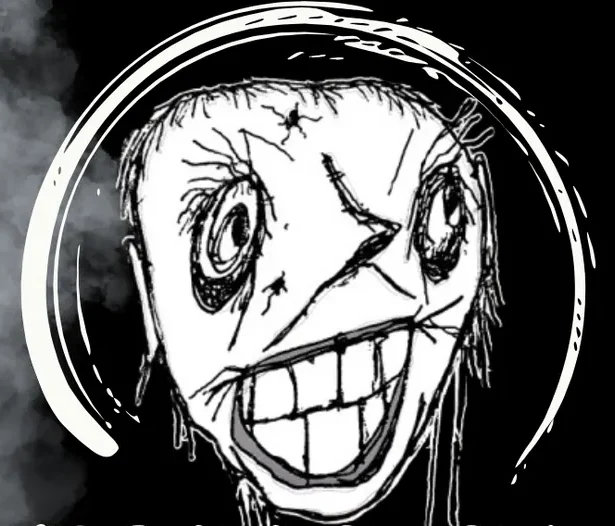
A gasp went up from everyone. One woman even shrieked. Billy, however, was too enthralled to notice. Unlike the crook, the victim looked just like she was supposed to. Her skin had dried to a waxy yellow, the outlines of cheekbones and eye sockets showing plain beneath tightly-stretched skin, her dull, filmed-over eyes sunken back in their two dark wells. Her bared teeth were all there, two rows of glorious white in the midst of all that rot, her lips shrunken back. Her nose was gone, only the two holes like on a skull. Most of her hair still remained, yellow and sweeping down her head. Her rib cage showed, even through the white dress knee-length she wore. The same dress she was buried in? Billy wondered. Or did someone…change her clothes? She shuffled on bony legs, her taut skin not quite covering everything—she had been dead how long now? Her right leg, her left arm had holes in them, like how Uncle George’s pants got holes in the knees because he’d worn them too many times. It would have really scared Billy if he saw those sorts of holes on a living person. But with these dead ones, well, they weren’t even alive anymore, so anything went.
A man in a white coat like a doctor, and a policeman in a crisp new uniform, walked on either side of the witness, helping her along (They’re holding her hands? Ewww!). She shuffled, feet never lifting off the floor, into the courtroom. Billy hugged the post, eyes fixed to this dead person who wasn’t supposed to be walking, but here she was.
Billy stole a glance at the clean-cut man. Like Darrow, he kept his face deadpanned, but it was even whiter now, and sweat glistened on his cheek. Billy would have given his two front teeth to know what he was thinking right then. Probably, I never should have left her mouth in such good shape. How was I supposed to know she would actually show up here? What’s the matter with her? Doesn’t she know she’s supposed to be in the ground? Heck! I should have—
She had reached the witness stand, her carrion reek very noticeable on top of everyone’s body odor packed into this small place—Billy began to wish someone would open a window—when Darrow stood up.
“Your honor. May I submit the near-certain likelihood of the witness’s brain not functioning at full capacity. “
The judge gave him a annoyed book. “Mr. Darrow. The witness here has been examined by two neurologists concerning that very matter, as you very well know.”
“Your honor, that was three days ago. A body’s normally formidable resistance to bacteria ceases entirely at death, after which the body rapidly decomposes, including the brain. The rate for even a single day must be taken into account. “
Someone near Billy groaned. Darrow also knew—and there was no way not to know, because the papers had ransacked this case for every last detail to splash onto the front page day by day—the victim had been packed in ice at a nearby meat-packing plant, lots of ice brought in every day “at great expense,” according to Dad. Could we just stop with these motions and whatnot and let the witness talk? Billy was aching to hear what her undead voice sounded like.
But he knew why, as everyone did. Darrow hated the death penalty, whatever the crime was. The very idea put him on the warpath. It had something to do with when Darrow was a boy, Billy’s Dad had said: Darrow’s father watched a man hang, and it made him sick, sicker than anything, and he told his son all the gory details. Darrow would move heaven and earth, try every last trick and then invent new ones, argue on and on forever, split a thousand and one hairs to get the criminal out of it, so Billy had heard.
“I have here today,” said Darrow, “a pathologist who is prepared to testify that at this point in the brain’s decomposition—even if preserved in ice—it has deteriorated beyond where the witness can accurately recall details, or give reliable testimony. “
Oh, for Pete’s sake! Billy clutched the post tighter, and Robert blew out a snort.
And then the victim caught Billy’s eye.
She stood in front of the witness stand, the doctor still holding onto her arm, the policeman now a few steps off to her right. She looked straight at the clean-cut man with eyes glaring like lightning from the dark well of their sockets. Her fingers, bony twigs, flexed and unflexed. The killer didn’t see her looking, her flexing. He watched Darrow’s performance instead.
The judge heaved a sigh, took off his glasses and rubbed his nose. Billy could guess what he was thinking. I set aside the whole day for this witness, and now…
The victim kept her gaze on the defendant. He still did not notice her. Her fingers flexed and her lips, already parted, peeled back even more to bare her teeth in full view.
“I also must submit to the court,” Darrow went on, “that with the abundance of testimony already on the record, the extraction of this unfortunate young woman from the sanctity of her final resting place was a cruel and unnecessary gimmick—”
She sprang.
Billy jolted. Everyone cried out, and some women screamed. The woman had moved slowly before, as if she would fall apart if she tried to do anything normally. But now all her strength and speed returned in a single burst of fury, lunging at the clean-cut man who gave her his attention at last, his eyes and mouth springing wide. She hit him like a whirlwind, clawing with her hands, biting with her teeth. Billy covered his eyes and then parted his hands to look again. Absently he was aware of Robert grabbing his arm and holding on. People jostled, shouted as the snapping teeth bit something important in the struggling defendant’s neck, and real blood spurted out.
Billy went dizzy and light in the head. He was sure he would lose his breakfast. He managed to hold onto it, although he did hear someone else puke and smelled the sour stuff along with everyone’s body odor. The policeman fell on the victim who still bit the crook’s neck like a vampire, the floor around them a mess of crimson. Blood sprayed, drops sprinkling the floor within reach of Billy, the woman behind him bellowing “Oh! Oh! Oh!” in a high trilling voice like an opera soprano.
Oh, crud! Billy held to the post with white-knuckled hands.
In moments, it was over.
A hush fell. Hardly anyone, however, had left the room—in fact no one at all, so far as Billy could tell, except of course the reporters. He had broken out in a sweat and his stomach swam. Robert looked dazed and green. Ambulance men arrived—someone must have called them—and bent over the tattered fellow now sprawled on the floor, motionless as an animal mauled and fed upon by lions. It was plain to see there was no more need for anyone to testify, to argue, or for the judge to decide if the killer should get the death penalty or not. They covered him with a sheet, brought in a stretcher, and carried him out.
I never saw anyone killed before, Billy thought over and over as Robert trembled beside him. I never saw anyone die before. He was sure he would see it again in his dreams. He wanted to get home to Ma and Pa. He wished he had not come.
As for the woman responsible for the unauthorized execution, the policeman and the uniformed court guard held onto her arms. She wore handcuffs on her bony wrists, but there was no need for them. She had spent herself, and now she sat quietly on the floor with her legs drawn up to her chest, chin resting on her knees, splattered with her murderer’s blood, her sides ever so slightly expanding and contracting with the faint wheeze of her breaths.
Billy, and everyone, looked to the judge. Amazingly he had not banged his gavel or called for order at any time during the uproar. He was white in the face, stunned as everyone.
A new voice broke the silence: the copper quietly informed the woman she was under arrest.
Darrow perked up. Until now he had stood rigid, gaping from the defense table as his client’s life bled out before him. Scarlet drops sprinkled his shirt. Running a hand over his head, he cleared his throat and straightened his posture.
“Your honor…as the accused—the young woman now accused, I mean—requires counsel, I wish to—to volunteer my services.”
A gray-haired man and a long-faced bespectacled woman, both draped in black, waved to him from among the spectators. It took a moment for him to notice, but when he did, he nodded back. Billy, like everyone, knew who they were: the victim’s mother and father. God only knew how they had felt when seeing their daughter the way she was now.
“May I request… a week… to prepare my case. Yes, she committed the crime as we have all seen, but… having been rescued from death itself, she cannot… possibly… suffer the injustice of condemnation to it, to death, for a second time. I…” He swallowed. “I mentioned I had brought a pathologist. I am confident that upon examination of the accused, he can confirm that—that her brain is impaired, as I have explained before. Impaired.”
Billy, listening, almost forgot his nausea. Looking around, he saw the same gape of amazement on every face.
Billy tapped on Robert’s shoulder, jerked his head toward the door. His friend’s face relaxed into relief, as if he had been waiting for an excuse to leave. The two started off, weaving back through the forest of legs. Better get home. Billy wanted that right now more than anything else in the world.
| EXHIBIT THREE: Return to “Calypso“ | Proceed to the next Gallery Four: Workplaces Redefined attraction, “Red in Tooth“ |