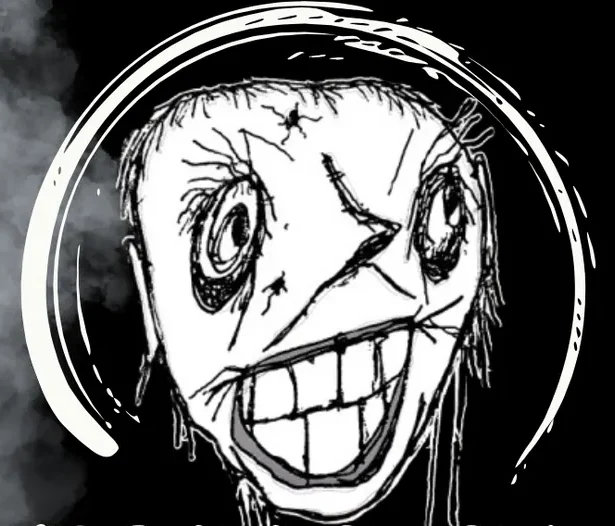
Flowers
by John Leahy
Horrific Scribes Extremity Rating:


Inspired by H. R. Giger’s Hommage a Bocklin
Brief note: The acronym VOC mentioned occasionally in the story stands for Vereenigde Oost-Indische Compagnie (Dutch East India Company)
When they came across Lammers, he was clinging to a piece of flotsam, his head resting against the timber, his eyes closed. Vejerin called out to him, but no answer came from the figure bobbing up and down in the water. Only when they were dragging him on board did the man show a sign of life, groaning weakly. They laid him on the deck at Clemens’s feet, Vejerin going to Clemens’s side as they did. The Captain and his Chief Officer regarded the prone form beneath them.
“Seaman,” Clemens addressed the drenched figure.
The man moaned with a slight tilt of his head.
“Seaman,” Clemens said again.
The man’s eyes fluttered open. He turned his head to the side and vomited water.
“Take him to the galley,” Clemens ordered. “Get some sustenance into him.”
Lammers’s exhausted eyes looked into the sky, blinking as they rested on the black flag billowing from the mast high overhead.

Clemens and Vejerin entered the galley about half an hour later to find the new arrival wolfing his way through a piece of pineapple, a small plate of yams before him. The diner looked up, the workings of his jaws slowing as he watched the two pirates move along the opposite side of the table. He wiped juice from his chin as Clemens sat before him. Vejerin remained standing behind the Captain’s right shoulder.
Clemens took in the dishevelled figure before him, its food-streaked, drawn, exhausted, sun-burnt face. Nothing remarkable. What was noteworthy was up further. The man couldn’t have been more than thirty years old, but his hair was completely white.
The man cleared his throat. “Thank you for your hospitality,” he said.
The face before him betrayed no recognition of the gratitude.
“You’re Dutch,” Clemens eventually said.
“Yes.”
“You work for the VOC?”
The man nodded.
“Yes.”
“What ship?”
“The Coen.”
Clemens blinked. He said nothing for a few seconds.
“Tell us what happened.”
With a total of three-hundred and fifty-five persons on board, including two-hundred and fifteen crew and one-hundred and forty soldiers, the Dutch East Indiaman Coen had set sail from Rotterdam for Jakarta. Packed with building materials, paints, guns, wine, and domestic goods, it was to deposit this cargo upon arrival at its destination and load up with spices from the VOC’s warehouses before returning to Holland.
The outward journey was uneventful until just after they passed Christmas Island, when, with only a little over two hundred miles between them and Jakarta, a powerful storm blew the vessel off course to the west.
A day and a half lingered before the storm dissipated. The Coen, her sails badly damaged, redirected herself toward Jakarta. The ship limped eastward a few hours when the ”singing” reached the crew’s ears. A hypnotic, ethereal oo-ing spread throughout the boat in seconds, weaving its fairy-tale like spell around every man on board. Every man stood on the deck silently, listening.
The ship approached a triangular atoll, but not one soul on the Coen was interested in this uncharted landmass. One side of the atoll was partially obscured by three islands, and these islands, or rather, their inhabitants, captured all attention. The islands were roughly circular and varied in size, the largest about two-hundred and fifty feet in diameter. The second largest was maybe half that size, and the smallest of the trio covered maybe a fifth of the big one’s area.
The islands’ features were bizarrely identical, differing only in size. At the centre of each island was a clump of palm trees, beneath whose fronds stood a group of three women, naked skin glistening. The producers of the singing, these dark-haired, olive-skinned beings of incredible beauty, varied in size with each island, the trio on the small island being little taller than pre-pubescent children, though their state of feminine development was mature.
The Coen dropped anchor, and Captain De Groot assembled a landing party to investigate the islands, including able seaman Anton Lammers among the selected. The Coen’s longboat was lowered into the water and headed for the medium-sized island, the closest one to the ship. The only sound the men heard during their short journey to the shore apart from the rhythm of the longboat’s oars in the water was the singing. On the longboat, Lammers noted every pair of eyes fixed ahead upon the island-women. On Coen’s thronged deck, Lammers regarded a similar fixation.
The longboat ground softly ashore, and the landing party disembarked. After reaching the dry sand and walking a few steps on the beautiful white grains, Lammers felt a knot of concern in his stomach. He slowed to a stop. The sand felt wrong, as though it… the sand felt as though it were moving up and down. Or something beneath it was. Lammers looked ahead at the landing party, which was moving further away from him. Obviously, none of them had noticed this… anomaly. As he began to wonder whether his mind was failing, Lammers heard a voice snap at him to rejoin the group. Looking up to see the stern eyes of the boatswain fixed upon him, Lammers jogged after the party, scolding his eccentricity as he reached his comrades.
As the band neared the women, the knot in Lammers’s stomach returned, and his heart picked up speed. By the time he halted before the singers, the women mere feet away from him, and his heart was racing in his chest. Something was terribly wrong with these women. But then of course, they were not women. Real women blinked. Their throats moved when they sang. Their mouths closed. And their chests moved for breath.
Despite the fact alarm bells ringing in Lammers’s head and a mental voice telling him this island was a dangerous and he should turn and flee now, Lammers had to know. He had to find out. He had always been curious, impetuous.
Aware that the ground was rising and falling beneath his feet again, and with greater intensity now (was it breathing? Breathing excitedly? With expectation perhaps?) he reached a quivering hand out toward the woman on the right. No one spoke. Nothing tried to stop him.
Lammers’s extended finger pressed into the form beneath its left shoulder. Encountering the resistance of neither bone nor muscle, it kept going. With a cry of revulsion Lammers yanked his hand backward. Holes flashed open all over the women’s bodies: on their faces, torsos, arms, legs. No area was spared. Each of the holes was about a quarter inch in diameter, making the women look as though they had endured horrific medieval torture involving nails. Some of the men returned to life at this sudden, shocking development, startled grunts escaping them. A few backpedalled.
Lammers had had enough. He turned and burst through the men behind him, racing for the longboat. A few steps into his sprint, the air filled with bloodcurdling shrieks and screams. His gut made him certain that what was happening behind him was terrible beyond imagination, that he should keep running, but his curiosity won the day once more.
He turned toward an unspeakable nightmare. Most of his comrades lay writhing and shuddering on the sand, in various stages of disfigurement. The majority of their clothing had disappeared. What remained gaped with huge holes that exposed melting, boiling flesh. Plumes of steam rose as their forms squirmed and liquefied.
Lammers saw clear fluid jet from the holes in the women’s skin. Whatever it struck, it consumed.
One of the men still standing collapsed to the sand, and the lines of spray that had been dissolving him now leapt toward Lammers, who darted to his left to avoid the dreadful substance. He escaped all but two of the deadly jets. He cried out as burning pain bloomed at the side of his right knee and at the tip of his right little finger. Instinctively he snatched at the aggrieved digit (the stricken flesh was already bubbling) with the fingers of his left hand. The pain lessened but also began to speak from the thumb, index and middle finger of his left hand. His eyes flashed upon puddles where the bone and musket-barrel of two soldiers were being quickly devoured, and Lammers turned and ran.
The moans and whines of the dying men receded behind him as he galloped toward the water, but the terrible singing remained, strong and clear amidst the charnel house. The ground beneath him panted, its eager rhythm almost sexual in intensity.
Lammers blazed into the water and tumbled beneath its surface. He scrambled into the longboat and began rowing. After two frantic strokes, the front of the boat began to rise up out of the water. A huge, reddish-pink flat shape lifted it higher and higher. His stomach a wretched cauldron of panic and terror as he tilted backward, he noted similar mysterious giants emerging from the brine on both sides of the ascending boat. Water coursed down the bizarre shapes in floods as they climbed into the air, with Lammers observing vein-like lines streaking the highly-coloured, parabolic shapes.
His helpless craft almost perpendicular to the water, Lammers spilled from it into the shallows. His head emerged from the water in time to witness the longboat thumping back down onto the surface a mere foot away from his skull. He looked up to see the shape that had lifted it, now free of the longboat’s weight, flick into line with the rest of its incredible brothers. A set of these shapes ascended from underwater points all around the island, all of them rising at the same speed, curving as they arose, the tip of each one arcing forward to meet an opposite, corresponding shape in the circle. To Lammers it was like watching some incredible corolla of petals coming together about a flower. When the orb was complete (it must have measured fifty feet from summit to base) the petal-things began to pulse softly as a unit, the gigantic pink bulb contracting and relaxing horribly, no doubt in sync with the loathsome throb of the sand concealed within.
Arrhythmic movement caught the corner of Lammers’s eye, and his gaze descended to the base of the bulb where the skin of one of the petals bulged outward sharply and intermittently, as though something struck it from inside. Lammers saw a shade behind the sporadically appearing bulge. Suddenly the blade of a dagger appeared through the pink wall, slicing a line downward to the water. A quivering hand appeared through the newly created tear, its steaming skin burnt down to the bone in places. Its blasted fingers let the dagger fall into the water before it shakily pushed at the sides of the flap, widening it. A head, which was little more than a feebly covered skull, appeared. A few tufts of hair sprouted oasis-like from a few random locations in the sea of hideous burn-tissue above a shocking landscape that had once been a face. The liquefied contents of one eye-socket clung to a cooked rag of flesh adorning the demon’s cheekbone. Its remaining unharmed eye shone brightly at Lammers, full of some terrible emotion that Lammers had never witnessed in a human being before. The entity’s scalded, haphazard mouth opened, and it emitted a few terrible raspy, guttural utterances before its head dropped forward, and the dreadful apparition was still except for the flesh-coloured fluid dripping from its crown into the water, which hissed and steamed upon receipt of the liquid. Only then did Lammers see the large signet ring on one of the ghoul’s fingers. He had seen that ring before. Captain De Groot had been wearing it.
The crack of musket-shot made Lammers look up to see the curved pink wall soaring over him billow as holes appeared in its skin. Looking behind him Lammers saw a line of soldiers and some sailors at the bow of the Coen, each with a musket pointed at the throbbing abomination before him. Lammers’ stomach pitched horribly upon noticing the anomaly immediately beyond the ship. The biggest island was now much closer to the Coen than it had been when the unfortunate landing party had boarded the longboat. Had the ship moved? Lammers doubted that it had; it had been anchored securely. No, the island had moved.
Lammers jumped to his feet and screamed at the men by the Coen’s bow, gesticulating wildly as he tried to get them to move the ship away from the bizarre approaching danger. When nothing changed on the deck, Lammers sat back down and paddled frantically, the singing of the “women” on the two remaining “open” islands and the thunder of musket-shot providing a deranged symphonic background for his desperate voyage of warning. He had almost reached the Coen when it began to rise from the water, and his spirits sank. The same pink petal-type things that had closed over the middle-sized island ascended skyward before him on either side of the ship. These petals were maybe twice as massive as the ones that had trapped the landing party. Up and up the twelve-hundred-ton Coen went, the terrible shapes lifting it becoming visible as the ship left the water. Climbing much slower than the ones not bearing any load, three petals were raising the Coen, which stopped ascending suddenly.
Lammers spotted the reason. The anchor chain was pulled taut, the timber cat-head beam supporting it pitched at an angle from the ship it was never intended to endure. A few seconds later the anchor’s resistance gave, and the Coen resumed its ascent. Lammers watched helplessly as it was borne upward, angling away from him as the colossal petals beneath it turned inward.
When the ship was about thirty feet above him, the cat-head, damaged in the unorthodox raising of the anchor, came free of the ship. Seeing it hurtling directly toward him, Lammers leaped from the longboat. When his head re-emerged from the water, he found the longboat in pieces. Grabbing hold of a long piece of flotsam, he looked upward to see the Coen about fifty feet above him, perched at a perilous angle on the curving petals. Then it slid off of them into the centre of the forming bulb, multitudes of screaming men spilling from its deck as it went.
Then everything was gone, the vast pink orb fully formed before Lammers, pulsing. Looking toward the island he had escaped, he saw the terrible bulb there pulsing as well. The third island’s singers sang, calling him. Immobilized with fear and shock, Lammers gazed at the beautiful girls beneath the palm trees on its sands. Then the tide swept him out to sea, the sirens receding into the distance.
From the journal of Will Clemens, Captain of The Black Zephyr:
25 October 1750
Lammers has been asleep for a little over six hours now. The man’s mind is undoubtedly broken, what with his fantastical tales of wax-women and giant sea-flowers. The sinking of his ship and the loss of his shipmates has clearly taken a terrible toll on him, compromising his sanity.
We have just passed Christmas Island, headed west. Finding Lammers’s atoll would be like stumbling upon a needle in a haystack, but both Vejerin and I know that the prize could be immense. The Coen was the flagship of the Dutch East India Company’s fleet and has always carried a huge cargo. Many pirates have taken her on, but all have failed to best her. And now she lies in the shallows of an atoll! May fortune smile upon us and bring us to her!
26 October 1750
Upon discovering our intended destination today, Lammers flew into a demented frenzy. Four men were needed to take him to his quarters, where he screamed and sobbed for over an hour before abandoning his theatrics. The poor wretch, he is completely mad.
27 October 1750
The women, they are so beautiful! Their singing so sweet, so entrancing!
I must send some men to Lammers’ quarters to silence his pitiful shrieks.
And then to the longboat!

Want another gripping story by John Leahy? Read “Smaller Lives” in Horrific Scribes June 2026.
| EXHIBIT FOUR: Return to “Before I Grew Nettled Skin“ | Proceed to the next Gallery Three: Tricksters attraction, “Family of Four“ |
| SPECIAL EXHIBIT FOUR: Return to “Calypso” | Continue in Gallery Three: Aberrations with Living Nightmares |