
Introduction and Guide: Springtime Rot (The Art of Decay)
by L. Andrew Cooper and Reese Hurd
with Silas the Scribble Man, Montage Master
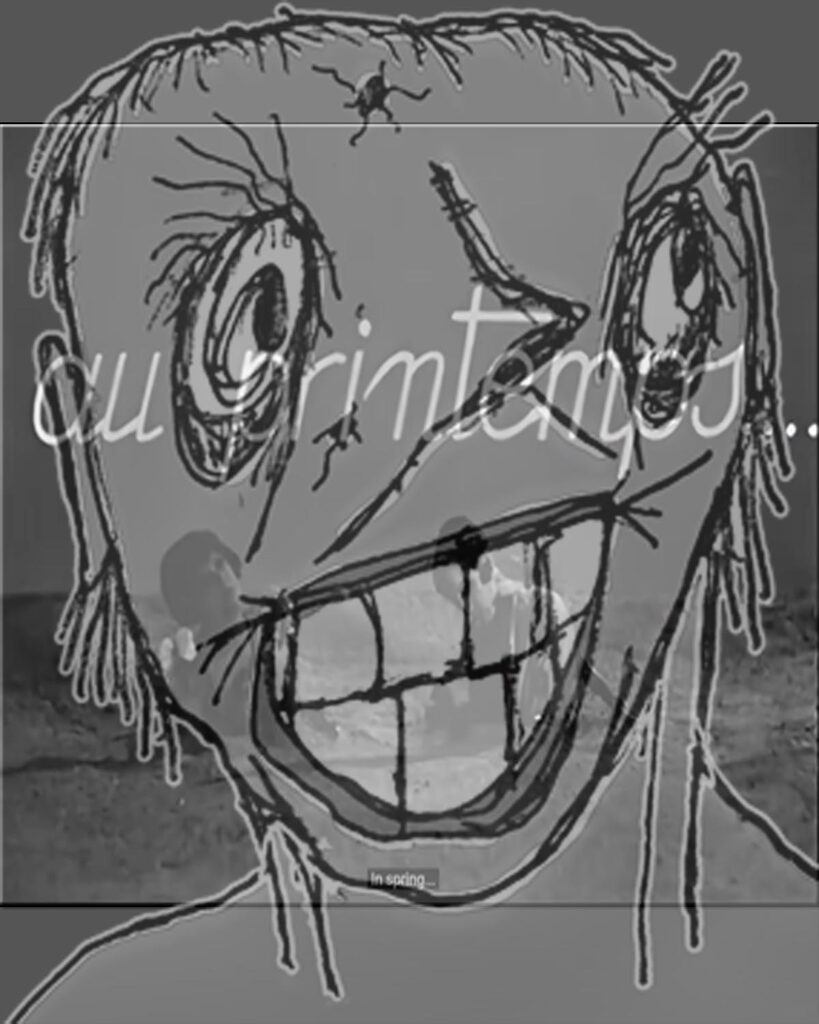
“April is the cruelest month…”
— T.S. Eliot, The Waste Land (1922)
Springtime heralds the return of life, rebirth, the triumph of surviving another winter–for those who’ve survived, anyway. Maybe part of the cruelty that launches Eliot’s generation-defining poem is that every new life is a memento mori, a reminder of older life lost. The births of spring carry the weight of the “re” prefix that means they are predicated on the deaths of winter that came before. New growth only springs from the ground because the rotten corpses of winter’s slain fertilize them. In springtime, the beauty of life is inseparable from death. Perhaps, to appreciate one, we should appreciate the other. Find, if not “beauty,” at least aesthetic value in rotting corpses. As the flowers bloom, we can embrace the abject. We can find, even in springtime, the art of decay.
We wouldn’t be the first. French poet Charles Baudelaire shook up the literary world with his collection The Flowers of Evil (1857), poems that look at traditional objects of beauty and find them lacking compared to the beauty in corruption and horror. He inverted conventional aesthetic values and proved the merit of doing so in his own celebrated works. He wasn’t the first, either. Early authors of Gothic fiction were invested in philosophical distinction between the beautiful and the sublime, finding the aesthetic value of the terrible and horrible in the Gothic to be of the edifying sublime sort. Matthew Lewis’s The Monk (1796) pioneered extreme horror with sublime images of a rotting baby corpse, a bleeding nun ghost, and other nasty delights that made the book both popular and critically reviled.
Early nineteenth-century Romantics continued to feature dark, sublime, and often very nasty images in their work. Everyone knows the corpse-and-rot festival that is Mary Shelley’s Frankenstein (1818); fewer people know the macabre dreams/hallucinations of Thomas DeQuincey’s Confessions of an English Opium Eater (1821) and Suspiria De Profundis (1845) or the manifesto for the value of abject imagery in his essays “On Murder Considered As One of the Fine Arts” (1827). His thinking isn’t far from Edgar Allan Poe’s in “The Philosophy of Composition” (1846), which discusses the aesthetic value of the macabre in his own work. Baudelaire was a fan and translator of Poe, and as a leader of the Decadent movement, he helped transmit the aesthetic value of corruption to other authors, contemporary and future, notably Oscar Wilde, Decadent and Aestheticist, author of Neo-Gothic novel The Picture of Dorian Gray (1891), which has quite a lot to say about the combination of beauty and decay as it goes about mixing the two.
Despite its long and illustrious history, making art out of decay has never attained the same level of social acceptability as making art with subjects that are more traditionally, or at least palatably, beautiful. Some art movements reveled in being unacceptable, notably the bawdy, gory displays named for the Grand Guignol Theatre that arose in France in the late nineteenth century and gave fresh air to the type of “splatter” pioneered by Matthew Lewis. Abject imagery attained respectability in early horror film largely thanks to German Expressionist masterpieces such as The Cabinet of Dr. Caligari (1920) and Nosferatu (1922). Grand Guignol style would later reemerge through film in the (now classic) “trash” gore films of Herschell Gordon (H.G.) Lewis such as Blood Feast (1963). While literary work self-identified as horror didn’t get much respect through much of the twentieth century, images of abjection helped define works of important literature such as the body wasting away in Franz Kafka’s “A Hunger Artist” (1922) and became central in later existentialist work by Albert Camus and Jean-Paul Sartre. Meanwhile, the walking corpses, vampires and the like, that gained popularity throughout nineteenth-century fiction and exploded with Bram Stoker’s Dracula (1897) never lost their public fascination. In 1968, George Romero released seminal zombie film Night of the Living Dead, which is part of the permanent collection of the Museum of Modern Art in New York. Since the 1970s, art about unruly corpses, respectable and otherwise, has been everywhere. The foundation for the grotesque stories in this Exhibit, for showing off tales that revel in the art of decay, couldn’t be much stronger.
We start in a fairly existential zone with Gallery One: I’m Falling Apart! An alternate phrase for “The Art of Decay” might be “The Art of Falling Apart,” and that’s exactly what “How May I Help You” is about–a woman who is literally falling apart, trying to go about her day as pieces of her body become useless and detach. Whether you perceive this story as dark comedy depends on how you react to the absurd–maybe the Absurd–in the existentialist sense that engages with the meaninglessness of life and everything in it. Absurdity is funny, but it’s also profoundly horrifying. The second story in this gallery, “Why I’m Running the Spookshow Now,” deals with the decay of an entertainment tradition, the decay of personal standards, and corporeal rot, all of which add up to the main character putting on a spectacle that meets and surpasses the heights of the Grand Guignol (as well as H.G. Lewis, an important figure in the story).
We shift emphasis from personal rot to environmental decay in Gallery Two: This Place is Falling Apart! The first story, “Darcy’s Docks,” throws us into the quiet viciousness of the dark in the bone-chilling atmosphere of a decrepit amusement park boat ride, a place filled with mucky water and crumbling animatronics. Two siblings return to the belly of that beast following a traumatic event ten years earlier. Will they come out alive? Our second story in the gallery, “Squatters,” toys with perspective as it follows a man on a mission to burn down a foreclosed and rotting house full of… squatters. You should probably question not only the physical decay of this home but also the moral decay of this character.
Gallery Three: The Universe Is Falling Apart! takes a cosmic approach to the art of decay, and our three works here transcend not only death but genre. The gallery includes a selection of horror-hybrid works ranging from sci-fi to western. It starts with “We Have Not Died Yet,” a grim piece of mind-bending sci-fi delivered from the perspective of a sea of bodies preserved and melded together in a pit of tar. A scientist excavates the history and the future at the same time as she uncovers hideous and seemingly inevitable personal truths. “Dead or Alive,” a cosmic horror-western, brings our understanding of decay into question as two wanted men, despite harsh warnings that would turn them away, venture into a part of the desert where the boundary between life and death itself seems to rot. The final story in this gallery and of the Exhibit, “This Sickness Will Not End in Death,” walks the line between life and death with an unusual threat from a reanimated, intelligent body. The horror-western context makes shattering revelations from beyond death a fitting final word on the significance of rot.
ATTRACTIONS IN THE EXHIBIT
Gallery One: I’m Falling Apart!
“How May I Help You?” by Valerie Patrick. “How May I Help You” throws us into a librarian’s shift from hell as she falls apart on the job—literally. The protagonist wipes tears of blood from her eyes as a perverted library patron asks her, “What’s my password?” The experience is a surreal nightmare, but it’s still relatable as the main character goes through the ultimate ringer of customer service, in which critical thinking from the people she helps is simply too much to ask. The story offers a grotesque physical metaphor for the emotional degradation that happens at a soulless job. What do you do when your eye falls out in the face of an angry Karen? Patrick creates a wider commentary on the workforce as well as the ignorance of the general public. As the skin of the protagonist’s face quite literally melts away, so does social etiquette.
“Why I’m Running the Spookshow Now“ by Douglas Ford. The story begins, “The spookshow was dying. As an institution, I mean. I almost said ‘art,’ but nothing Cal Edwards ever did could properly count as an art.” The tale immediately raises the problem of decay–of an institution–and what’s decaying is the spookshow, a stage spectacle, direct descendant from the Grand Guignol, featuring monsters that menace a scantily clad woman, and it falls so far over on the critically reviled side of horror in the tradition of Matthew Lewis that it might not even deserve to be called “art.” Why is the spookshow dying? Because recent developments in film–largely due to the work of one H.G. Lewis–have given people an alternate source for gory spectacle. To reverse the spookshow’s decline, the main character and her boss delve into the supernatural… which results in more rot, organic and otherwise, but also renewal. Unlike “How May I Help You,” this female protagonist’s journey through decay goes beyond a fall and, as the title suggests, charts a very dark rise through the beauty of decadence.
Gallery Two: This Place Is Falling Apart!
“Darcy’s Docks” by H.J. Dutton. This tale is classically creepy and atmospheric. The piece evokes unsettling rot in its first lines: “The entrance’s teeth dripped rainwater, paint having peeled since the park’s closure in ‘97.” Dutton’s use of sensory detail creates an immersive and frightening journey into a closed amusement park ride’s decaying structure, a journey deceptive in its simplicity. Claire takes the journey with her younger brother Liam, and we soon find out that the horror they face is more sinister than the rusting and outdated animatronics. Claire relives a family tragedy from ten years earlier, and as the water-logged boat ride crumbles underneath the crushing weight of the past’s horrors, intrusions on the present might keep them from getting out of their oppressive surroundings alive.
“Squatters” by Devin James Leonard. The place that’s falling apart in this story is “an enormous derelict Queen Anne overlooking the Hudson River like a malevolent lighthouse from hell,” a house the owner of which doesn’t deem worth saving, so the main character, Ken Duffy, is on his way to burn it down. Why? Check the title. Some kind of trouble seems to have settled inside, and like the house, it seems corrupted, tainted, possibly… inhuman. Ken Duffy doesn’t have a problem with killing whoever, or whatever, it is, though, so maybe he’s just the sort of corrupt guy to deal with the corruption inside the corrupted house. As you follow Duffy’s thought processes and behaviors, particularly with regard to a boy who gives him information about the old house, you might wonder whether Duffy or the house is more rotten. When Duffy and the house finally face off, the rot is so pervasive that you might have difficulty choosing sides.
Gallery Three: This Universe is Falling Apart!
“We Have Not Died Yet” by Raymond Brunell. Both physically revolting and psychologically intense, this story will mess with your head. It follows eager scientist Nina as she excavates a tarpit. She discovers the remains of her daughter, who is presently living, among other bodies. Through the creepy and unconventional perspective of the bodies and minds melded in the pit, the narration reveals that Nina’s digging has uncovered a temporal anomaly with horrific implications that defy conventional thought. Brunell warns through this tale’s misery that humans may be the cause of our own demise. Time and space inevitably collapse as death waits for us all.
“Dead or Alive” by Jim Best. Our last two stories that bend genre and show the universe crumbling are horror westerns, frontier tales, but the frontier experiences they relate aren’t about being on the brink of American westward expansion–each story, through a confrontation with death and decay, comes to the brink of cosmic revelation. “Dead or Alive” starts in somewhat familiar western territory with men wanted dead or alive fleeing into the desert, but as they journey into an area where they’re warned not to go, the “or” in the title becomes increasingly problematic. Strange discoveries coincide with stranger phenomena as corrosion sets in, and the attempt to fathom the corrosion’s source might be more dangerous than the corrosion itself.
“This Sickness Will Not End in Death” by Mavrik McMeekan. The author has not disclosed whether he wrote “This Sickness Will Not End in Death” as a showstopper, but even though it is in an important way about not ending, following its last line with anything but silence seems somewhat inappropriate. Like “Dead or Alive,” it blurs life/death boundaries, and while the result is arguably zombie-like, it’s a vast distance from a conventional zombie. It is instead a conveyer of horrific, and again cosmic, truth. Essential to grasping the tale’s full horror is placing yourself in the mindset of the western, of the frontier’s people and their beliefs. The art of the story is making the physical rot on display a miniscule horror compared to the devastation of the lingering corrosion its message inflicts.
| EXHIBIT SIX: Return to the “Order of Attractions“ | Begin Gallery One: I’m Falling Apart! with “How May I Help You“ |