January
by Adam Murray
Horrific Scribes Extremity Rating:

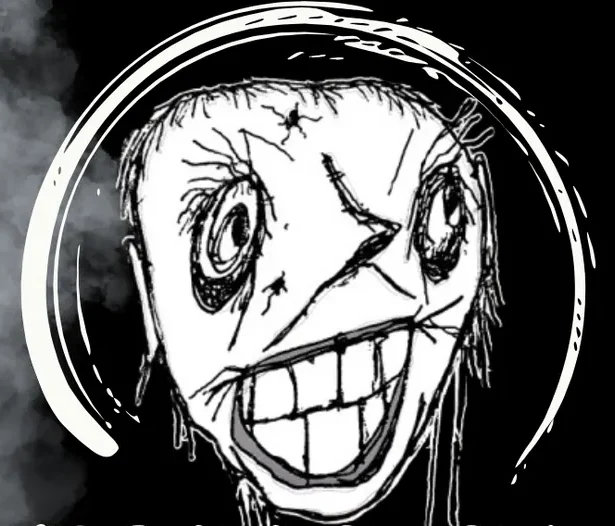
The world did not end loudly. It did not break. It corrected. At 23:59:60—an invented second humans added to keep their clocks from drifting—the future failed to load. Time did not stop. It simply refused to advance. The meaning continued. The numbers did not.
January arrived without permission. Like a mouth opening: not violent, not dramatic, just enough to admit what had been waiting. Later, people would insist nothing happened at midnight. No light in the sky. No rupture. Just fireworks and noise and the false comfort of repetition.
But the correction had already begun. We felt it as friction first. Plans that would not hold. Sentences that would not finish. The sensation that something ancient had noticed an accounting error and was moving, patiently, to fix it.
On New Year’s Eve, the city did not explode. No sky splitting open. No whimper and no bang. No angels, no fire, no God. It simply stopped creating what came next. Fireworks went up as planned—cheap rockets launched from rooftops into the smoggy Mexican sky. Street dogs barked themselves hoarse. Children screamed with joy. Someone fired a gun into the air and laughed like a madman.
Then the clocks rolled forward. And the future didn’t follow. I noticed because the radio refused to finish a sentence. I was driving home through Iztapalapa, streets slick with tequila and rain and purple powdered ash from fireworks, when the AM announcer froze mid-breath.
“…y en otras noticias—”
The words stretched thin, vibrating—caught in a loop that never resolved. I twisted the dial. Every station carried the same half-sentence, layered and overlapping, like ghosts arguing through concrete walls.
At home, my mother was still awake, sitting at the table with twelve grapes laid out in a perfect circle. One for each month. Tradition imported and repeated until it felt sacred. She looked up and smiled, as if she’d been holding it since last year. “Did you make a wish?” she asked.
I checked my phone. JANUARY 1, it said. The time was wrong—not frozen, just unconvincing. Like a number someone guessed. “I don’t think it worked,” I said.
She laughed. “That was predicted by the old ones.”
At 12:07 a.m., the neighbor upstairs began screaming. Not words. Not panic. Just a long, animal sound that rose and fell like breathing—too steady to be fear, too raw to be anything else. We gathered in the stairwell with the others: pajamas, bare feet, phones held up like offerings.
Someone knocked. Someone prayed. Someone filmed in potato quality. When the screaming stopped, it didn’t feel like relief. It felt like the pause between heartbeats. The apartment was empty. Furniture untouched. Food still warm on the stove. A calendar on the wall flipped to January—and nothing after it. Every page beyond was blank, as if the printer had given up.
By morning, people started noticing patterns. The buses ran, but only along routes they had already driven. Drivers couldn’t remember new stops. Babies born after midnight didn’t cry. They stared instead—wide-eyed, silent, already exhausted.
No one could explain why plans no longer held. You could remember yesterday. You could repeat today. But tomorrow slid off the mind like oil. By noon on January 1st, the computers refused new entries. Every file reverted to the same timestamp:
DATE: JANUARY 1
STATUS: PENDING
We tried writing by hand. The ink faded within minutes. By January 3rd—or what we insisted on calling January 3rd—the city smelled wrong. Sweet and metallic. Like breath held too long. People stopped making plans because plans implied a next hour. Stores closed not from fear but confusion. How to restock if nothing progresses?
The whistling started. Aztec death whistles, bone instruments shaped like screaming faces, meant to terrify enemies and call gods: once used for psychological warfare and sacrificial ceremonies.
The sound came from everywhere and nowhere. From under highways. From inside subway tunnels. From the direction of Teotihuacán. It rolled through the city at irregular intervals, vibrating bones and windows alike.
Tourists livestreamed the pyramids as the noise grew louder. The feeds glitched. Pixels bled. The shadows around the stones deepened until they seemed to detach from the structures themselves. Someone zoomed in. The pyramid wasn’t opening. It was counting down.
Blackness spilled from the seams—not darkness, not light, but absence, thick as fog and wrong as silence. Shapes beneath shifted, massive and slow, like something stretching after a long sleep.
The calendars had been wrong. Not broken—replaced. We had traded the old count for one that fit us better. Rounded the edges. Promised ourselves forever. The ancestors had recorded the end date clearly. We just stopped listening. January opened wider.
That’s when the monsters came through. Colossal things, ancient and precise. Mastodons of obsidian and bone. Jaguar forms with symbols carved into their flesh. Serpents whose bodies were made of segmented stone: etched in Nahuatl we never learned to read.
The first to emerge bore the face of Tezcatlipoca, Smoking Mirror, god of night, memory, and punishment without malice. His body moved like a volcano deciding to relocate. One flank reflected the city in warped obsidian—every building bent inward, every human reduced to motion without consequence. Where his shadow passed, intention collapsed. People forgot why they were running and lay down instead.
Above him coiled Quetzalcóatl, feathered, beautiful, segmented—serpent-body composed of calendar stone, each plate engraved with dates that did not exist in any modern system. He did not hunt. He measured. Streets folded under his passage, reorganized into spirals. Time did not move forward beneath him. It layered.
Tlazolteotl came last, quiet and obscene. Eater of filth. She did not crush or burn. She excreted purity. Where she passed, bodies thinned. Skin glossed. The city grew clean in the way bones are clean after insects finish. They were not invaders. They were maintenance. This wasn’t the end times. It was the beginning of a new calendar.
They fed on us. Not quickly. Not violently. They moved through the city with the patience of inevitability, their footfalls cracking asphalt, shaking collapsed buildings into dust. People learned fast not to scream. Fear attracted them. Panic was seasoning.
The beasts fed the way calendars work: gradually, without appetite. Entire neighborhoods entered them without ceremony. Streets softened. Buildings exhaled. Windows clouded into translucent membranes that flexed faintly when pressed, like skin remembering it was alive.
Inside, people remained. They lost weight. Skin grew slick, perpetually oily, coated in a thin digestive film that smelled faintly sweet. People complained of pins-and-needles sensations, of itching they couldn’t scratch, of a tiredness that sleep did not touch.
No one called it pain. Pain would have implied urgency. The digestion was patient. Memory dissolved before muscle. Names went first. Then faces. What remained was contentment without choice—a parasite’s mercy. Houses did not trap people. They persuaded them to stay. Then offered them up to the gods as sacrifices.
I hunched low in the rubble of a gutted Mega Mart, in a sea of Labubu dolls with their stuffing spilling out. Gas mask fogging with each breath. The limited vision helped. The less I saw, the easier it was not to break. I recognized streets by absence. The taquería where the grease fire never got fixed. The cinderblock wall painted with the Virgin of Guadalupe whose face peeled more each year. Iztapalapa did not disappear—it was absorbed, folded into something older that had always known how to eat cities.
The monsters stepped over shrines without disrespect. Candles guttered but did not go out. Even gods recognize their elders. Somewhere, a radio played the same unfinished sentence. Somewhere, tourists still filmed, desperate to be witnesses rather than food.
My mother was gone by then. Like most people. Those who survived noticed changes. The digestion was gentle. That was the horror of it. The beasts didn’t crush everyone. They absorbed them.
From the ruins, I watched a mastodon lower its skull to the street, its mouth opening not to eat but to listen. The sky whistling harmonized. Time corrected itself in grinding increments. January wasn’t the end. It was the mechanism. I stood at the edge of the city, watching beasts pass like seasons we had refused to name.
On the last morning—if morning is the word for light repeating without promise—I returned home. The table was still set. Twelve grapes lay arranged in a circle, their skins split and leaking, collapsing into themselves. My mother hadn’t eaten them. No one needed rituals anymore. The calendar on the wall showed January. Only January.
I stood there a long time, oily-skinned and lighter than I remembered being, listening to the distant death whistling harmonize with something beneath the floor. Outside, the monsters continued their work. January was not the end. It was the mouth. And it was feeding on our future.
I thought of the calendars we’d printed. The wishes we’d made. The years we’d assumed were owed to us. The old ones had warned us. We had simply relied on the wrong chart. At dawn—if it was dawn—I went to the roof. The city lay below me, humming faintly, like a machine stuck between commands.
I took one of the grapes from my pocket. I bit down. It tasted like ash. Like fireworks. Like all the things we said we would do someday. My jaw locked. Below me, the city held its breath. And January opened wider. The world, finally, was devoured by the old gods we chose to forget.
| SPECIAL EXHIBIT 2: Return to “Smashing in the New Year“ | Begin Coming Soon to a Civilization Near You, Gallery Two: Apocalypse Presently and read the next attraction, “Vote Abyss“ |