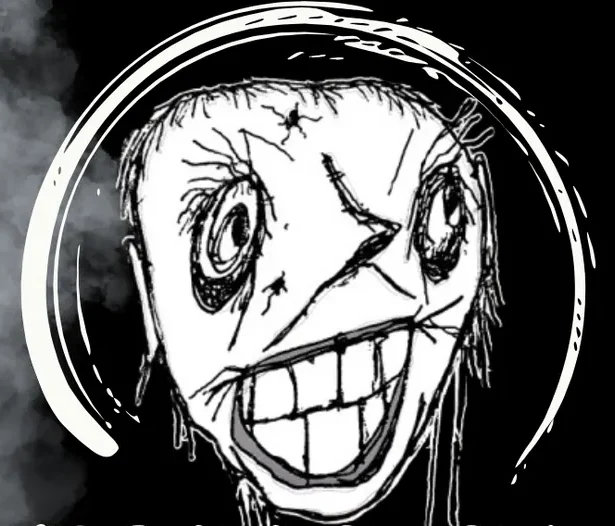
Mr. Ears Comes to Dinner
by Tracy Fritz
Horrific Scribes Extremity Rating:

“Time for raccoon dinner,” Alison said to the empty kitchen. The sun was setting, and her hungry visitors would arrive soon. She arranged carefully sliced grapes and cherry tomatoes artfully around a steep hill of cat food on a ceramic tray while she kept an eye on the fence top to see if Mamma was waiting. The obviously nursing raccoon recognized a reliable food source and had built her den on the other side of the fence, behind a neighbor’s shed. Mamma was always the first to arrive, and Alison was glad for that. If her life—once full of acrylic pyramids celebrating her record-breaking sales—was now thin on accomplishments, at least she was supporting a struggling wild animal and her litter of precious kits. That was more meaningful than some corporate award. She told herself this often.
Balancing the full plate on one hand, she slid open the glass door, grubby with raccoon prints, and stepped into a wall of Texas heat, unbroken even by twilight. Already her eyes were tearing up. The sulfurous smell she had noticed this morning lingered. So, too, did the outline of a footprint, charcoal in appearance and seemingly burned into the patio’s concrete. She had assumed the odor blew in from Luling—a wasteland of abandoned oil fields and fracked wells southeast of Austin. But as she placed the small buffet beside a steel water tray, she remembered that Luling’s gases were only a nuisance in winter—something about the fumes being unable to rise and dissipate in the cold. It was high summer now.
She sniffed the air. The stench pulled her brain down into her gut. Her aversion wasn’t just physical—an uncomfortable twitch in the stomach. It carried a moral weight, too, a sickening sense of obscenity. Was this confused flush of unease a symptom of menopause? Everything, it seemed, could be chalked up to menopause. In the sweltering dusk, a cold sweat soaked the back and armpits of her sundress.
Tugging the fabric away from her clammy skin, she shook off her disquiet and turned her attention to the print. Three taloned toes at the end of a long, bony heel. It looked like it had been made by an impossible hybrid—a chicken-dog mix? Or maybe, she smiled to herself, that’s my Rorschach reading of a stubborn mold stain; there isn’t enough excitement in my life, and I’m starting to invent it. She had tried to remove the mark with a high-pressure hose, succeeding only in wasting a lot of water. At least the hose had worked on the sloppy pile of shit, seething with flies, that had been left like a gift outside the door. Her raccoons were more civilized, but maybe a newcomer didn’t know the rules.
She laughed a little at the fantasy world she had created, complete with a cast of animal characters worthy of a Disney film. I’ve become a crazy cat lady without the cats. What would my old colleagues think? Then she remembered that they didn’t have time to think. Thanks to Matt, she had all the time in the world—and the space to be herself.
When she stepped back into the cool kitchen, Matt was at the island sipping from a barrel-sized mason jar of iced coffee. A manager at a software firm, he’d worked for the same company for two decades, first in-person and, since Covid, remotely. In an industry where people changed jobs every other year, his tenure was unusual—but then again, so was he. After 15 years of marriage, Matt was still the most reliable person Alison had ever met, as stable as a limestone bed. And it was the grounding weight of his character—not to mention his income—that gave her the freedom to pursue her own enthusiasms.
“Everything ready out there?” he asked with a smile.
“All set,” she said. “But it still stinks to high heaven. Do you think it’s safe? There’s been no mention of a spill or a leak on the news. Nothing in the neighborhood group. I’m afraid it’s going to put Mamma off her food.”
“Nothing could do that. And, besides,” he said with mock seriousness, “Mr. Eyes is a Victorian gentleman. I’m sure he’ll offer the lady a scented handkerchief.” A favorite in their household, Mr. Eyes was a stunning fellow whose black mask framed a penetrating gaze.
“Maybe,” she smiled back, relaxing her shoulders a little. “I didn’t see Chapeau last night. Hope he’s OK.” Chapeau was a plump juvenile shaped like a bowler hat. “Can you watch for them while I take a shower? Just twenty minutes.”
As she waited for him to retrieve his office laptop, she looked into the growing darkness. An inexplicable dread settled into her body, cold and heavy, like a riverstone in her palm.

Not long after turning in for the night, Alison crept from the bedroom, closing the door carefully behind her, and stepped into the kitchen. She made dandelion tea and—cup in hand—sank down cross-legged on the rag rug before the back door, her nose inches from the pane. This was a routine for her. Plagued by Restless Leg Syndrome, she couldn’t fall asleep until around three. Until then, she would monitor the patio for raccoon activity.
The yard was a tight space, hemmed in by the backs of neighboring houses but softened over time by the unchecked growth of trees and shrubs. After leaving her job three years earlier, Alison had lost herself in gardening. She’d planted the now towering elderberries, topped with umbrels of purple fruit, that bordered the patio. At first, Matt had expressed concern that the foliage would block the view from the kitchen window. His quiet resistance, however, gave way, as it often did. She’d argued that the birds needed more food and shade and that they ought to do everything in their power to make the lives of their feathered friends easier. He couldn’t disagree with that.
Tiny cages packed with suet and seeds hung from the patio’s lean-to roof, tracing lazy circles in the air. She watched them for a moment before dropping her eyes to the water tray and ceramic plate, glimmering in the faint rays that shone through the elderberries. Her neighbor’s security lights were always on; the motion detector probably broken. By their illumination, she could usually spy one or two of her little friends rolling nuggets of cat food between their deft hands like gamblers blessing dice. Tonight, she saw two—no one she recognized, but cute all the same. And then a third, crouched in the inky shadows collected in the patio corner, slowly unfurled into view.
Alison recoiled, splashing hot tea onto the crotch of her sweatpants without feeling the burn. She had seen a lot of messed up raccoons over the years: ones like Mr. Hurt Hand with atrophied limbs curled close to their bodies; others with missing eyes and savaged noses, tender parts torn away in the vicious fight for survival. This, however, was something else altogether. It was a raccoon, of that she was certain—because, in this area, what else could it be?—but one with severe congenital deformities. Not horrifying—to think so would be cruel—but definitely unexpected. Only chromosomal chaos could explain why the typically soft and rounded cub ears were leatherlike and pointed, why the signature curve of back and bottom was unnaturally lean and straight.
You poor creature.
The raccoon dropped forward into the darkness, disappearing from her sight, before suddenly rearing up mere inches from her face. Jerking backwards, Alison bumped her tailbone hard on the laminate floor and froze, recollecting herself. What the hell is wrong with me? Was she one of those shallow bastards who only cared for “cute” animals? Save the pandas and tigers but screw the Sunda Pangolin? No, she was not. She would be sensible and compassionate.
Resolved, she looked up at the raccoon, who stared back at her with eyes that were golden, intelligent, and sharp as snares. She was caught. Circling his left pupil in dizzying rotations, she knew with a certainty that he was starving—wracked with hunger pangs!—and desperate for help. And then her knowledge turned into experience. The raccoon’s suffering passed through her body like a fast-moving storm, and when it was gone, she was overwhelmed by sadness. At the thought of what life was like for him, Alison’s heart melted.
Alison considered that the survival of this singular creature—who was doubtless as special as any dolphin or elephant—depended entirely on her. Other ideas immediately followed, as if she were rehearsing a familiar syllogism. If she saved this special animal, then she would be special, too. In the way that people who rescue bald eagles are magically dignified by their conscientious action. Forget birds, though. She’d be like the mother of a prince or like Mary to Jesus, women who were important because of the powerful people they nourished. And she would feed him the richest and best food.
The focus and stillness she had felt while following this inexorable logic slowly gave way to a spiraling of body and mind. For a moment, the raccoon’s pupil filled her inner vision. And then she was in free fall through the clouds, her stomach in her mouth, a descent that ended abruptly when the kitchen floor came up to meet her. Jolted into consciousness, her head snapped back from the clammy glass against which her forehead had been pressed, and her nostrils flared with the stench of rotten eggs. Outside, the patio was empty and completely dark. Her neighbors’ security lights had kicked off.
Lying in bed beside Matt, Alison pedaled her legs with frustration and excitement. She was thrilled to have seen such an unusual raccoon—he might be one of a kind!—and angry with herself for having dozed off. There was also a gently gnawing fear. Plagued her entire life with insomnia, she would be the last person on earth to fall asleep sitting up. Can a person develop narcolepsy in middle age? And what’s going on in Luling—some unreported environmental catastrophe? If the smell continued, she would have to contact Austin city officials. Still, taken together, these concerns about her health and the apparent poison cloud engulfing her home felt like a feint, a distraction from a deeper disturbance. Something else about the episode unnerved her, though she couldn’t say what.
Despite her agitation, she fell asleep quickly and dreamt, as she often did, of that day three years earlier when she had quit her job. Usually, the dream closely followed the contours of the actual event: she sat across from Heather, who was more of a friend than a boss, and told her the truth. The job was consuming her life, triggering panic attacks of an intensity she hadn’t known since college, and it was time to reprioritize. There would be a financial hit, for sure, but with some strategic cuts, they could get by on Matt’s check. And he was supportive of her decision. True, he wondered what she would do with so much unstructured time and worried that she might grow bored. But he also agreed that, for the sake of her well-being, it might be worth stepping back if that’s what she wanted to do. And she did.
Aiming to end the conversation on a cheerful note, she had said to Heather, “It’s like I’m entering my Laura Ingalls era! What with all the gardening, sourdough baking, and cross-stitching, I won’t have time to miss ‘real’ work.”
“Well, congrats,” Heather had said. “I’ll stay tuned for the TikTok channel. Before long, you’ll have millions of followers and a cottage-core empire, I’m sure.”
Then they talked about staying in touch and meeting up for drinks. None of that happened. Alison had quickly lost touch with all of her work friends—not that there had been many.
That was how the dream usually went. Tonight, it followed a different script and was riddled with technical glitches. It was all asynchronous, their lips and words resisting alignment like crooked teeth in a broken zipper.
Alison whispered emphatically, “In my head, like a prayer, I’ve been calling to the universe for a new opportunity. I didn’t even know I was doing it!” The sentences completed themselves long after her lips had closed. Then, mouthing silently, she shrugged her shoulders and slowly—like a slipped belt finally gaining traction—her voice emerged: “But now he’s here with a special challenge—something to help me grow as a person—and I’ve just got to pursue it!”
Heather pantomimed and smiled. After a delay, Alison heard her say, “Oh, of course! You’ve got no choice!”
“We’re vegetarians,” Matt said. “We don’t buy meat for ourselves, but now we’re going to buy it for a special raccoon?” He pulled a Styrofoam package of chuck steak from the fridge and dropped it on the counter between them.
“Don’t,” Alison said, her voice a little raised. “I’m not ready to put it out yet, and it’s going to leak.” “Look,” she continued, switching to the reasoned tone of a patient educator, “the meat industry is disgusting, and it would be wrong for us to eat from slaughterhouses. But it’s natural for wild animals to eat other animals. And I just know that, right now, that’s what this raccoon needs.”
“This is Austin. Every hipster has a chicken coop. If he needed meat that badly, surely he could pick off a hen.” A rare note of sarcasm had crept into Matt’s voice.
“I don’t know if he’s healthy enough to hunt. That’s why I think he’d benefit from the extra protein.”
“So he needs you to stay alive, is that it?” Matt’s lips pressed together in a thin line. “What’s he been doing up until now? And what about the flies? If you put raw meat out there, the patio’s going to be swarming with them.”
They had descended into an actual argument, something so rare that both regarded it with the wonder of witnesses to a car accident. She passed over his offensive suggestion about the savior complex and, instead, countered his claim about pests.
“It won’t attract any more flies than the fruit, and you don’t have a problem with that.”
She knew she needed to diffuse his growing irritation. Returning the focus to cute animals, she added, as if it were an afterthought and not a strategic move, “Oh, and I’ve decided to name him Mr. Ears.”
This personal detail seemed to soften him a little, and he let the subject slide.
That night after Matt had gone to bed, Alison set up camp in front of the patio door with a large couch cushion, a glass of water, and a paperback. They hadn’t spoken much over the course of the evening, and he hadn’t asked when she was coming to bed. This was just as well. Like a parent surprising a child with a coveted toy, she was eager to see Mr. Ears’s reaction to the special meal. But who could say when he would show up?
Not long into her book, a powerful feeling of being watched made her turn around. The house was open-concept and, from her position at the back, she could see straight through the kitchen and living room. The blinds on the front windows were drawn—no one was peeking in. Feeling a little ridiculous, she began to turn back when something stopped her. A sound on the roof. Two reflective dimes looked down at her from the sky lights, and a wave of adrenaline crashed into her bloodstream. Then, the twin lights blinked out. A second later, she heard the bright squeal of over-extended metal and whipped her head toward the back door. Outlined in soft white by the neighbouring security lights, a humanoid form with pointed ears, lean legs and what appeared to be chicken-toed feet hung from the gutter, which protested under the weight.
“It’s Mr. Ears!” she sighed in relief. And then she remembered that raccoons were good at scaling structures.
Her fear forgotten, she leaned forward, fascinated, as Mr. Ears loosened his grip and dropped ten feet to the concrete, landing in a tight crouch over the plate of bloody meat. She couldn’t see his face—he was in silhouette—but the sounds of his appreciation came through loud enough. The insistent smack and dribble of wet chewing threatened to turn her stomach—a delicate situation made worse by the sudden descent of Luling’s sulfuric miasma.
“This again?” she gasped. Breathing through her mouth to escape the loathsome stench, she felt guilty for being disgusted by Mr. Ears’s noisy enjoyment of his food. What kind of person privileges their own comfort over the obviously pressing nutritional needs of a starving animal?
Mr. Ears rose from the plate. In a bipedal action unusual for raccoons, he closed the gap between them and slapped a capacious palm against the glass. Alison marveled. Instead of the attenuated fingers typical of his kind, he had thick, strong digits, each tipped with a curved talon—a flourish more appropriate to large avian species. Those from the Mesozoic era.
“You are a wonder,” she murmured and impulsively covered his palm with her own. When the seal was complete, a low hum expanded in her head and pressed outward against the shell of her skull. It vibrated her fillings and tickled deep inside her ears. “You purr like a cat!” she cried with delight, and before the last word had fully passed her lips, a cascade of memories and associations overwhelmed her. She thought of the tortoiseshell cat across the street, always within mere inches of a moving tire’s tread. Of the decapitated cat on Peaceful Hill, no doubt killed by one of Austin’s ravening coyote packs.
It’s dangerous out there for cats. They belong inside. Only irresponsible assholes keep them out. Her reverie was instantly broken. Where had that come from? Had she said it out loud? Whether she had or not, the sentiment felt true enough. Her chest burned with anger at other people.
Before she could delve further into their awfulness, however, a series of images flickered across the screen of her mind’s eye: Mr. Ears eating from a small silver bowl stamped with decorative paw prints. Mr. Ears curled up on the couch. Mr. Ears in the kitchen, a painful cut on his flank glistening in the overhead light. And who was that kneeling beside him? It was her, gently patting the wound with a peroxide-soaked cotton ball, a golden aura of sainthood framing her hair. Pity pricked her eyes with tears. As much as she loved cats, they were a dime-a-dozen compared to him. He was rare and precious. She must keep him safe.
Mr. Ears shouldn’t be outside, she thought—or heard—impossible to tell.
All the while the purring continued, oscillating from high to low and back again before finally resolving into a continuous buzz.
Alison pursued the buzz through a bright mauve space. It was featureless—no furniture or windows—only translucent black stars drifting lazily from left to right. The insistent thrum intensified until it was cut dead by a flare of pain. In a flash, the pink void was replaced by white light and form: an air conditioning grate on a textured soffit. Her consciousness switched on like a light, and something dropped from the tip of her nose to the curve of her ear. Picking it out, she flinched with disgust. A dead fly, apparently flattened by her own slapping palm.
Shifting her eyes above the grate, she registered a rectangle of eggshell blue, bottomless but spoiled in the middle distance by a dark shadow. An animal print on the skylight? she hazarded, her stuttering brain reluctantly resuming the work of categorization. From some kind of chicken-dog? she speculated lethargically.
Alison’s mind shot from the ceiling back to her body. She was on the floor, on her back, a hot breeze grazing the bottoms of her feet and skimming across her chest. The glass door, she perceived, was wide open. A bone-deep chill swept through her, shivering knees and jaw, and, where the air had scorched her skin, goosebumps rose.
Turning stiffly onto her side, she pulled herself up into a sitting position and looked through the frame to the patio. The chuck steak was gone; the plate was clean. There were no flies. Yet the hum continued. Reaching out, she slid the door closed and stared blankly as half-a-dozen flies bounced off the pane in front of her, ricocheting toward her face. They were coming from inside the house. She grew rigid with foreboding.
“Matt,” she shouted, the word clotted and guttural. Her tongue was dead in her mouth like a piece of unchewed meat, almost choking her. The microwave clock flashed 10am—long after he should have been up and working. But there was no way he would’ve left her on the floor. No way he would’ve left the back door open. As her thoughts raced, the flies came thick and fast, colliding with the glass. Dull thuds expanded in a scatter shot pattern, like fat raindrops at the start of a summer storm.
“Matt,” she tried again, struggling to shake off the encroaching paralysis. “Matt!” Unsteadily, she rose to her feet. A spike of pain in her knee cleared her mind, cutting through the torpor that had weighted her limbs. She stumbled through the L-shaped passage that joined the kitchen to the bedroom, caroming hard off the back wall and into the doorframe, where she halted, rebuffed by blackness and heat.
The blinds had not been raised this morning, and the air conditioner had lost the battle against the open kitchen door. Moist and thrumming like a living thing, the atmosphere reeked of shit, rotten eggs, and wet pennies. Like a finger, it reached down her throat until she gagged. Feeling along the wall, she grasped the light switch and flipped it on. In the second it took for the bulb to ignite, a menagerie of animals marched through her mind—a surreal parade of birds, cats, and raccoons. And something else, lean and sharp with lambent eyes, smiling malignantly—laughing a little bit—at her innocence, her ignorance, and her pride. When light exposed the room, she saw without comprehension.
A shimmering black pall covered the bed in thick folds that scintillated and moved under the lights. Dense metallic bunches parted and closed like slow-speaking mouths. In these transient openings, Alison saw a nose and a finger encircled by a gold band. Lower down, a wet and gaping cavity. And then she understood.
Her husband’s eviscerated body was wrapped in a shroud of flies.
Vomit erupted from her lips and she fell to her knees. Her palms, greased by blood and bile, slipped out from beneath her, dropping her face-first, hard, onto the floor. Dazed and breathless, she rolled onto her side, a sense of calm detachment settling over her, and gazed under the bed. She studied the dust bunnies and missing socks closely before looking further toward the bookcase. On the bottom shelf, in her line of sight, was an award she had won and later hidden from view.
“In recognition of exceptional achievement and dedication,” she mouthed, air moving through the gap where her front tooth had been. Matt’s blood dripped slowly from the pyramid’s pinnacle to its base.
| EXHIBIT THREE: Return to “From a Trail Cam Pointed at Our House“ | Proceed to the next Gallery One: Domestic Subversion attraction, “The Herman Condition“ |
| SPECIAL EXHIBIT FOUR: Return to “Húsið Mitt” | Continue in Gallery Two: Creepy Critters with “She Is Our Warmth, She Is Our Shelter” |