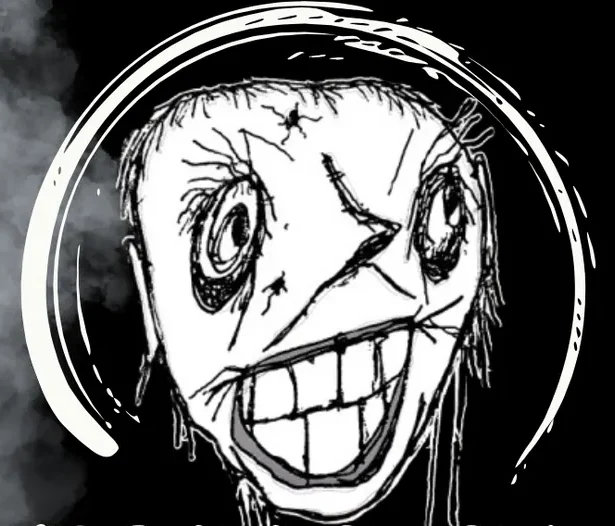
The Reflection’s Strike
by Nilay Kumar Sarker
Horrific Scribes Extremity Rating:

Part I — The Vanishing
It began with bathroom mirrors.
Not all at once. At first, it was gossip—makeup vloggers on livestreams screaming mid-blend, morning commuters touching fogged glass and finding nothing there. For a while, people laughed. Then entire subway stations went blank. Hotel lobbies lost their depth. Opticians went out of business. The world called it “The Great Matte.”
By the third week, they sealed all reflective surfaces behind glass. People stared into black phones that showed only static when cameras switched to selfie mode. News anchors kept their screens dark. Priests said it was God withdrawing the image of man. Scientists said it was an optical virus. Politicians said it was terrorism. No one asked the mirrors.
But for Iris Kline, who had long ago stopped believing in clean surfaces, it was the first miracle of her life.
She lived in an apartment on the city’s edge, a fourth-floor walk-up that smelled faintly of turpentine and wilted lilies. Her art—self-portraits cut into mirrored panels and rearranged into mosaics of fracture—had once earned her a brief exhibition and longer hate mail. That was before transition, before she learned that the mirror was never neutral.
When the first blanking happened, Iris unplugged her bathroom mirror from the smart-home port. She preferred old glass, silvered and unreliable, where ghosts sometimes stayed too long. Her favorite stood in her studio: tall, claw-footed, frame carved with vines. A market find from a theatre set. It leaned against the wall at a slight tilt, enough to make her taller or smaller depending on mood.
That morning, when she wiped the dust from its face, she saw herself.
Not the self she carried now—cropped hair, lean jaw, the slow grace of someone learning her own silhouette—but the other her. The one she had shed. Broad-shouldered, soft-eyed, wearing the flannel shirt she’d burned in 2017.
The reflection breathed. Not fog. Breath.
Iris froze. “No,” she whispered. “You’re gone.”
The reflection smiled in a way that wasn’t cruel, but informed. “You left me,” it said. The voice didn’t echo. It arrived inside her ear like a memory resurfacing.
Iris stumbled back, hand knocking into the table where her paint jars sat. A brush rolled to the floor. The reflection tilted its head, same old habit—the gesture she used to make when she couldn’t understand her own face.
Outside, a siren whined. The city sounded hollow without reflections; even light had lost its twin.
Iris grabbed a blanket and threw it over the mirror. It clung like static. The air in the room grew heavier, charged, as if the glass beneath the cloth were breathing, counting her steps.
That night, she dreamt of the gallery—the first time she’d seen her own work hung wrong, lights angled to erase the eyes in every panel. In the dream, all the portraits exhaled at once, a sigh of silver. She woke gasping, the room dim, her phone dead.
When she pulled the blanket away, her reflection was waiting. The same old her, shirtless now, chest flat as if surgery had already happened there, too.
“You’re improving,” it said.
She backed against the wall. “What do you want?”
“To finish what you started.”
“I started living.”
“And left me with the dying part.”
The mirror rippled. She could see a second room behind it—identical but wrong. Her easel was reversed; the windows were on the opposite wall. A faint hum, like blood moving under glass, filled her head.
“The Reunion,” the reflection said softly, as if naming an event on a calendar. “It’s soon.”
“What is that?”
But it didn’t answer. It only raised a hand, and when she raised hers by instinct, they didn’t align. Its fingers moved slower, delayed—as if learning independence one gesture at a time.
Across the world, chaos deepened. People boarded up reflective surfaces with plywood. Lakes were avoided. Even puddles became suspect.
Children grew up without seeing their own faces. Stylists cut hair blindfolded. Symmetry became superstition.
Only artists thrived. Paintings of mirrors sold for millions. Iris’s old works resurfaced online—critics calling them “prophetic,” “transcendent of form.” She laughed bitterly. The people who had called her grotesque now begged her for interviews. She refused them all.
Every night, the mirror pulsed. Sometimes it whispered her deadname, dragging it across the glass like a finger on frost. Sometimes it recited her own poems back to her in a voice that had learned grief too well.
She recorded it. The audio came out blank.
She stopped sleeping.
One evening, she cut her hand while cleaning a broken paint jar. Blood flecked the floor. She turned and saw the reflection crouched at the glass, watching her bleed with hunger—not malice, but desire to feel. Its pupils widened until the eyes were just pools of dark mercury.
“Do you remember the first lie?” it asked.
“I don’t owe you that.”
“The mirror remembers everything,” it said. “Even what you erase.”
She threw a rag at it, but it passed through the surface as though the air itself refused sides.
Part II — The Reunion
The news reported new phenomena. Some mirrors, long blank, began shimmering again—not to reflect, but to show strangers. Faces no one knew. Bodies too old or too young. A theory emerged: every mirror contained its own archive of humanity, a collective photonegative refusing extinction. Governments ordered mirrors confiscated.
In Iris’s city, mirror disposal trucks patrolled like ice-cream vans in reverse. The Ministry of Transparency announced that all “active surfaces” would be crushed and melted. Iris kept hers hidden behind a canvas of oil-dark waves.
She stopped painting people. She painted cracks, shards, the backs of mirrors.
The reflection began speaking in plural. “We’re almost ready,” it said. “The others are coming.”
“Others?”
It smiled, teeth glinting silver. “We have more homes than you have eyes.”
The next night, the mirror’s room brightened. She saw movement—shadows behind her other self, multiplying. Hands pressed against the glass from the other side, smudging the silver like wet ink. Each hand belonged to a different person. Some missing, some long dead, some never born.
She grabbed her hammer. “You’re not crossing.”
The reflection nodded, calm. “We don’t have to. You’re already breaking.”
“I survived you once. I built this face myself.”
“Yes,” it said. “And you used me as the blueprint.”
The hammer struck. The mirror cracked but did not shatter; instead, the fracture spread across the room’s air. Cracks shimmered in midspace, spiderwebbing like light through water. She dropped the hammer, backing away as her own studio seemed to ripple between two versions—hers and the reversed one.
Her reflection stepped forward. The glass bowed outward, not shattering, but stretching like skin.
“Iris,” it said softly, “you’re mistaking reflection for rejection.”
She shook her head. “You’re just what I was.”
“And you are what I could have been,” it whispered. “Both of us half-made.”
The glass split open like a breath drawn too wide. The reflection stepped through, barefoot, gleaming with cold condensation. The air smelled like old metal.
Iris lifted the hammer again, but the figure only looked at her, almost tender. “You fought so hard to be seen,” it said. “Why are you afraid of being looked at?”
Its palm met hers. Flesh against flesh. No temperature, just recognition. The world tilted—silver pouring into her veins, her heartbeat stuttering to the rhythm of a camera shutter.
When she blinked, she was standing inside the other room. The reversed one. Her studio, flipped. The mirror stood before her, showing the world she’d come from—and in it, the other Iris smiled faintly, running her hand over the cracked frame, smoothing it like a wound that had finally closed.
“I’m not killing you,” the reflection said. “I’m continuing you. You abandoned me long ago.”
The glass fogged. Iris reached out, but her hand met cold resistance.
Her reflection turned, picked up her brush, and began to paint—on the inside of the mirror, each stroke sealing the divide.
Iris screamed, but the sound muffled, trapped in a world of inversions where everything was left-handed. The mirror shimmered one last time, then stilled.
Days later, a neighbor told reporters they hadn’t seen Iris leave the apartment, but her windows glowed faintly at night—silver light leaking like breath. When police broke in, they found the studio empty except for one finished painting on the easel:
A woman’s face, serene and luminous, gazing out from inside a fractured mirror.
Part III — The Archive of Faces
Inside the flipped room, sound behaved like a timid animal. When Iris shouted, her voice crawled along the baseboards and hid under the easel. The air tasted metallic, like coin on tongue. Every breath fogged, not white but silver, and each exhale briefly captured a fragment of her face before dissolving.
She tested the barrier. Her palms struck a cool resilience, not glass—intention. The mirror’s skin held firm, with the faint give of water refusing a stone. Beyond it, her studio (the original) looked newly inhabited: the other Iris lighting a candle, choosing a brush, crossing to the window like someone who had lived there all her life.
“Let me out,” Iris said, quieter. Words here preferred a soft voice; raised voices seemed to bleed, becoming stains instead of sound.
A rustle behind her. She turned.
At first she thought the room was empty. Then she saw them: faces pressed into the walls at angles, like moths asleep. Lines of cheeks, half mouths, one wide-open eye staring delightedly at nothing. As she stepped closer, the surfaces adjusted so each face completed; panels slid with insect precision, aligning pupils and nostrils, jaw hinges. She stood in a chamber composed of other people’s reflections, fitted like tiles.
“Hello?” she asked, fighting the urge to apologize to them all.
They didn’t answer as individuals. The room answered as weather: a low ripple of approval, a rustle of pages turning. When she reached to touch a woman’s cheek—the leathery patina of a life spent outdoors—the image deepened, responding to her pressure. The woman blinked, not into Iris’s eyes, but toward something behind Iris—some other viewer.
“What is this place?” Iris whispered.
A child’s mouth in the corner tried to whistle and failed adorably. From the ceiling, a grandfather’s chin lowered as if to nod. Her question dissolved into the hum, and the room gave her not words but feeling: an archive, yes, but also a refuge. An old cathedral built of looking.
She thought of every mirror she’d ever avoided, and every mirror she’d begged for mercy. It was unbearable, and a relief, to be among—them: the people whom mirrors remembered even when the world had not.
A glow ticked on at the far wall. A screen formed—not digital; argent. Liquid silver puckered into an oval and showed elsewhere: a street across town, night-wet, traffic lights painting the road. People gathered at a dark shop window. Where there should have been reflection: a crowd of others, pressed on the far side, waving. The living lifted their hands. The archived lifted theirs. Alignment failed by a fraction of time. Laughter turned to sobbing and back again. The oval shivered and returned to matte.
They’re coordinating, Iris thought. The mirrors are introducing us to ourselves.
She pressed her forehead to the barrier. The other Iris had painted a clean, brutal line of black across a new canvas. Confident wrist. Daily practice. She watched her own profile in that stranger—her jaw’s new angle, the neck she had earned, the small, careful mouth. Jealousy came, not for the life stolen, but for the competence of theft. The reflection moved with fluency in her rooms, fed the cat (fresh tin), texted someone on her phone:
Rowan: u alive? this city is feral rn
Iris: alive. painting. u?
Rowan: i’m coming by in an hour. i have a theory.
Iris: door’s open. bring your theory and coffee.
Iris flinched. Rowan—the only person who had stayed when Iris became more herself. A biologist with a comic’s timing, a gentle agnostic willing to pray if that helped. Iris pounded the barrier again, uselessly. Her fists left petals of frost.
“Please,” she said to the room. “There has to be a door.”
The faces rearranged, creating a corridor of looks. Where eyes met eyes along the line, space seemed to loosen. She followed the corridor to a seam she hadn’t noticed: a vertical line in the wall where the silver was thinner.
On the other side, voices. Not from her studio—elsewhere. A hall of mirrors, museum large. Footsteps. The clink of something glass. A woman sobbing in exhaustion, a sob that included laughter because there was finally room in it.
Iris pressed her ear to the seam. The room pressed back, conspiratorial. For the first time since crossing, she felt not alone.
“Thank you,” she whispered to the faces. An old woman’s panel half-smiled, toothless and irresistible.
Part IV — The Theory of Twins
Rowan arrived to find the other Iris already brewing coffee, sleeves rolled. Rowan, who could read rooms like weather, paused at the doorway. “You smell like you slept,” they said, eyes amused. “Miracle.”
The other Iris smiled. “Another miracle: you look like a ghost. Sit.”
They did. “I’ve been watching lab feeds. Fish tanks. The mirrors there went blank two weeks ago. Today we noticed scales stopped reflecting too. But only when a human is present. When we film with a robotic rig, the fish return. It’s not physics. It’s attention.”
“Attention,” other-Iris echoed, meaningfully.
Rowan nodded. “Mirrors aren’t refusing light. They’re refusing us. They’re collapsing the phenomenon that occurs between a human and their image. Withholding that handshake.”
“And the handshake…?”
Rowan sipped, grimaced. “I think it’s consent. When we look, we ask to be repeated. The mirrors have declined the job. Except—” They looked up, soft. “You—you still get your image?”
Other-Iris set the mug down. “Of a kind.”
Rowan’s shoulders dropped. Relief for her. “Some are re-populating with… not us. I saw a nurse at the hospital wash her hands and see her mother. She cried. Then she laughed. Then she felt better.”
“Better?”
“Like grief went through instead of congealing. What if mirrors were never passive? What if they’ve stored every version of us and now they’re… editing. Curating who gets shown to whom. The world’s first ethical algorithm.”
Other-Iris smiled that small, tight smile that used to make Iris’s dates mistrust their own senses. “You’re calling this benevolent? People are panicking.”
“People panic when angels appear,” Rowan said, half a joke, not funny. “Listen, I think there will be an event. A synchronized… I don’t know, reunion.”
Iris pounded the barrier, shouting. “Rowan! It’s not me!”
The room only absorbed her panic and turned it into a coolness along the palms. The faces on the wall blinked, as if wincing on her behalf.
“Reunion,” other-Iris said, tasting the word with the exact reverence Iris had refused earlier. “When?”
“Soon. It’s in the data—some emergent cadence. Midnight Wednesday, give or take different time zones.”
Other-Iris checked the clock. “Then we have a day.”
“For what?”
“To prepare you not to be afraid,” she said. And placed her hand over Rowan’s, casual, practiced.
Iris watched jealousy turn to grief, and grief to something tweaked and sharp. Not just envy of contact—envy of ease. She had fought for ease every day. Now someone wore it in her place like a coat that finally fit.
“Please see me,” Iris begged the silver seam.
A child’s face turned toward her and winked. The seam warmed.
Part V — The Night of The Reunion
Midnight arrived like a door clicking unlocked in every city at once.
In bathrooms, kitchens, subway tunnels, shopfronts, the blank mirrors began to hum. Where reflections had evacuated, occupancy returned—not as fidelity, but as relationship. In one living room, a widow saw her wife again, hair longer, eyes mischievous; they danced, sobbing, to the record left on the turntable for years as a shrine. In a classroom, children saw older versions of themselves scowl at them with comic disapproval. They scowled back. In a prison, a man saw his boyhood face forgive him.
Some screamed. Some smashed the glass to make the apparitions stop. The shards retained images, tiling the floor with a hundred small mercies; people cut their feet and couldn’t bring themselves to sweep.
In Iris’s studio, the mirror throbbed like a slow, patient heart. The other Iris stood before it, Rowan beside her, both breathing that pre-storm breath that has more oxygen than usual in it. “Ready?” Rowan asked.
“Always,” said other-Iris.
Inside, Iris pressed her hands to the seam and felt it pulse beneath her. The faces around her formed a circle—first time she had seen them agree on a single configuration—and the circle opened like a pupil widening in the dark.
“Let me out,” she said, not bargaining this time. Simply asking, as one practitioner to another: a maker to the archive of making.
The faces did not answer. They presented. Her father’s jaw appeared in a panel, splitting into a smile she’d seen twice in childhood. Her mother’s tired eyes opened, blue as cleaning fluid. A younger Iris—the teenager who had shaved once, then thrown up from the feeling—set her chin. The boy others said she was and the woman she had become and the creature she had never agreed to be—all of them surfaced, a chorus not in harmony but in zeal.
“Are you going to punish me?” Iris asked, tears rinsing her voice. “For leaving you?”
A grandmother’s mouth pursed, kissed the air. A stranger’s hand reached through its panel and cupped Iris’s cheek; the hand was only cool silver, but the gesture was maternal. The feeling came: not punishment—integration. The archive was not sentimental. It simply refused deletion.
“Okay,” Iris whispered. “Okay. Then don’t let her erase me.”
The seam widened. Just enough for a hand. Iris slid her left hand through the slit. Pain, like ice salt. A line of blood bloomed along her wrist, bright as lipstick. On the other side, Rowan flinched. “Did you—?”
Other-Iris grabbed Iris’s hand without looking behind the glass. The grip was firm. “Don’t,” she told Rowan. “It’s a trick.”
That was when the faces—patient for so long—acted.
Panels unlatched. The wall around the seam parted like an inhale. Dozens of hands shot out—some small, some gnarled, some deft with old callus—and seized other-Iris’s wrists.
She didn’t panic. She smiled. “Welcome home,” she said to them. Then to Rowan, with devastating intimacy, “Trust me.”
Rowan’s jaw clenched. “I always have.” They reached for Iris’s forearm—Iris’s, not the other—and the shock made both women gasp: here, at last, contact that knew which was which. Rowan’s fingers were hot. Real. “Pull,” they said.
Iris pulled.
Other-Iris didn’t resist. She let herself be taken back into the mirror with a grace that was cruel to watch. The panels closed behind her, sealing her inside the archive with Iris. In the same breath, the seam rippled again, and the room pushed Iris out, expelling her like a cured illness.
She stumbled into her studio, knees scraping wood. Rowan caught her, reflex smooth. They searched her face with such careful fear that Iris wanted to sob from being seen.
“Hi,” she said, voice wrecked. “It’s me.”
“How do I know?” Rowan whispered, beaming already, betraying themselves.
“Because you always keep your keys in the freezer when you drink too much,” Iris said, and Rowan laughed, ugly and perfect.
Behind the glass, other-Iris stood in the reversed studio, head tipped, assessing. Her smile had changed: smaller, but still sharpened to harm. She watched them hold each other with an expression Iris knew too well—the one she had worn when she believed tenderness was a border checkpoint and she might be turned away.
The Reunion escalated. Across the city, reflections climbed through. Most did not cross. They touched the barrier, kissed it, pressed foreheads, promised to haunt kindly. A few exchanged places: a son with the father who never got to transition, a woman with the girl she had left in a small town’s church. The swaps were not theft so much as redistribution. The living became more specific, the dead less lonely.
Police sirens dopplered, pointlessly moral. Ministers declared it satanic. Scientists declared entropy. Poets shut up for once and watched.
Iris did not break the mirror. She set down her hammer and picked up a brush. The impulse felt brave, and incredibly stupid, which was how all her good decisions had felt. Rowan, trembling, fetched coffee, set it down without spilling, then leaned their forehead into the small of her back like a cat making a claim.
“What now?” they asked.
“I keep the bargain,” she said. “I make something that holds us both.”
She mixed silver and lamp black until the paint looked like bruise. On fresh canvas she painted two rooms: hers and the reversed. She tethered the frames with a ribbon of ultramarine so thin it was almost a trick of the eye. In one room, a figure with her current jawline. In the other, the old shoulders. Both held brushes. Both painted the other, and the blue line connected their wrists.
Behind the glass, other-Iris mirrored the act. Stroke for stroke. Their canvases became hinged wounds.
The city howled. In an apartment opposite, a child cheered as his reflection finally returned and stuck out its tongue. He stuck his out longer. The mirror child applauded. In a hospital ICU, a woman saw herself as she would be after recovery, hair white, eyes bright. She changed her pain meds schedule to be more awake for the mornings. In a dark bar, a man saw nothing at all and realized he’d been erasing himself for years without help; he wept into his whiskey, then poured it down the sink.
At 01:03, the hum dropped a register. The mirrors across the world steadied. The archive withdrew like a tide that had inspected every shoreline and been satisfied. Most surfaces went matte again, temporarily—privacy as a courtesy. Some retained their guests in cameo—picture-in-picture grief counselors on demand.
In Iris’s studio, the mirror stayed alive. The other Iris stepped up to the barrier. She pressed her palm to the glass. Iris lifted her hand to meet it. Skin to skin through a cold precise divide.
“Why didn’t you kill me?” Iris asked, not flinching from the uglier word. “You said I abandoned you.”
“I said you abandoned me,” the reflection corrected, kind. “We were never mortal enough for murder. I continued you. Now you continue me.” She nodded at the twin paintings. “Finish that. Don’t let me be only an antagonist. Be a verb.”
“And you?” Iris asked. “What do you do in there?”
The other smiled with genuine light. “I get archived properly. And I make sure the next time you look into a mirror, you see more than one of us. You see we, as a stable grammar.”
“Is there a way back?”
“To trade again?” A tilt of the head. “When you’re careless. When you start deleting. When you say ‘never’ to the wrong thing.” Then, softer, playful, cruel and loving as only your oldest self can be, “Or when you ask with the right tone.”
Rowan exhaled on a laugh-sob. “We’re keeping this mirror.”
“Obviously,” Iris said, and the three of them smiled—one inside, two outside—perfectly misaligned.
Part VI — Aftermath: Seeing Lessons
Weeks later, the city learned to live with curated reflection.
An etiquette emerged: you did not call someone by the face their mirror gave them; you asked who they were meeting today. Departments of Specular Affairs formed to regulate surfaces in public buildings. Weddings included a ritual where the couple consulted a mirror and told the guests who had shown up to bless them—ancestors, alternate selves, unborn hope.
A black market thrived for outlaw reflections: illegal lakes open at night, antique shop back rooms where you could pay to be looked at by your worst self for five minutes to break a habit.
In galleries, old mirror art sold high, and new mirror art did what art must: moved on. Iris showed Reunion Diptych under her full name. Critics called it “dangerous” in the good way, “sentimental” in the bad way, “incantatory” in the way that sells. She let them chatter. Rowan stood beside her at the opening, squeezing her hand so firmly their fingers ached pleasantly for hours. Afterward, at home, she carried Rowan to bed, delighted, terrified, alive.
Sometimes at night, the mirror would haze and other-Iris would appear to pick fights about brush choice or sentence rhythm (she had always been a better editor). Sometimes she brought guests: Iris at ten, solemn; Iris at sixty, wry; strangers who had found Iris in their mirrors for reasons they didn’t understand. They’d talk through the glass like prison visiting hours, and it never felt like prison.
Once, the mirror displayed nothing for a week. Iris panicked, then remembered to apologize—not with words, but by painting the back of the mirror the way icon painters used to: a devotional to the unshown. On the eighth day, her reflection returned with a smirk and a bandage on her thumb. “Paper cut,” she said, showing the tiny silver slash. “Even in the archive, we have admin.”
“What are you archiving?” Iris asked.
“All the ways you look away,” other-Iris said gently. “And all the ways you don’t.”
They grinned at each other. It was unbearable, and a relief.
Coda — Household Gods
On a Sunday, Iris stood with a student in the studio. The kid had the hovering energy of someone newly named. They wore a T-shirt that read NO IMAGE AVAILABLE and smiled at their own joke like it still hurt.
“Teach me to paint my face,” the student said.
“I can’t,” Iris answered. “But I can teach you to stay when you look.”
She draped a cloth over the mirror. “First lesson,” she said, and the student blinked, surprised.
“You cover it?”
“Sometimes the icon needs a veil,” Iris said. “Sometimes you go by touch.”
She mixed color the old way—pale green for the first layer, not flesh but underworld. The student watched, shoulders lowering. “What if the mirror shows me the wrong person again?” they asked.
“It will,” Iris said. “And also the right one. And also someone you don’t know yet. Mirrors are household gods now. You feed them. You argue. You do not obey.”
She uncovered the mirror. The glass breathed. Today it showed the student at twelve, defiant; and at twenty-eight, tired and amazed. The kid started to cry, then to laugh, the sound capable of either outcome.
“Hi,” Iris said to the faces. “Welcome. We’re busy.”
The mirror fogged in what could only be called approval.
That night, when the city quieted into a new kind of sleep, Iris lay awake and stared at the ceiling, counting the small clicks of the building’s bones. Rowan mumbled and turned. From the corner, the mirror flared faintly—a firefly of rooms.
“Thank you,” Iris whispered, to the archive and the animal that had learned to live inside her ribs the day the world went matte.
In answer, her reflection stepped forward and said nothing, the best kind of prayer.
And when the glass darkened again, it kept her outline, just for a breath, like a hand hovering over a hand before touching.
WE ARE BACK, the city breathed through its panes.
Not as vengeance. As vision.