Introduction and Guide: Coming Soon to a Civilization Near You
by L. Andrew Cooper and H.J. Dutton
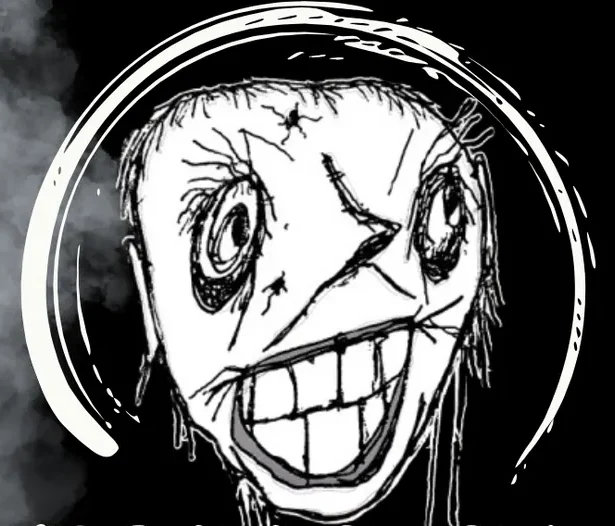
and Silas the Scribble Man, Emperor of the Wastes

“Some say the world will end in fire,
Some say in ice.
From what I’ve tasted of desire
I hold with those who favor fire.
But if it had to perish twice,
I think I know enough of hate
To say that for destruction ice
Is also great
And would suffice.”
–Robert Frost, “Fire and Ice”
The world was supposed to end at midnight. My (Andrew’s) father had stored some extra water and other necessities in his basement, but his efforts hardly qualified as prepping and wouldn’t save the family if and when civilization collapsed, leading to the widespread rule of primal savagery. He seemed rather amused by the concept; we all were. On New Year’s Eve, 1999, we waited for midnight.
Of course, nobody ever specified which midnight would be the one that led to chaos. Some family and I watched TV in a house in the eastern U.S. while, elsewhere in the world, midnight after midnight hit without planes falling from the sky. Y2K turned out to be what nowadays we call a nothingburger.
But the fear! The fear was real!
Jumping off from our first Special Exhibit, Holiday Hurlyburly, we at Horrific Scribes wanted to start with the idea of making New Year’s a horror holiday, horrific because the end of the year is the end of the world (as we know it, anyway). So that’s where we begin this second Horrific Scribes Special Exhibit, Coming Soon to a Civilization Near You: New Year’s Eve, 1999, with millennial anxieties and the scary situations that particular holiday (might have) engendered on display in the gallery “New Year’s Endings.”
So, we were beginning the New Year with The End, apocalyptic thinking, and we wanted to go forward. More apocalypses! Dreadful post-apocalyptic gasps for survival! Horrors that arise from the ashes of a once dignified human civilization!
You didn’t want to think happy thoughts about what lies ahead, did you?
Since the beginning, humans have dreamt of the end. Take a look at any culture’s set of beliefs, and the pattern is uncanny. The Canaanites believed the world operated on cycles that began and ended with cataclysmic battles between their deities. The Zoroastrians believed the world would last for 12,000 years, its story ending with a period of rebirth called Frashokereti, in which the wicked deity Angra Mainyu would be effectively kicked out of creation. The Egyptians believed the serpent Apophis would one day devour the sun and plunge everything into darkness. The Hindus have their Kalpas, the Hopi their Blue Star Kachina; the Aztecs had their Five Suns, the Vikings their Ragnarok; the Christians have their Book of Revelation. Remarkable how all peoples, regardless of geography or the vast gulfs between their beliefs, have believed so strongly in some global expiration date. Perhaps our uncertainty binds us. Humans are creatures that, above all, fear the unknown. No matter how violent our visions of Armageddon, they will never be more frightening to us than a future shrouded in fog.
How fitting, then, that our dreams of Armageddon often extend beyond the Armageddon itself. Determining an end, however fantastical it may be, may give us a sense of comforting certainty. Though cycles of rebirth and “great resets” are by no means a new concept, the idea of the post-apocalypse is relatively recent. Le Dernier Homme (1805) by French author Jean-Baptiste Cousin de Grainville is widely considered to be one of the earliest renditions of the post-apocalypse in print, followed by Mary Shelley’s The Last Man (1826), an English translation of the same title. More recent works such as Stephen King’s The Stand (1978) and Robert McCammon’s Swan Song (1987) paint a brutal yet ultimately optimistic vision of life after the apocalypse, one in which humanity fights tooth and nail to piece itself back together. By comparison, futures in books and films such as Mick Jackson’s Threads (1984) and Cormac McCarthy’s Pulitzer Prize-winning novel The Road (2006) make extinction look like a mercy.
If the concept “apocalypse” stops shy enough of total annihilation to allow for post-apocalyptic strife, with the apocalyptic event(s) being the end of civilized order rather than extinction, new orders may arise… and the majority of imaginations these days seem to suggest that such risings aren’t likely to be good news. Our final gallery in this Exhibit, “Dystopian States of Being Post,” takes a brief look at dystopian horror, with one uncomfortably lighthearted (but deeply twisted) tale of a suburban household familiar in all ways but one (but that one makes all the difference) and another tale that chronicles civilization’s fall and what arises after. The dystopian shows how human values–and the value of the human–can change radically under the norms of a new, post-post-apocalyptic order. The vicious conditions of post-apocalyptic survival may pass, but the viciousness remains. The broken world will not mend. Only horror endures.
So, strap on a smile and enjoy! Think of this Exhibit as an emotional rehearsal. After all, it’s Coming Soon to a Civilization Near You.
FEATURES IN THE EXHIBIT
Gallery One: New Year’s Endings
“Prepped” by Kirsty Syder Doomsday prepping, a subculture that first took root in a post-WWII era world, entails exactly what its namesake says. On top of the meticulous stockpiling of supplies, those deep into the habit of doomsday prep have made a lifestyle out of cultivating the survival skills necessary to outlast a societal collapse. Doomsday preppers are (sometimes unfairly) associated with intense paranoia, distrust, social withdrawal, and general instability. This story explores what happens when a “prepper’s” paranoia afflicts not just his own life, but that of his family.
“Smashing in the New Year” by Lene MacLeod. MacLeod’s story has the same starting point as Syder’s, New Year’s Eve, 1999, and anxieties about societal collapse from widespread technological failures. However, it goes in a very different direction. The characters don’t have to worry about the end of civilized order, not in a way people would expect. What if the order of identity, what separates one person from another, falls apart instead? What if, when the millennium ends, time itself becomes disorderly? A new year can hatch apocalyptic chaos in ways that defy rationality, as the surreal turns of “Smashing in the New Year” demonstrate.
“January” by Adam Murray. Like “Smashing in the New Year,” this story recounts an apocalyptic rebellion of time itself, which refuses to advance when the New Year is supposed to arrive. January isn’t the start of a new year but a beginning that fails to begin, a surreal thwarting of human expectations–and presumptuousness. Rather than something new, something old has come to correct our assumptions about time, modernity, and the human order. If the new year itself can be an abortion, we’re more fragile than we ever imagined. “January” approaches prose poetry as it drives us deep into cosmic horror.
Gallery Two: Apocalypse Presently
“Vote Abyss” by Barry Charman. The traditional image of the world’s end is one of chaos. Abrupt collapse of institutions, mobs smashing in windows, reasonable people foregoing all sense of order in the face of their imminent deaths. This image isn’t necessarily accurate. As animals, our responses to threats of a global scale are flawed. Our fight-or-flight response, so key to our survival, can’t handle a threat that isn’t literally on our doorstep. So, when this story’s heralds of the apocalypse creep into everyday life in the form of hooded madmen, its characters do their best to pay them no mind. Nothing out of the ordinary, everything’s fine… until it’s very much not. Cosmic creepiness from a very different perspective.
“Dysmenorrhea” by J.S. Douglas. Some pain is so intense, it feels like the world is ending. This story starts with an ordinary scenario–a grocery store clerk doing her job–to begin addressing a topic that is common (about half of the human population, in fact, experiences it) but is nevertheless extraordinary due to ancient patriarchal taboos, and their extension into contemporary prudishness: menstruation. The main character in this tale suffers such intense period pain (or dysmenorrhea) that she retreats to a closet where she can hide and wait for relief, but when she emerges, she finds the world has somehow experienced devastation akin to her inner turmoil. Like “Smashing in the New Year,” this story becomes increasingly surreal as it blurs the line between internal and external states, personal and global apocalypses.
“Sleepwalkers” by Edward Newton. Fear of civilization’s apocalyptic collapse is fear of anarchy, the loss of order, of control. In Newton’s story, not only does civilized order collapse, but it collapses because people can no longer control themselves. Basic facts about humans: we must breathe, we must eat and drink, and we must… sleep. In “Sleepwalkers,” when people fall asleep, they turn into deranged, superhuman killers. Everyone is a threat, and no one is innocent. Newton takes the idea of an apocalypse of humanity gone feral to its limit and spins it into an exciting chase with a cinematic style, harsh setting, and gritty characters. Buckle up for a dark ride through human chaos.
“Chrysalis” by Emmie Christie. At the beginning of this story, a world is ending, winding down–individuals seem to succumb to entropy as stars disappear from the sky. The initial phenomena are frightening and grotesque, but as a whole, the story is not; as it progresses, something bizarre happens: the apocalypse becomes meaningful. Apocalyptic dark sci-fi and horror tend to be bleak and nihilistic (like “Vote Abyss” and “Sleepwalkers”), but “Chrysalis” actually offers a strange kind of hope. It’s a good bridge to the next gallery because it goes a little beyond the apocalypse and shows what comes from it, something its opening paragraphs might make hard to foresee.
Gallery Three: Post-Apocalyptic Resistance
“Lake Fame” by Jan-Andrew Henderson. Too often, post-apocalyptic fiction leaves the immediate reaction to worldwide collapse (mostly) up to the reader’s imagination. Either the broken world we see is one that’s had years or even decades to take shape, or we get a brief glimpse of the catastrophic moment/day before jumping forward in time to that grisly new normal. Very rarely do we get to see what’s in between those two in its full glory, that whirlwind of emotions that unfolds as everything we’ve grown accustomed to over the last millennium is violently torn asunder. “Lake Fame” is a brilliant example of post-apocalyptic storytelling that fills that gap, a story about an immediate aftermath the catalyst of which is devastatingly personal.
“To Dream of Better Worlds by Grigory Lukin. Lukin’s “Dream” story is a layered nightmare about technology and “progress,” both of which might be important to save humanity and might in fact be lethal to it. The first sentences tell us that two anthropologists on a space station “at the end of history” have awakened as if released from a time capsule to discover Earth dead. They have the tech, however, to send warnings from their post-apocalyptic vantage back through time–into people’s dreams–to avert the apocalyptic, technology-enabled catastrophe. Can they use technology to avert what technology caused? Darker, perhaps, than the deadness of Earth might be the fact that Earth’s death should be avoidable, at least from some point on the timeline. Or is the idea of a planet strong enough to survive humanity just a dream?
Gallery Four: Dystopian States of Being Post
“The Basement” by Andrew Welsh-Huggins. Dystopian fiction is, at its core, anti-authoritarian, so it’s no surprise that the bulk of fictional dystopias entail dire circumstances enforced onto the populace by a sociopathic regime. Whatever venom has pervaded the common man is not posed as a result of their nature, but rather as a result of nurture at the hands of an antagonistic setting (e.g. Cyberpunk 2077). It’s for this reason the following story is so effective in its horror. What if the creation of a dystopia never required a forceful, guiding hand in the form of a regime? What if we alone are just the right amount of evil it needs?
“Final Confession from the One-Woman Department of Mind Control” by Phoebe Barr. This story shows civilization’s fall and the rise of a dystopia from the perspective of one woman who considers herself to be the catalyst, if not the cause, of the end. It’s a bleak, bleak lesson, as well as a warning, about the road to Hell being paved with good intentions, intentions that spring from desires to avert trauma but only multiply it. Barr gives us a showstopper in more than one sense, a tale that’s a full view of an apocalypse from its beginnings to its ongoing aftermath, an apocalypse for an individual as well as the world. The vision is devastating and particularly poignant in January 2026. Enjoy our downward spiral!
| SPECIAL EXHIBIT 2: Return to the Order of Attractions | Begin Coming Soon to a Civilization Near You, Gallery One: New Year’s Endings and read the first attraction, “Prepped“ |