Introduction and Guide: Holiday Hurlyburly
by L. Andrew Cooper and H.J. Dutton
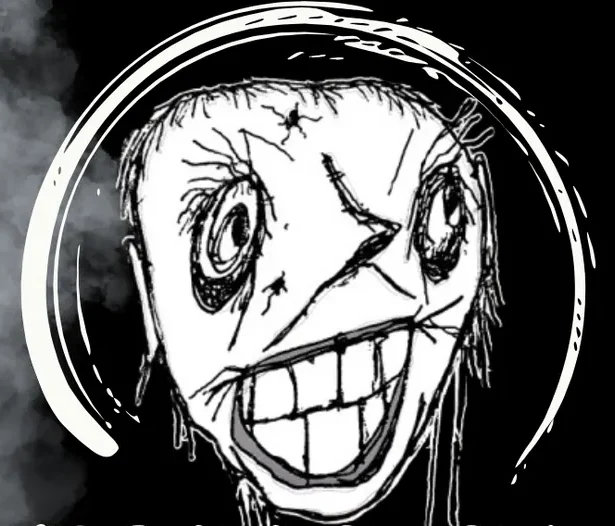
and Silas the Scribble Man, Witchfinder General

Welcome to Holiday Hurlyburly, the first Horrific Scribes special Exhibit, designed to bring your holiday season a little more horror! From a U.S. perspective, the holiday season spans from Thanksgiving in late November to New Year’s Day on the first of January. Most English-speaking cultures have similar holiday seasons during or close to December; depending on which part of the globe you’re in, when this season begins and ends often varies, but popular observances such as Christmas, Hanukkah, and Kwanzaa ensure that December celebrations are a global phenomenon. Other observances stretch this festive calendar. Those who celebrate Diwali, for instance, began their festivities on October 8 of this year and concluded them on October 20. Regardless of its duration, what the holiday season represents in both a cultural and philosophical sense is near-universal. It is a time of peace, community, joy, and merrymaking.
At least, that’s how most modern sensibilities perceive it. Due in part to its popularity and commercialization in the U.S. and American global influence, Christmas is perhaps the biggest focal point of “the” holiday season around the world. While it retains religious significance in much of the West, in Japan, for example, it is extremely popular but almost entirely secular. Beginning sometime in 4th-century Europe, the early iterations of Christmas entailed a blend of Roman celebrations such as Sol Invictus with Pagan practices such as evergreens and gifts. In this process, syncretism, different cultures, religions, and/or philosophies merge, often recontextualizing facets of those customs. So, contrary to popular belief, Christmas was not originally a Pagan holiday, but it did make use of Pagan customs in its festivities (the Welsh “Mari Lwyd” lore and tradition, addressed in this Exhibit by a story of that title, likely blends Christian and Celtic iconography and interests). Most of these customs and those absorbed in later centuries remain (somewhat) intact today. Some aspects of the holiday’s mythology, however, have all but disappeared from mainstream Christmas traditions, particularly the ones that contrast with the jolly, sanitized holiday we’re now familiar with. Some that remain, such as Krampus and Belsnickel, represent a dark side of Christmas that was much more prevalent in medieval observances.
The arrival of modernity made the darker, more medieval forms of Christmas the stuff of old nightmares, but Christmas retained fragments of its scariness in the form of a storytelling tradition. Few people realize that the modern means of sharing dark tales–the horror genre–has its roots in Christmas. The birthday most agreed-upon by scholars of the Gothic, the tradition of writing from which contemporary horror grew, was December 24, 1764, when Horace Walpole seized the holiday mood to publish The Castle of Otranto. Originally passed off as a “found” medieval manuscript, it’s a wild tale of ghosts and incest that would have been perceived as terribly transgressive if people had known an “enlightened” individual had written it. Walpole likely never imagined his story would found a type of literature that would endure for centuries, one with a lasting connection to his publication’s timing.
But horror, and Christmas horror in particular, would last. The best-known Christmas horror is undoubtedly Charles Dickens’s A Christmas Carol (1843), though it’s been turned into such family fare that few now think of it as horror. In its time, it was not an anomaly but part of fiction that fed yearly Victorian appetites for Christmas ghost/horror stories. Writers from Sir Walter Scott early in the 19th century to Sir Arthur Conan Doyle around the end of the century participated, with short form masters such as Elizabeth Gaskell and Charlotte Riddell participating in between. In later years, the tradition spilled into other media. Christmas-timed horror films rose to popularity along with the cinema itself. The original box office smash Scream, with no holiday connection, was released December 20, 1996. More recently, smaller Christmas-themed horror such as It’s a Wonderful Knife (2023) has found success, and since Terrifier 3 broke box office records in 2024, some of its creators have tried to do the same with a reboot of Silent Night, Deadly Night, recently released on December 12, 2025.
Christmastime, then, is not and has never entirely been a time for joy and merriment: it is a time for darkness and drear, ghosts and monsters. The histories of other festive holidays conveniently scheduled around the time of year when, at least for a significant portion of the planet, almost everything in nature is dead or dying often reveal similar hidden… or not-so-hidden… dimensions of darkness. One of our stories in this Exhibit reflects on a tradition unconnected to Christmas; others are all connected (publications reflect the submissions pool) though treat the subject in different ways. While we at Horrific Scribes are carrying on the tradition of holiday horror, we still aim to be provocative, scary, and strange; to be traditional by being untraditional, which is to say by being transgressive like Horace Walpole was in his day; by delivering holiday horrors that give you some things you do expect and some things you don’t. We give you uproar! We give you commotion and chaos! We give you HOLIDAY HURLYBURLY! The upset to which “hurlyburly” refers can’t help but summon the witches from Macbeth, who refer to meeting again “when the hurlyburly’s done, when the battle’s lost and won.” Have a wicked good time confronting the nastiness in our first Special Exhibit. We’ll meet you on the other side.
FEATURES IN THE EXHIBIT
“Non-Denominational Office Gathering” by Mike Rusetsky. We open our December holiday journey with an event as familiar to the average American as their decorated living room: an office party. To some, these annual gatherings are barely tolerable, social obligations to be endured. Others, such as this tale’s event-coordinating protagonist, live and breathe these productions. When this story’s protagonist learns her boss is banning Christmas imagery in the workplace, she hatches a plan to make this year’s party the most memorable one yet.
“Slippers from Hell” by Lene MacLeod. “Slippers from Hell” takes the idea of malicious gifting in “Non-Denominational Office Gathering” a few, um, steps further. Coal in the stocking is a threat of comeuppance for naughty children that survives from Christmas’s ancient dark side in contemporary conversation but seldom in practice. This story seizes on the idea of an older relative giving gifts that punish and amps up the darkness by making the punishment so disproportionate to the crime that it yields disturbing (and unusual) body horror. Like the previous tale, however, this story’s take on holiday-driven vengeance has a delightful edge of sick humor.
“Mari Lwyd” by P.N. Harrison. Though Mari Lwyd isn’t that obscure of a figure in Europe, she is elsewhere. This ghostly horse skull on a stick has stalked village streets in South Wales for over two centuries. Paraded from door to door by a band of (likely drunk) adults in costume, the skull engages homeowners in rhyming games known as “pwnco.” The homeowner, upon losing, must grant her entry to the house, upon which she will eat their food and drink their beer. Then it’s off to the next house to repeat the mischief. Despite her appearance, the grey mare is more of a jolly troublemaker than a threatening figure. This story’s iteration–as you’ve already guessed–is not as benevolent. If this ghostly horse skull doesn’t get her gifts, she isn’t so jolly.
“When One Door Closes” by SJ Townend. At least at first, this story might seem to be about a ghost with a mischievous, playful sense of humor because when the main character opens or closes a door, even a door on his Advent calendar, another one somewhere closes or opens in response. As with the preceding stories, however, something more disturbing lurks within the character’s situation, something to do with repressed tensions and holiday traditions, and “When One Door Closes” takes us deeper into the demented psychology of December holiday thinking that we only glimpse in “Non-Denominational Office Gathering” and “Slippers from Hell.” Its humor ranges from the light and farcical to the bitterly ironic while it still stirs up scares.
“Ghosts from a Christmas Carol” by Ian Hunter. Even though the speaker “struggl[es] to recall that classic tale,” this poem, taken from the set Three Distorted Visions, seems to evoke the ubiquity of Dickens’s A Christmas Carol. Dickens’s story has, at least in some places, become inseparable from the holiday, so much so that some cities have annual stage productions in major venues (which vary story elements slightly to reward returning viewers). Less elaborately, one could easily imagine, as this poem does, images related to the story showing up on a wall in a random public place (a pub, the author informed us) due to their widespread recognizability. Despite the familiarity of the images, they still have power… as does Dickens’s story… and the horrors of accounting for one’s own life that Dickens makes Scrooge face have become no less horrible.
“Christmas Angel” by Jon McGoran. The holidays, despite their positive connotations, are, from a writing standpoint, a perfect stage for somber atmosphere and even tragedy. Again, the wintry conditions for many celebrating this season offer harsh juxtaposition to the warmth of the festivities. The fear necessary for a good horror story might seem antithetical to such somberness and sadness. After all, fear is a stimulant, whereas sadness is a depressant. The following story demonstrates how the right hands can blend extremes of both emotions in an exploration of a dark dimension of Christmas’s contemporary emphasis on family connections and obligations.
“The December Booth” by Iluka Chayan. Folk horror entails what its title suggests: folklore. Think old wives’ tales, superstitions, ancient and unheeded mythologies. Despite its broader implications, the most broadly familiar folk horror stories center around European folklore and the communities that revolve around it. What a treat, then, that author Iluka Chayan has contributed a masterful example of Indian folk horror to this Exhibit. This story is likely the Exhibit’s most frightening: quiet dread mounts slowly, piling on the suggestions until the full, haunting picture appears.
“In the Bleak Christmas Market” by Thomas C. Mavroudis. In this story and others Mavroudis has published with Horrific Scribes, the author advances his tale with an unusual emphasis on cumulative and transforming description over conventional story beats involving physical action. Thus, we flow with concepts and images, first a very rapid description of deaths and their aftermath and then a slower journey with survivors craving normality in an atmosphere of rich regional holiday detail that is nevertheless unstable… and feels more and more like a mythological underworld. Note the date (“longest night of the year”) and, well, pomegranates. It’s masterfully crafted and all very dark and unsettling because it never stops feeling personal.
“Snow Angel” by Amy Grech. Holiday storytelling wouldn’t be complete without a story that rips your heart right out of your chest, throws it on the ground, and stomps on it. Mavroudis’s “Christmas Market” is bleak. Grech’s “Snow Angel” is super-bleak. This story is a family drama extreme enough to qualify as horror. Its hurlyburly is inward, psychological and emotional chaos. It transgresses and questions the very nature of transgression: how do you determine whether and when doing the unthinkable might not only be right, but actually a gift? Merry Christmas!
| SPECIAL EXHIBIT 1: Return to the Order of Attractions | Enter Holiday Hurlyburly and read the first attraction, “Non-Denominational Office Gathering“ |