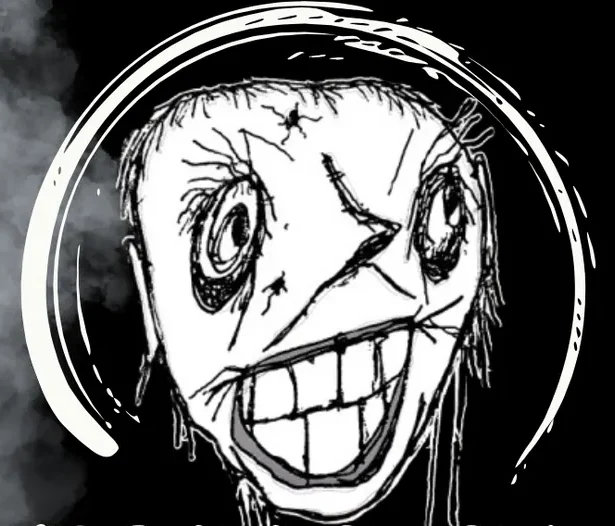
The Artistry of Poteauje
by Jeffery Scott Sims
Horrific Scribes Extremity Rating:


The cops insisted that I tell them everything I knew about it, that I hold nothing back no matter how insignificant—the truth, the whole truth, etc.—so of course I told them next to nothing of consequence. Those stolid, unimaginative types wouldn’t have believed a word I said, any story of mine approaching honesty surely leading them to doubt my innocence or sanity. I peddled the idiot’s version, a bland, vacant-eyed tale that thoroughly satisfied them. It has become the accepted account, which suits me fine. To this day I haven’t the slightest idea how to prove any other.
I’d never heard of Eugenio Poteauje until the afternoon he came onto the studio grounds. Back in those days we were still cranking out silents, but change hits the movie industry fast, and all the big noise involved the upcoming tidal wave of talkies. My job was to manage productions, not make strategic decisions, so I went with the flow, taking orders and paychecks as they came my way. I had to put up with a lot of crap, but it was better than working a real job.
This time J.W. swiveled his fat cigar at me and mumbled around it, “Howie, go meet this Poteauje fellow. He’s one of those blasted foreigners we got to get on our team. It’ll be a feather in our cap if he directs a flick for us.” I bobbed my head, replied “Great, J.W.,” and departed his plush office, trooping across the crummy industrial-looking lot to the guard’s booth at the main gate.
There the flunky fingered Poteauje. I introduced myself, welcomed him in, ushered him along the trashy “street” between the stage warehouses, and we gabbed, me doing most of the talking. “Pleasure to have you aboard—great honor—great future—keen to work with a master.” Like I say, I’d never heard of the guy.
I took him on a tour of the relevant work areas. He seemed unimpressed, sniffing sneers at our deluxe equipment, smirking at the acting sessions he saw. He didn’t say much until our sit-down in the cafeteria. Eugenio Poteauje was very tall, rail thin, nattily attired in Old World fashion, with bony-sharp pale features beneath scanty, prematurely white hair, and eyes both bright and black, kind of glossy and glowing. He gestured constantly with spidery fingers as he spoke in an accent I couldn’t quite identify.
“It is my pleasure,” he said after curtly dismissing some commonplace utterance of mine about the mechanics of the trade, “to have survived into an age when marvels can be created without fear, even acclaimed for what they are.” I came up with another commonplace about him not being so old. Poteauje grinned, replying, “Ages come and go, but this one suits me best. Always I have desired to excel at magic, to burst the bounds of mundane reality. It is my passion. So, this era affords me the opportunity, unfettered by oppressive societal restraints. These movies cloak genuine magic. I can practice, with due care, as I wish, summoning those marvels, and learning as I conjure images of the fantastic.”
Yeah, right. I said, “Well, concerning those restraints, don’t forget we’ve pretty mean censors in this country. We have to kowtow when they bark. I’m sure they were more liberal where you hail from. Where is that?”
“I last directed in Germany,” was all he said.
After seeing that the boys got him set up for proper living, I cut him loose, diving back into my own affairs, which didn’t include him until he actually got into action. I heard of him once or twice. Nicky the PR flack even sought me at one point, begging crumbs of info. “What’s with this guy? I can’t nail down much of anything on him, where born, folks, education, nothing. He won’t talk. I’ve only dug up junk on his career, such as it is. He showed up in the biz overseas from nowhere, made big splashes in a few morbid flicks, and as I hear it, he got himself booted from Hun-land. Come on, Howie, you yacked with the bloke. What’s the scoop?”
There wasn’t one, so far as I knew. There it rested, for me, until we got the cameras clattering.
The studio gave Poteauje a routine crime whodunit, Night Falls Black, as his first dance with us. Second tier cast, no big names, but a larger than usual budget because the director was a hot shot. He made most of the money. One of our standard henchmen would have popped out a gray, jaunty mess, but Poteauje agonized over every shot, calculating angles and lighting schemes, directing stuff rather than actors with mathematical precision. I gained the impression he didn’t care for the people. He didn’t especially get along with them. He was brusque and cold; they responded with warm muttering and, behind his back, expressions of loathing. I figured they couldn’t abide foreign attitudes. I, of course, rolled with the punches, nodding and smiling and coping with the crises he identified or imagined. The skills that originally landed me the job made sure I retained it.
When I say mathematical precision, I really mean it. Poteauje carried around a worn notebook jam-packed with fancy math—lots of numbers plus symbols I’d more than half forgotten from high school—that he constantly scribbled in. Also, he toted a sheaf of rolled up, old brown papers to which he’d refer at odd moments. When he spread one, I took a peek, saw another carpet of symbols, these less like math, instead resembling prehistoric Red Indian drawings I’d seen painted on rocks in desert canyons. What it all meant wasn’t my business, but he seldom made a move or a decision without consulting these strange files.
Expenses, shooting schedules, all the items that really count, the ones the front office screams about, he kept under perfect control. In most cases, Poteauje hammered out his film like the solid craftsman he was meant to be. Where this one went weird concerned the murder scene. I say “the” even though the story contained a clutch of nondescript killings, typical for the type. The handling of this particular scene startled me, disturbed as this brand of chuff normally didn’t.
This time, the second banana female recoiled across a stagey room menaced by a masked, ax-wielding fiend who had already bumped off a few extras, all about a missing will and who was supposed to inherit, probably the last relative standing, etc. Anyway, Poteauje transformed this scene into something freakishly different from the mediocre presentation in the shooting script. This girl, not quite so good-looking as the heroine, was meant to flail her arms, roll her eyes, open her mouth wide, then exit stage right, bad guy close behind, and the image iris to black. So written, commonplace rubbish in one take, only Poteauje didn’t film it that way.
He set it up with inordinate, painstaking care. He shot it practically all by himself, first chasing his technicians from the line of sight. He kept me close by, solely so I could pass snapped commands on to the grips. That’s how I saw as much as I did.
The setting a bed chamber, the bed itself bathed in harsh Klieg, the surroundings inky black. Poteauje maneuvered the big, chunky electric camera, rolling it from one angle to the next, a series of quick shots, of a fashion popular decades down the road. What did he shoot? The girl being slaughtered with the ax, no holds barred. Poteauje disappeared into the darkness, the actress hurtled into view, flung onto the covers, and from the deep shadows the bright blade slashed again and again, blood spraying to the accompaniment of chilling screams. Crazy as all this was, what shocked me most at the moment was the total nudity of the girl, a definite no-no.
But the murder appeared absolutely real. No expert I on that, yet I instinctively started forward, shocked, to intervene. Immediately Poteauje reappeared, shut down the camera and switched off the stage lights. He strode forth from the gloom.
“That is a wrap,” he said with a creepy smile.
I said nothing. He stared at me, also in creepy fashion, and I turned to ice on the spot, needles of chill all over. Time paused; I tried to shake off the numbing mood, would have pushed past him, only at that moment the actress joined him from the darkness. Sylvia Thatcher this was, one of several slight blondes used for supporting roles in those days. If you know Hollywood history you remember that name, and based on that you can guess where this is all going. It wasn’t clear to me right then. What counted on the spot was the evident fact of her present health, for I’d just seen her cut to pieces, and now here she stood intact and happy.
Not only happy but engaging as well. “Why, it’s Howie! Howie dear, I’ve heard so much about you. Mr. Poteauje says you’re the greatest,” and so forth. In every way a pleasant conversation, putting me entirely at ease. No, scratch that, exciting me mucho. “It’s getting late, Howie, and I’m hungry. How about treating me to a bite, Howie? We can take my car.”
Said Poteauje, “Go ahead, Howie. I can finish here alone.”
I felt mighty light-headed at this stroke of luck. It dizzied me. The evening passed as a dream. Afterward, flopping in my apartment, I couldn’t fully reconstruct the sequence of events. Sylvia and I went out to eat—of course we did—ate at—never mind that detail—then we relaxed for a drink—must have—somewhere. Finally, I dropped her off at her pad, down along—I’m not spiffy with addresses—at her place. Then I came home. I remembered that clearly enough.
Sylvia had filmed her final scene for the movie, so no one was surprised that she didn’t show up at the shoot again. I had thought, foolishly, that she might check in with me. By the light of day, I doubted she would and grew puzzled that she’d shown me any attention at all. Who was I to her?
Well, she was someone to somebody, and only a few days passed before her nonappearance everywhere gave rise to comment, with concern hard on the heels. Sylvia Thatcher vanished, friends and associates at a loss, the authorities called in. Detectives went to work, backtracking in time, and—what do you know?—the trail led right to Poteauje and me.
Of course it would. I cooperated. Why shouldn’t I? I told what I could, only to learn that no one had seen her since that final gory shoot. Not terribly important, I’d have thought, except for the subsequent development. A few more days altered everything.
They discovered Sylvia in a drainage ditch on the outskirts of town. Found most of her anyway, she having been artfully cut up and gouged… to the death, if I need point that out. Somebody had performed an expert job of killing her, and then—I don’t know how the doctors established this—drained most of the blood from her corpse.
This cheery news sent the cops storming back to me and our august director. Awfully suspicious chaps, this I learned the hard way when they grilled me, roasting over open coals, about the striking similarity between Sylvia’s ultimate scene and her ultimate fate. No fools, they. The facts, as understood, boiled down to me being the last person to see her alive… or claiming to do so. Boy, they for sure checked me out. Their insinuations gave me the sweats. Poteauje received the same treatment in the interrogation cell down the hall from mine. Our combined testimony convinced them that we hadn’t gruesomely sacrificed Sylvia in order to lend that shoot a heightened air of realism.
The police demanded the relevant film footage, and they got it. I ran it for them.
With that the investigation rushed off in other directions, and as any student of Hollywood history knows, Miss Thatcher’s murder remains unsolved to this day.
I told the ostensible truth. I didn’t hold back anything concrete, anything I couldn’t swear to, cross my heart. My conscience should have been clear, fine, great, only that wasn’t all there was to it. I felt something radically wrong about that night after the shoot. I didn’t recall it as having lived it. Oddly, it struck me more as a movie I’d watched. Suppose—just suppose—Sylvia hadn’t gone out with me. Where did I get the idea? Clawing through the cobwebs of memory, I grasped differing images: the glaring, glowing eyes of Poteauje, Poteauje busy in shadows, wrestling with a large, cumbersome object, Poteauje driving me home. Whichever direction recollection poked, I ran smack into Poteauje, and only him.
I didn’t think the man would tell me anything, but the moment came, in private, when I accosted Poteauje, demanding answers. To my astonishment he proved quietly, calmly, brutally frank.
We sat in the den of his leased cottage, a couple of blocks down from Pickfair. The interior suggested an antique European milieu. Poteauje smoked from an ornate hookah while I only sipped from my offered glass. Confronted by questions, veiled accusations, he initially responded with complaints.
“Forgive me, Howie, but I do not care for your country’s movie system. Too much the spirit of the assembly line, too little of the artistic bent. These censors of yours are fools. They have cut my film, removing that same scene, so vividly structured, reverting to a stupid fade. Fortunately, Mr. Pierce—he says call him J.W.!—I will not, yet he informs me the film will be dubbed as a talkie. I accept that. I shall place at the appropriate moment a blood-curdling shriek.”
He drew on the hookah, exhaled long and slow. “Nevertheless, I shall return to Europe, I think. There they ask fewer questions. It was not always so. Back in the old days…
“Now you ask, Howie. I will tell you. Why not? No one will believe you, yet it amuses me that you should know. My needs are simple, my desires complex. I must have blood, that I may indefinitely extend my life. There, Howie, the big secret you seek. Long ago—very long ago—I trod the difficult, though gratifying path toward immortality. The ancient magicians found the way. Most shrank from the cost; not all, not I. I accepted the price, that I might continue my never ending studies. For me, blood is medicine. I count Miss Thatcher as my latest dose.
“Do not look so bewildered, Howie. Your curious experience, that charming outing with the young lady, constitutes the weaving of my spell, the fruits of my arcane arts. Genuine magic triumphs over commonplace reality, expands and breaks the boundaries of the crudely mundane. I have delved to the limits of the mystic sciences. These days I make use of the wonders of cinema, both as cover for my supernormal researches, and as means to advance my ethereal capacities.
“I took the blood, you watching all the while, and then clouded your mind, creating for you a convincing alternative actuality. I realize now that my little play did not persevere in your memory. You bring me useful knowledge. Next time I shall endeavor to refine the method so that subjects such as you can never doubt. Imagine the power of perfect illusion! I need never fear.
“That is all, Howie. You know. Do with the truth as you will, and good luck to you.”
That was all. I could say nothing, nothing further to him, nothing to anyone. Any corrected statement of mine would be damaging only to myself. The case of Sylvia Thatcher remains officially unsolved to this day. So many laughable theories since, pounded out in popular Hollywood histories, I living with the actual, impossible answer.
I never saw Poteauje again. He did go back to Europe, his name mentioned occasionally, eventually disappearing from view during the tumultuous years that followed over there. That was all so many years ago. Lately I’ve been hearing about this upcoming Italian director of sleazy, push the envelope thrillers, giallos they call them, apparently frightfully realistic patchworks of horrendous murders. I don’t recognize the guy’s name—that would be asking too much—but I’ve seen a photo of him. Hard to tell, with that beard and lanky black hair, but the eyes tantalize my memory. I could swear… but I won’t. What would be the point?