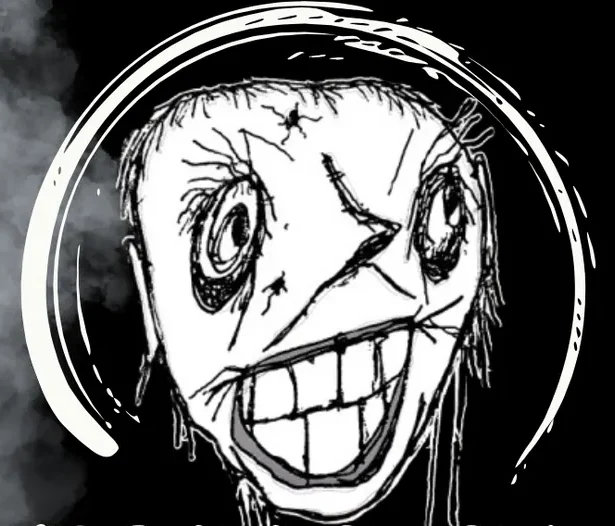

After Chambers: Three Stories Featuring the Yellow King
by H.J. Dutton
Clocking in at over 11 million viewers, season one of True Detective (2014) was HBO’s most successful show to date and a major turning point for television as a medium. Its ambitious plot, literary depth, and cinematic quality changed the gameboard, proving that high-brow, hard-to-sell concepts could become massive commercial successes in the crime drama genre. Season one’s plot follows police detective Rustin “Rust” Cohle, masterfully played by Matthew McConaughey. He and his partner Marty Hart, played by Woody Harrelson, hunt for a killer whose brutal murders mirror an infamous case two decades prior. The more they uncover, the more the already unnerving crime drama unravels into an occult nightmare, at the center of which is a figure known only as the “Yellow King.” Most fans of True Detective will remember the king and its worshipper, Errol Childress, as the most frightening among the series’ rogues gallery. What most fans don’t know is that the Yellow King has a literary history that spans over a century.

In 1886, author and Civil War veteran Ambrose Bierce published a short story titled “An Inhabitant of Carcosa.” In it, an unnamed narrator wanders through an eldritch landscape until he comes across a tombstone with his name inscribed on it. It is, of course, implied that the narrator is a ghost, wandering the ruins of Carcosa, his former homeland. Another of Bierce’s short stories, “Haita the Shepherd,” follows the titular character, a devotee of a deity named Hastur. The terminology present in both these stories – particularly Carcosa and Hastur – would later be borrowed by fellow American author Robert W. Chambers.

Despite his reputation today, Chambers was not primarily a horror author, nor did he consider himself such. The bulk of his oeuvre lay in the romance and historical fiction genres. But it was his departure from this area of expertise in 1895 that would prove to be his most famous and culturally lasting. The King in Yellow, while often described as a novel, is a collection of ten stories all set in the same fictional universe. The plots, while diverse and bizarre, share a common thread in that they serve as masterful meditations on madness. Their conflicts all trace back to the book’s titular, overarching antagonist. Strangely enough, the king itself only physically appears once, in the collection’s third entry, “In the Court of the Dragon” (my favorite of the bunch). Its lack of a tangible presence in the book is more than made up for by the oppressive atmosphere its profound impact on the characters exudes.
Chambers’s collection had a tremendous influence on pulp writer Howard Phillip (H.P.) Lovecraft. Specifically, Lovecraft drew from Chambers’s use of suggestion and madness to build dread when crafting his iconic Cthulhu Mythos. Lovecraft’s close friend and correspondent August Derleth would later incorporate Hastur into the Cthulhu Mythos, transforming the enigmatic figure into another eldritch deity.

It’s this iteration of Hastur that readers of Lovecraft’s predecessors and contemporaries are most familiar with, rather than his debut appearance in the original collection. For what is quite an obscure character in popular culture – at least in comparison to other members of the Cthulhu Mythos’s pantheon – Hastur has a surprisingly lengthy and far-reaching cultural legacy. He’s experienced repeated surges in relevance, referenced in video games (Dark Souls, Elden Ring, Signalis, Fear & Hunger), other television series (From, Good Omens, Doctor Who), and literature such as L. Andrew Cooper’s Middle Reaches books. The following short stories illustrate how Chambers’s creation continues to enthrall the imaginations of writers decades after his time.


“The River of Night’s Dreaming” – Karl Edward Wagner (1981)
As an expert on the pulp genre, Wagner’s fiction has assimilated the themes and interests of his influences, chief among them the nihilism of Lovecraft and his contemporaries. He was a prolific contributor to the Cthulhu Mythos, his most famous being “Sticks” (1974). This story, by comparison, pays respect to Lovecraft’s own predecessor, featuring characters from Chambers’s collection. In it, a prisoner transport bus crashes, and an unnamed convict flees across the nearby river. On the other side, she’s met with a city far too old to be from her time.
“Gramma” – Stephen King (1984)
The most successful author in contemporary horror has given no shortage of praise to Lovecraft. “Lovecraft opened the way for me, as he had done for others before me.” While I don’t think this is his best Mythos story – that honor goes to “Crouch End” – it’s certainly his most well-known. It takes after Chambers in that the King’s presence isn’t felt, but rather implied, hinting at larger horrors beyond the present conflict. The story follows a boy who must spend his afternoon at the house of his decrepit, bedridden grandmother.
“A Cherished Place at the Center of His Plans” – Matt Cardin (2003)
Raised as an Evangelical Christian, Cardin has, throughout his literary career, blended spirituality with the nihilism of cosmic horror, intensifying the themes of insignificance and hopelessness the genre thrives on. His tales are bleak, even by Lovecraftian standards. Though Hastur is never mentioned by name in this story, I believe his presence is heavily, heavily implied. A budding talent in the art industry receives a commission from a legendary critic, one which could make or break his career. As the pressure of the project erodes his sanity, he begins to suspect that the work he’s doing is part of something vast and unknowable.