
Resident Evil: A Retrospective
by H.J. Dutton and Reese Hurd

In 1989, Kiyoshi Kurosawa directed Sweet Home, a supernatural j-horror film in which a film crew visits a deceased artist’s estate and encounters the violent spirit of the man’s wife. Kurosawa disowned the project after producer Juzo Itami edited the final cut without Kurosawa’s permission. Today, people are likely more familiar with the Famicom video game of the same name, developed by Capcom and released the same year as the film. This Japanese Role-playing Game (JRPG) featured mechanics such as turn-based combat, puzzles, and scant items that forced players to manage resources carefully. The film and game, despite their obscurity, provided the groundwork for a giant within horror across narrative media.
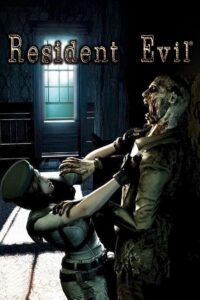
In 1993, developer Shinji Mikami of Capcom’s Production Studio 4 initially set out to remake Sweet Home for the Playstation, this time with updated mechanics and superior graphics. This game was intended as a fully 3D experience, a massive undertaking at the time. What started as a remake turned into an original action-horror adventure title known in the West as Resident Evil. The game follows a special forces unit known as S.T.A.R.S. as they uncover the crimes of the Umbrella Corporation, a pharmaceutical giant secretly producing bioweapons beneath the Arklay Mountains. This premise has become increasingly believable since the game’s release.
A massive critical and commercial success, the game sold over four million copies, becoming the Playstation’s biggest hit. A major component in its success was its approach to scaring players. Unlike other action-adventure games of the era, the game forces players to manage dangerously limited resources (ammo, first-aid, etc). Combined with tight spaces and fear of the unknown, the threat of running out of necessary supplies makes the otherwise simple gameplay incredibly stressful. It triggers fight-or-slight reactions to a degree that few other titles manage. The game and its sequels also helped push zombies back into the cultural spotlight.
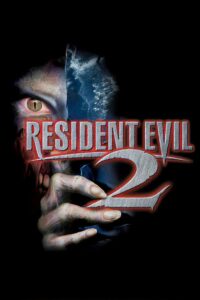
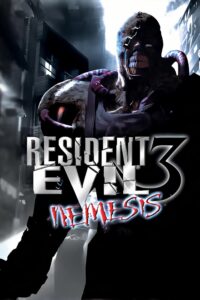
Two years later, Capcom released Resident Evil 2, followed by Resident Evil 3 in 1999. Taking place shortly after the first game, they tell the tragic story of Raccoon City and its destruction at the hands of a viral outbreak. Both games were also commercial hits, selling a combined total of eight million copies. Resident Evil 3 introduced Nemesis, an iconic antagonist who ramped up the already stressful gameplay through its relentless pursuit of the player. Today, the franchise, still going strong today, is one of the most successful horror IPs in history, selling 180 million copies worldwide. Horror games for decades would attempt to emulate its brand of tense combat and resource management, spawning a genre known as survival horror. These games include classics such as Parasite Eve (1998), Dino Crisis (1999), Fatal Frame (2001), Eternal Darkness: Sanity’s Requiem (2002), Dead Space (2008), Alan Wake (2010), The Evil Within (2014), Alien: Isolation (2014), and of course the legendary Silent Hill (1999).
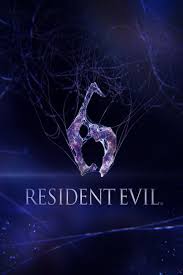
The Resident Evil franchise maintained high quality until the release of the sixth game, which is widely hated by a large portion of fans for straying too far from its roots in survival horror. The game is oversaturated with unnecessary plotlines, dramatized war, and enough action sequences to be mistaken for a Michael Bay film. Resident Evil’s fanbase typically has no qualms with campy levels of action. However, the game simply lost touch with the horror genre as well as the survival aspects that had defined the franchise, and thus it alienated its long-time players. The developers lazily threw disconnected character arcs together and pissed off a whole lot of die-hard fans.
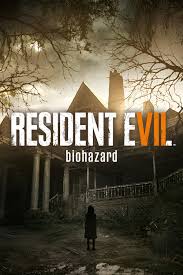
Capcom’s seventh installment of the series, Resident Evil: Biohazard (2017), reversed the error. In the eyes of most fans, the game saved the series and remains the most horrifying in the entire franchise. Biohazard offers a new take on southern gothic as it follows Ethan Winters’s journey into the belly of a disgustingly decrepit estate on a Louisiana bayou. Inside the house, he finds his previously missing wife kidnapped by a family infected and kept immortal by a form of mold. Ethan discovers he is defenseless against their rapid regeneration abilities. Players must then engage in a “cat and mouse” style of gameplay, forced into circumstances with which the character has no experience. The game tests skills such as hiding and resource management, and every move must be strategic as “Jack,” the father and man of the house, hunts Ethan. For the first hour of the game, the player has no access to weapons and must avoid Jack as he paces through every hallway and corner of the decrepit home. The game returns to the roots of Resident Evil as it turns the abject into spectacle rather than relying on the simplicity of unrealistic, explosive action.
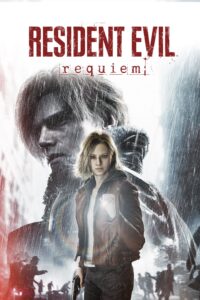
In February of this year, Capcom released the long-awaited Resident Evil 9: Requiem. The game demonstrates that developers knew what fans really wanted to see. Pulling from the most successful aspects of previous games, Requiem reflects a divide within the fanbase between horror and action elements. It follows a new protagonist, FBI analyst Grace Ashcroft, and the beloved Leon Kennedy through a trial to defeat the final remaining antagonists of Umbrella. The game weaves both elements into the story as each character’s path emphasizes one of them. Similar to Ethan Winters in Biohazard, Grace strategizes but is unprepared to face the beasts lurking in the shadows and experiences realistic panic attacks in the face of danger. By contrast, Leon spits out corny one-liners and embarks on an epic journey with an inventory full of artillery to fight monsters and drive motorcycles up the sides of buildings. With its brilliant combination of the two styles, Requiem keeps Resident Evil’s hold on the throne of survival horror.

Assault on Precinct 13 – John Carpenter (1976)
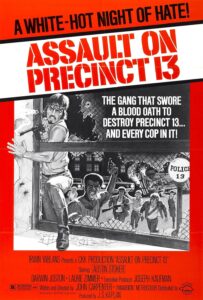
Classic Carpenter goodness. A bus, in preparation for a snowstorm, unloads its cargo of prisoners at Precinct 13 for the night. But when a vengeful street gang lays siege to the precinct, police officers and prisoners must band together to survive. Though firmly grounded, this film inspired the plot of Resident Evil 2, in which a small ragtag group of characters must take shelter inside a large building.
REC – Jaume Balaguero (2007)
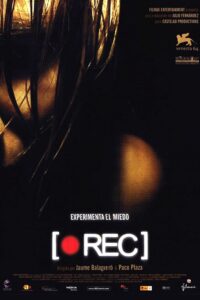
A reporter and her cameraman accompany a fire crew as they respond to a call from a Barcelona apartment complex. Things get very bad very fast when the police, seeking to quarantine a viral outbreak within the complex, trap the group inside with the ravenous infected. This scenario creates a fantastic parallel to Resident Evil’s tight corridors combined with tense encounters, made all the more claustrophobic through the film’s found footage style.
The Bay – Barry Levinson (2012)
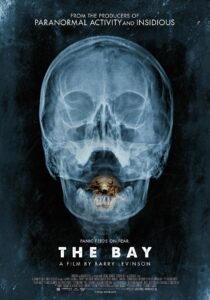
Like REC, this found footage body horror flick follows a reporter. She covers the July 4th festivities in a small Maryland town as its residents begin to exhibit violent symptoms of an unknown illness. Things only get worse when the source of the sudden outbreak is revealed. The film’s plot and the origin of its monsters share a lot with Resident Evil’s emphasis on communities suffering from corporate negligence and greed.
The Troop – Nick Cutter (2014)
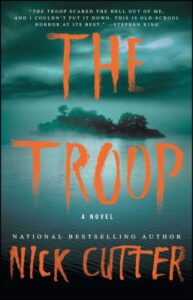
Cutter’s extreme body horror novel is similar to The Bay in premise, albeit on a smaller scale. While camping on an island off the coast, a scoutmaster encounters an emaciated man who vomits on him. He and his scouts learn through the ensuing symptoms that the man was carrying a brood of genetically engineered tapeworms. Like Resident Evil, the book explores themes of survival and scientific hubris.
Mexican Gothic – Silvia Moreno-Garcia (2020)

Set in the 1950s, the story follows Noemi as she tries to rescue her cousin from the High Place mansion and its cult of control freak in-laws. As she tries to break the family’s control, she discovers the family’s history of using an eldritch network of fungus to extend its lifespans. This novel is especially pertinent here because its plot is very eerily similar to Resident Evil 7, notably the decrepit backwoods family and its subservience to a supernatural parasite.