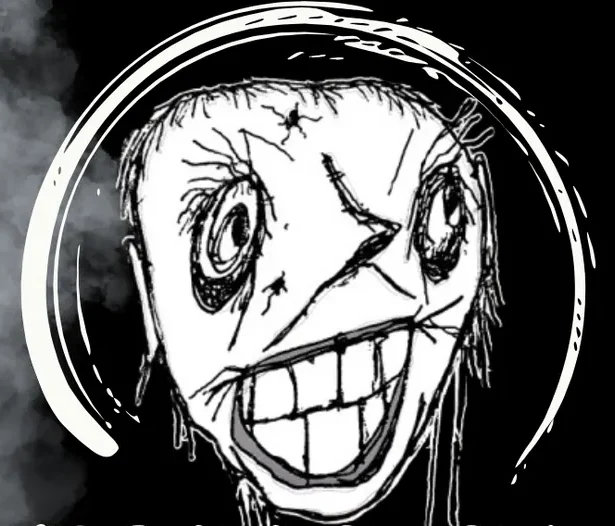
When One Door Closes
by SJ Townend
Horrific Scribes Extremity Rating:


Donald feels a little like the world might be thinning around him.
It isn’t anything dramatic. The wallpaper isn’t self-peeling in strange patterns. The hands of the clock on his kitchen wall aren’t dragging themselves in the wrong direction. In fact, nothing cinematic is happening, really.
Yet, to Donald, something feels off.
Donald reflects. December had started off so well. On December the first, just a week ago, he’d had so much hope. This Christmas will be sublime. Holy. A season of peace and goodwill to one and all.
But, with just eight cardboard flaps carefully re-opened on the humble advent calendar he’d bought himself a decade ago, he has an awareness. Things might’ve taken a turn for the odd.
Something is not quite right with his doors.

It began an hour ago, the embarrassingly ordinary quandary. His back door had refused to stay shut. With brute force, he had won that battle, but right now, it’s happening again, this time in the kitchen. This time, it’s the pantry door refusing to stay shut.
After retrieving a can from the kitchen pantry, he’d closed the wooden door of said pantry. But now, as he walks away from the wooden door to fetch a saucepan, he hears the soft, decisive click of the pantry door undoing itself without aid.
Donald turns and eyeballs the crack in the pantry door.
He places his can on the table and, firmly, closes the pantry door again. He steps back, folds his arms, and stares at the bronze handle he’s just released.
Perhaps there’s a fault with the spindle? Could the latch not be sitting tightly enough in its keep? This time, rather than wrestling with it and trying to overpower its decisions, he chooses to watch the shut door for a significant while.
He pulls up a seat in front of the pantry and perches to observe. Other than prep his beans and make headway with his current crochet project, this evening he has nothing much to do.
Quarter of an hour drifts by. Thirty minutes.
No movement comes from the handle. The pantry door remains closed. His stomach rumbles. He rubs his belly with his right palm. Perhaps he should get on with heating his dinner? He ponders. Just as he decides it may be safe to stand up again and source his trusted can opener, a creak from upstairs makes him spring from his stool.
Of its own accord, the bathroom door has swung open.
Donald leaves the kitchen, Marches up the stairs. He tuts and releases audible exhalations with each step. What is wrong with his blasted doors?
He examines the externals of the latch mechanism of his bathroom door. Noticing nothing out of the ordinary or untoward, with a strong tug and a sharp upwards crank, Donald fastens the glazed-glass-upper wayward perpetrator and with a wedge of toilet tissue, he ensures it won’t swing open again. He returns to the kitchen. His oven door, all square black mouth, is now agape.
It appears, he thinks, opting to ignore the undone oven door, the possibility that his doors might be haunted, that when one door closes, another one opens. He cups his chin in his hand, grooms his attempt at a beard. Something else to fix.
He pierces his can opener into the rim of his can of beans and begins the tedium of the four and a half rotations he will need to make to release his dinner from its metal prison.
After his meal, he rinses the can and shuffles towards his front door. He mustn’t miss the rarity that is the Christmas waste collection. The can must go in the green recycling bin. Bristol City Council are very specific about that. Shame they won’t do anything about the eyesore next-door.
He unlocks his front door in order to step outside. Much to his surprise, as he pushes it open, behind him, a loud smack. The oven door slams itself closed.
He startles. Just the oven.
Outside, cold December air bites at his extremities, and the hairs on the back of his neck prick. The lights from his neighbour’s house cause his long shadow to flicker, to dance over the ice-laced tarmac and his tall black bin. He shakes the load in his green box to make space for his deposit and sighs. He can’t avoid looking at the atrocity his neighbor, his old pal Mr. Linden, erected at the start of the month.
Across the waist-height shared hedge, Mr. Linden’s house shudders under the weight of Christmas decorations. Lights pulse. Plastic figures twitch in motorised loops, juddering between broken gestures. The whole façade appears to be writhing with manufactured cheer, swollen with it. He ogles it, ignoring the Baltic temperature for a moment, for as long as his eyes can bear. Are the bricks and mortar underneath the decorations so overstimulated, they’re struggling to escape?
Donald dislikes the colours. The brightness. The pair of glowing inflatable Santa legs poking out of Mr. Linden’s chimney, which deflate and inflate circuitously. The gigantic LED-lit Rudolph strapped to the windows and guttering, which canters at breakneck speed yet remains rooted to the spot. The monstrous reindeer’s eyes are a little too wide, fearful even. Rudolph has the constant appearance of a deer trapped in approaching headlights.
How relentless it all is, Donald thinks. How insistently joyous. It’s as if December is trying to force a smile directly into his face. The month itself might as well be leaning over him, coercing him into participation.
Donald strides back inside. He is glad to be in the warmth and quiet and regularly-lit domain of his own home once more. Peace. But on closing the front door behind him, whap—the pantry door, untouched, pops open again.
Tools, he thinks, tools and new locks. Tomorrow, I’ll brave The Galleries Mall despite the burgeon of Christmas shoppers. I’ll purchase strong locks for all the doors.
The outside of the shopping district is full of temporary market huts. Fifty shades of shed. Inside, undercover, the heaving mall is suffocating under tinsel. Whole corridors are feverish with jingling bells. Children scream with festive abandon. The recycled air, to Donald, tastes rotten. Of cinnamon and burnt German sausages and greasy cash.
Donald weaves through the merriment with a scowl on his chops and approaches the sliding doors of Tools4U. Not a shop he expects will be busy this time of year, at least. The glass doors stutter open, then hesitate, then judder wider, as though confused. He steps through, nodding at the glum-faced youth behind the counter. In his wake, the doors slam with unnatural force. The large panes shatter and splinter, yet, due to the wonderment of being reinforced, remain entirely intact.
Out in the overlit corridor, across the way, before snatching up his sack of rip-off gifts and ho-ho-ho-ing his way to the other end of the strip, a Santa actor, beard askew, sees Donald clutching his hands to his chest.
“Shit,” shouts Donald. His heart thunders. Thank God there is no pain in his chest. Just shock. He lifts a shaking hand to his hairline and pushes the wisps of grey away from his eyes. He checks his hands, front and back. No sight of blood, no cuts. The sound of the glass splintering, the urgent crackling as jagged ruptures spider-webbed across the sliding doors, still rings in his ears like a storm of metallic rain. “Those doors are a danger,” Donald grumbles. The young lad rushes towards Donald from his spot behind the counter.
“Sorry, sir,” the boy whimpers, pauses, shifts from foot to foot. “Are you okay? You’re okay. I can see you’re okay.”
“I’m fine,” Donald states. “I came for locks.”
“I can’t serve you. I need to close up and call the repair company.”
Donald huffs. “I’ve come all the way in to town just to visit this shop. Have you any idea how stressful the parking situation is at this time of year? I’ve a good mind to lodge a complaint. I’ll sue.” Donald turns and flaps his hands at the shattered glass wall behind him. “Those doors could have taken my arms off.
The young lad pulls a key from his pocket and twists it in a box on the wall. A portcullis grille creeps down in front of the damaged frontage. “I’ll serve you, if you’re quick, but then I’ll have to try to secure the place and make some phone calls. Insurance and glaziers and so on.”
“I should think so, too.”
Donald fills a basket with mortice locks and hook bolt locks and latch bolts in various shapes and sizes, and screws and hinges and chains and nails, and a fistful of window sash locks in case his double glazing also starts to play up, before making his way to the till.
Security grille down, the young lad escorts Donald, laden with purchases, out of the back of the shop, takes Donald behind the scenes, and directs him towards the customer car park. Donald finds his car in the dingy lot – there are no Christmas lights or carol singers or idiots dressed as elves here though, just him, a handful of insufficiently bright flood lights, several dozen parked cars, and the stench of piss. He clicks off his car alarm and clicks open his central locking and then releases a gasp: on unlocking the driver’s side door of his Fiesta, creak, the boot of the unmanned rusty Volvo to his right pops open and glides up.
Donald shoves in his shopping and jimmies into his seat, as if pursued. Although only hinges pursue him. Just hinges, he whispers and rubs his thighs. Hinges and latches and the growing certainty that the world might be organising itself around him in ways he doesn’t want to understand.
His house feels larger tonight. Larger and labyrinthine. And noisier. Those misbehaving doors.
He hopes his front door – which, on return from the mall, had unlocked after he had locked it, click-pop – now remains sealed safely. His mahogany writing bureau is wedged up tight against it, securing the handle in a fixed position.
He prays the back door – such a quiet betrayal – which had swung open when he’d closed the fridge – keeps anything that shouldn’t come in, out. The steel wall-anchors masonry-drilled into the surrounding brickwork and chains should see to that, he tries to reassure himself.
The internal doors don’t unsettle him too much. Most of them can flap open and closed all night for all he cares – he’s stuffed cotton wool in his ears to block out the random bangs. He’s not bothered that much about most of the internal doors. Not now, sleep calls. Those doors can wait for the morning.
But the important doors – those doors which for security, must remain shut – he’d dealt with them to the best of his ability before getting into bed.
As he sits in bed, the covers pulled right up under his chin, the lights from Mr. Linden’s decorations seep through the curtains. Red and green bleed into one another. Off and on and off and on. A flickering phosphorescent mould.
Must sleep, he tells himself, more jobs to do in the morning. Must get to sleep. He repeats this in his head, each word in time with the blink of the intrusive lights, until eventually, his head drops.
At the crack of dawn, he embarks on his list of tasks. With his tool belt on, his hammer, drill, and purchases from the day before, he seals up every door in his home bar the main point of entrance at the front. The writing bureau will have to suffice there, for now, for reasons of practicality.
After several days of DIY, the troublesome doors have all been dealt with. The white goods’ doors and drawers are now secure, as are the mirrored openings of his medicine cabinet, each wandering section of his dresser and wardrobe, and the doors which connect one room to another.
Donald wants to relax, unwind, and finish off the sweater he made a fair start on mid-November with a glass of Glenfiddich single malt by the fire. But he can’t relax. Not yet. He must address. one more thing.
The lights. Linden’s ridiculous seasonal display. He must go over and sort out that maddening situation. The constant blinking is disturbing his sleep.
Before dealing with the lights, Donald, a man of simple pleasures, opts for a little treat for the hard work he has done in eliminating the constant banging: his advent calendar deserves attention.
From his hallway shelf, he lifts his cardboard calendar and anticipates the joy that opening door number twelve will bring. He knows what will be behind it: the same thing that was behind it last year, and the year before. Re-opening December the twelfth will reveal a small, grainy picture of a wise man.
Balthazar! Donald’s index finger tickles expectantly at the edge of the papery flap. Balthazar. The third wise man. With his purple, bejeweled turban. A wise man, like me, Donald thinks. A very wise man. Although, Donald’s not sure that, of recent, he’s been thinking all that wisely. Or, perhaps, all that straight at all.
As his fingernail digs into the perforated cleft that conceals flap number twelve, the door under his staircase rattles. Donald’s brow furrows. Donald frowns. Donald chooses to ignore the clatter from the door and refocuses on the task in hand.
A little treat. He smiles. That is what he needs, after all his hard labour. A peek at the image will ground him. A small picture of Balthazar will cheer him up. The excitement of opening the final door on Christmas Eve swirls in his belly. He must wait though. Restrain. Over two more weeks must pass before he can reveal the grand finale: the whole crew, together in the straw, huddled around baby Jesus.
He opens the small flap marked twelve.
He squints. His eyes widen in disbelief. He recoils. The calendar has not revealed the usual scene, Balthazar, bearing a bottle of myrrh. Behind flap number twelve lies, what appears to be, a tangled ball of red wool.
Donald inhales sharply at the miniature image, rubs his eyes, then looks again to confirm. Horrendous. What a mess. His eyes are playing tricks. He presses the flap tightly back down. He’ll try again with flap twelve later. And as he closes the door on December the twelfth, the writing bureau wedged up against his front door, completely unaided, screeches its claw-wood feet across the hallway tiles. Exposed, the front door, by itself, yawns open.
Donald shakes himself down, tosses the advent calendar aside. He knows what he must do now. This is his calling. Opportunity has knocked. On closing one, albeit small, cardboard, door, it appears, somehow, another door has opened. He must move through it. Press on. Deal with his final task.
He heads outside, where his neighbour’s colossal collection of lights is still strobing, on and off and on and off, as it has been for far too long.
Behind him, he pushes his front door closed. It clicks into its frame. But through its uPVC structure, thunderous shuddering emanates. Inside his home, all his interior doors writhe and struggle to open. They struggle to unfurl, eager to push wide, but they can’t. None of his interior doors stand a chance. Because they’re all gagged and bound up tight. Donald grins.
His grin quickly flattens.
Because in place of his washing machine door or his bedside table drawer or the door under his stairs shooting wide, Mr. Linden’s front door swings open instead.
Red and green and red and green. The lights, usually a repulsion, this evening, beckon him on. Must go and deal with the lights. Now is as good a time as any.
Donald enters his neighbour’s home. Doesn’t bother knocking. Why would he? All the interior lights are off. Linden clearly isn’t at home and the front door is already open and Donald’s been inside plenty of times before. Donald knows his way around. Mr. Linden’s semi-detached is a mirror image of Donald’s abode – on the inside anyway. Flipped sideways, Mr. Linden’s internal layout, Donald has always thought, is strangely familiar. Or familiarly strange.
He heads straight for the plugs in the living room and flicks the switches behind the sofa off. Then he does the same in the kitchen. He climbs the stairs and finds the place in the master bedroom where more of the lights are plugged in and yanks those plugs, the last of the plugs, straight out of the wall.
From outside, not that at this late hour anybody will be watching, Mr. Linden’s house grows dim in three staggered stages.
As Donald descends the stairs, the front door of Mr Linden’s home slams shut. Donald tries to open it. Fails. He rattles the handles of the back door and the downstairs windows, too, but none of them will give. Clamped like exposed bivalves. Donald panics. He can’t get out.
But Donald must get out. He can’t sleep over at Mr. Linden’s. With the hammer hooked onto his DIY belt and his heart racing a little too fast, he makes an impulsive choice. He smashes Mr. Linden’s living room window. The racket. This cacophony, in turn, much to Donald’s chagrin, sets off, outside, his own bastard car alarm. Adrenaline spikes. Friendships are fragile agreements. Donald must get out. Out of the house. Before the alarm company is notified. Before law enforcers arrive.
The repetitive honks blare loudly in his ears. In desperation, Donald hammers the hole in the window again, again and again, metal on glass, metal on glass, until the shark-toothed hole is wide enough for him to climb through. But he isn’t thinking clearly. Donald isn’t thinking wisely, is he? For Mr. Linden’s house is wrapped up like a Christmas present, encased in a thick weave of cables, bulbs, inflatable elves, and a fifteen-foot-wide metal-framed canvas reindeer.
He folds himself up to get out through the window, but on his way out, he becomes tangled in electrical vines. Not vines, lights. Bloody strings of lights, he thinks. I’m bloody well trapped in cables and the arse end of Rudolph. And the more he struggles and panics, the more the cables tighten and snare, binding him tightly, like a boa constrictor that has caught a mouse.
The police arrive, of course they do, and catch him suspended outside Linden’s front window. They laugh as they cut him out. Then they arrest Donald for breaking and entering, to which, of course, Donald protests. He insists he knows Mr. Linden.
“And has Mr. Linden given you permission to break into his home?” the shorter officer asks, pointing at the damage.
Oh, the sanctimonious copper, Donald thinks. The sour-faced sanctimonious sarcastic bastard.
“Because we will need to hear that from him.”
“I wasn’t stealing anything,” Donald says, in desperation.
“What exactly were you doing then?” the taller officer asks before pulling out his walky-talky and radioing through to the station.
“Calming down the lights.”
“Officer Wycombe,” the taller officer says to the shorter one. “The station can’t get through to Mr. Linden’s mobile phone.” He nods at the shorter officer then wanders off to knock for Mrs. Brandt, Donald’s neighbour next-door-but-one. He returns with a face as smug as a Reform politician. “Mrs. Brandt informs us that the last time she saw Mr. Linden was with you at the start of the month. The both of you, tipsy. You were seen escorting him into your home.”
Donald’s tongue is more tied up than his body had been a moment earlier – he worries he knows what is coming next. We all think we know what is coming next, sometimes, don’t we? But sometimes, especially at Christmas, life can toss up surprises.
“Sir, we are going to have to inspect your property.”
The police escort Donald into his home. The front door swings open unaided, like it’s hungry, like it’s swallowing them inside. The cops look around in disbelief; gawk at how every hinged item is held tight with chains and padlocks. Then radio through for more support.
“Sir, you’ll need to unlock everything,” the taller officer demands. Donald, begrudgedly, unclips the hefty janitor’s key ring from his tool belt and unlocks the pantry door. He works his way around the entire house, with the officers breathing down his neck. But he refuses to unlock one door. The final door. The door beneath the stairs.
“You’re going to need to open it, sir. Or we shall, with substantial force.”
Donald doesn’t want to open the door beneath the stairs. Donald swears. Donald tantrums. Alas, what choice does he have with two burly officers standing on either side of him and another unit on the way? Donald is not a wise man, far from it, but he also is no fool. He’ll open it slowly, to give himself time to think. “Just get on with it,” one of the officers demands. Donald lugs open the ten-inch bolt that secures the door beneath his stairs. The door that leads to his cellar. Then begins to work open each of the six heavy duty padlocks.
He hadn’t meant for this to happen. Hadn’t meant for things to turn out quite like this.
The cellar had felt like a sensible place to introduce Mr. Linden to the joys of a less flamboyant seasonal celebration, the nirvana of a little less light. A sort of reverse exposure therapy. A strategic desensitization. He’d just invited the old boy over to sample some more of his barrel-aged best and to show him the craft project he’d been working on, the true meaning of Christmas, and to discuss the matter of the lights with some coercive diplomacy. Hadn’t he?
From the top of the stairs, Donald flicks the cellar light on. A gentle glow, so meek and so mild, reveals, just enough, of his crocheted creation: the life-size Nativity cast. Mary, kneeling stiff in organic angora. Joseph, all thirty-seven balls of Worsted wool of him. Baby Jesus wrapped in a blanket. The Shepherds. Three Wise Men. All bracketed by a variety of double-ply Aran fluffy farmyard animals.
Donald cringes. How he’d struggled to master Mary’s expression. She’d been the fiddliest of the lot. He’d had to resort to using black beads the size of golf balls woven in for her eyes. Too large. Too vacant. And how he’d grappled with scale. His hook tension had been all off when he’d worked on the Wise Men. Melchior looms over the rest of the cast. Melchior’s turban grazes the ceiling. “The star of Bethlehem,” Donald proclaims, pointing to the shadeless and orange-dim suspended bulb. “A solitary twenty Watts is all you need to illuminate the true meaning of Christmas.”
Donald grimaces at the sight as he and the officers stare down at the mess in the cellar. Donald tells the officers all he recalls: the clash of two solids colliding, the sound of shattering, like a storm of metallic rain.
He hadn’t meant for anything irreversible to occur. But Christmas pressure accumulates in a man. Accumulates and accumulates and—
The lights.
The red and the green lights have made him increasingly forgetful.
There, now, under the additional arc of light from the taller officer’s torch beam, Donald sees it, the officers do too. The red. No green. Just red, this time. A dry bloom of red the shade of Christmas. All over the floor. All around what used to be Mr. Linden.
At some point in between Donald directing Mr. Linden down into his cellar, Mr. Linden must have fallen and hit his head. Or Donald had hit his neighbour’s head. Of this, Donald cannot precisely remember. Linden’s head, a smashed jam pudding, like some sort of Biblical offering, like a gift from a not-so-wise man, rests atop the foot-long crocheted baby Jesus who sleeps soundly in a sagging crimson yarn manger.
To the officers, their faces all deer in headlights, Donald just reiterates, again and again: the cellar door closed… Linden’s head opened.
Donald does not resist when cuffs are snapped around his wrists. And as the cuffs are ratcheted and clicked in place, every door in his house, as if sighing with a chorus of relief, slams in unison, open and closed.
Donald’s cell is bare and smells of metal. It is a dank hole stripped of decoration illuminated by a single strip-light which glares without season.
The guard closes the door on Donald. The world still feels like it is thinning around him. His grip on the world is now as thin as a single-ply yarn. But the cell door is thick. Five or six inches of heavy gauge steel, reinforced with anti-barricade devices.
On the end of a slim, hard bed, Donald sits. Donald waits. He sits and waits and watches the door. But the cell door stays immovably shut.
Want another gripping story from SJ Townend? Read “QVC” in Horrific Scribes, July 2025 and “Bedroom Eyes” in Horrific Scribes August 2026..
| SPECIAL EXHIBIT 1: Return to “Mari Lwyd“ | Continue with Holiday Hurlyburly and read the next attraction, “Ghosts from a Christmas Carol“ |
| SPECIAL EXHIBIT FIVE: Return to “More Downstairs →” | Continue Gallery Three: Revealing with Whispering Walls and Other Verses |