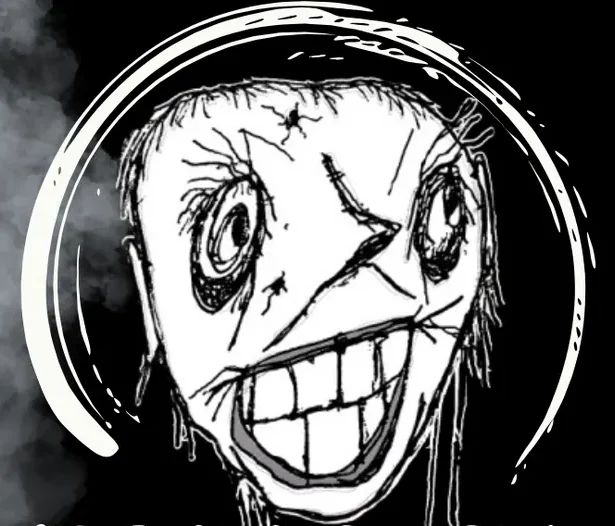
The Loyal Readers
by Jonathan Ferro
Horrific Scribes Extremity Rating:


The first comment came in at 3:17 a.m. Notifications in the middle of the night weren’t unusual; Nick had been posting stories online for years, and insomniacs were his most loyal audience. What was strange was the content.
“We see you.”
Nick smiled. Trolls. The internet was full of people who mistook vagueness for depth.
He opened the user’s profile: no photo, no other comments, no activity. Created that day.
“Classic,” he muttered. He closed his phone and went back to sleep.
The second comment arrived the following night.
“Don’t write about us.”
This time, Nick didn’t smile. He opened the profile again. Empty. Same pattern. New account, a single comment. It had to be the same person or a small group making a fool of him.
Nick poured himself a glass of water and reread his story. It was about a man who discovers he’s being watched by something that lives in the spaces between words. A nice idea. Not original, but effective.
“Don’t write about us,” he repeated aloud. “Who are you, exactly?”
His phone vibrated. Another comment: “You already know.”
The next day, he tried to rationalize it. Algorithms. Bots. Some elaborate prank. Maybe a bored Discord group.
He wrote a new story. Worse than usual, if he had to be honest. But he had a theory: if the problem was what he was writing, changing the subject would do the trick. Perhaps the trolls would lose interest.
The new story was about a man who forgets the names of things. No observers, no entities, no “them.”
He posted it and waited. At 3:17 a.m., a new notification arrived.
“Better.”
Nick felt relieved. Then the second one came.
“But it’s not enough.”
He started sleeping less. Not out of fear, he told himself, but out of curiosity. He wanted to understand the mechanism.
He tried everything: changing style, length, genre. He wrote comedies, poems, and even a risotto recipe.
The comments always arrived at the same time. Always from empty accounts. Always with the same tone.
One night, exasperated, he wrote directly in the story: “Whoever you are, stop it.” He posted it. He waited.
At 3:17 a.m., the reply came: “Finally.”
Nick felt a shiver. Finally what? The phone vibrated again, almost in response.
“You’re listening to us.”
He began to notice things. Small things at first. Words in his stories he didn’t remember writing. Sentences that changed after publication. A description like “the room was empty” became “the room seemed empty.” Nick checked the saved versions, and those were different, too.
“No,” he said. “No, no, no.” He opened the original file. That had changed, too. He decided to experiment.
He wrote a very short story: “If you’re reading this, stop.”
He saved it offline and turned off the Wi-Fi. He waited, and finally, 3:17 a.m. arrived. The phone vibrated. A notification. But not from any app. Just a black screen. And then, slowly, the text appeared.
“It doesn’t work that way.”
Nick dropped the phone. He didn’t sleep that night. He wrote. Not to post, but to understand. He noted every change, every suspicious word. He looked for patterns, rules. At 3:17 a.m., without fail, something responded. Not always with comments. Sometimes with edits.
One night, he wrote: “You aren’t real.”
At 3:17 a.m., the sentence became: “You aren’t real, are you?”
The paranoia slowly turned into something else. Addiction. Nick began writing for them.
Every word was bait, and each sentence was an attempt to get a better reaction. When he got their approval, he felt relief; when he faced rejection, shame.
“What do you want?” he typed into the text one night.
“The truth.”
Nick stared at the screen.
“What truth?”
“The one you avoid.”
He spent days thinking. Then he understood. Or so he thought. He wrote one last story. No metaphors, no elegant horror. Facts.
He wrote about himself. About the fear of being mediocre. About the desperate need to be read. About the feeling that, without an outside gaze, he didn’t really exist. He wrote it all. He published it and waited.
At 3:17 a.m., his phone vibrated longer than usual. The screen lit up.
⭐⭐⭐⭐⭐
No text. Only five stars. Nick smiled. Finally.
The next morning, his profile was gone. No story. No trace. As if he had never existed.
That evening, on another site, another author published a story. At 3:17 a.m., the first review arrived.
“We see you.”
| SPECIAL EXHIBIT SIX: Return to “Prepped“ | Continue Gallery Two: Surveilling with “If Their Eyes Offend Me“ |