Five Stories About Bugs and Creepy Crawlies
by H.J. Dutton and Reese Hurd
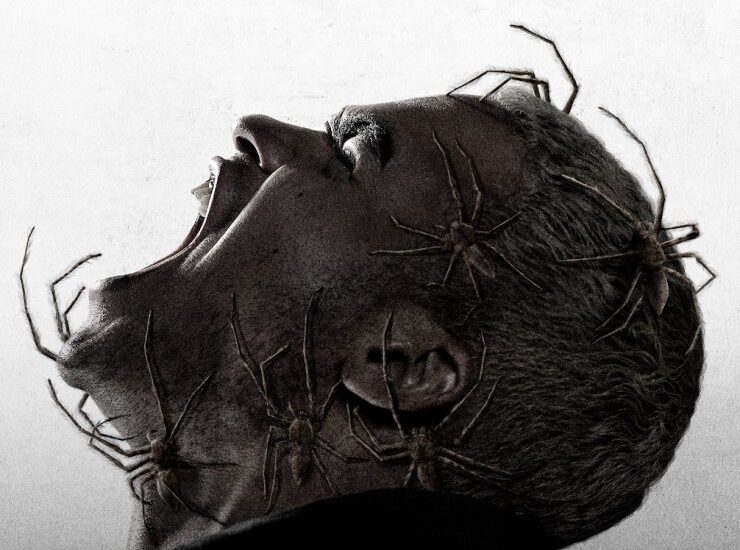
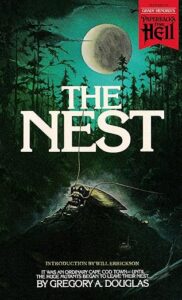
The popularity of some topics in horror doesn’t require much explaining. Bugs, for example. Through millions of years of evolution, humans developed an instinctual aversion to insects and arachnids, a survival mechanism that protects us from toxins, disease, and infestation. The horror genre routinely exploits our primal fears of all three of these threats that bugs pose; they’re on display in Gregory A. Douglas’s classic novel The Nest (1980) and the more recent film Infested (2023, French title Vermines, the source of this post’s featured image). Franz Kafka’s The Metamorphosis (1915), while not exactly horror, uses extended meditation on the disgust inspired by a dung beetle as a multifaceted metaphor exploring, among other things, discrimination against the disabled.
Despite our revulsion for all things creepy crawly, we have a strange habit of incorporating them into religious imagery. Insects are, across cultures, symbols of divinity. Christianity, for example, uses the inherently transformative themes associated with the caterpillar to symbolize The Resurrection of Christ. On the other side of the spectrum, the name of the prince of demons Beelzebub means “lord of the flies.” The ancient Egyptians famously believed scarabs to be Earthly manifestations of the sun god Khepri.
Associating creepy crawlies with the divine didn’t stop with the ancients. Contemporary media, particularly horror fiction and games, carried on the tradition. Capcom’s Resident Evil 4 (2005) presents the threat of Las Plagas, parasitic insects capable of infecting their human hosts and transforming them into killing machines known as Ganados. Ganados often operate as a sort of hive mind. The game links Las Plagas to the “Los Illuminados” cult. Native to Valdelobos, Spain and rooted in Roman Catholicism, Los Illuminados believe Las Plagas are a divine and holy creature brought down to earth by God. Their destructive traditions include requiring infection with the parasite for new members’ initiation.
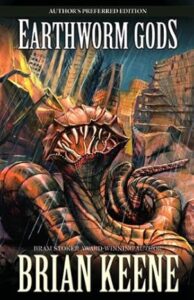
On the literary side, Brian Keene’s Earthworm Gods–published briefly under that title combining religion with creepy crawlies in 2005, republished as The Conqueror Worms in 2006, then brought out in 2012 as Earthworm Gods, Keene’s preferred title, once again–contains no shortage of Biblical resonance within a nightmare of epic proportions. In an alternate reality, retired veteran Teddy Garnett survives in a post-apocalyptic world swallowed by rainwater from an event like a warped Biblical flood. The watery conditions have given birth to monstrous, man-eating earthworms, resulting in even more mass global destruction. Keene’s earthworms are a cosmic disruption of traditional understandings of Earth as designed and directed by the divine, our understandings of what could and should happen in our world. As the title suggests, the worms are, in some ways, like gods. Their existence emphasizes the powerlessness of humanity. Throughout the novel (and its sequels), many of the flood’s survivors not only fear but also worship these creatures. Thus, Keene capitalizes on what has made bugs and other creepy crawlies such enduring features of horror: they have hellish and godly dimensions; they’re awful and awesome. They could just as easily chew on your brain or blow your mind.

Caterpillars – E.F. Benson (1912)
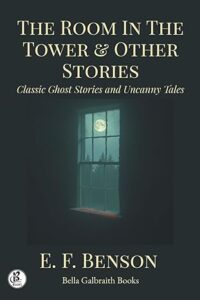
During his stay at a hotel in Italy, an anonymous narrator experiences vivid nightmares about the room down the hall. Things only get worse when he attracts the attention of the things haunting the room. This is a classic Benson tale and easily one of his creepiest.
Mr. Ash’s Studio – H.R. Wakefield (1932)
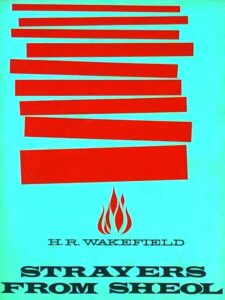
Mr. Horox, a writer, rents a studio in London once occupied by a now dead artist. In the room he discovers a series of unnerving sketches as well as a swarm of strange-looking moths. Wakefield demonstrates his absolute mastery of quiet horror here, drip-feeding the reader clues that paint an increasingly haunting answer to the mystery.
The Cocoon – B.L. Goodwin (1946)
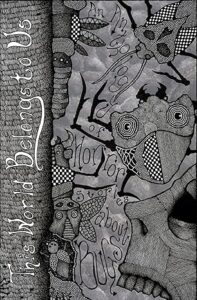
A young boy, eager to impress his absentee father, brings home an unknown species of caterpillar. Things take a predictable yet tragic turn when the thing later hatches from its cocoon. Both Ray Bradbury and Alfred Hitchcock included this story in their respective anthologies Timeless Stories for Today and Tomorrow (1952) and Stories for Late at Night (1961).
Bug House – Lisa Tuttle (1980)
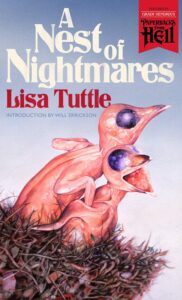
Seeking distance from her husband, Ellen arrives at her aunt’s house and finds the old woman dangerously ill. She later meets Peter, her aunt’s primary caretaker and lover, who may be connected to her aunt’s illness. Be warned: this tale contains a graphic depiction of sexual assault.
The Forest – Laird Barron (2007)
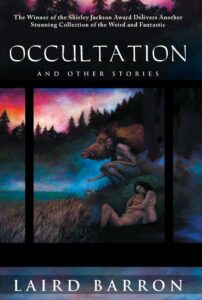
While visiting an entomologist’s estate, a wildlife documentarian stumbles upon the man’s various projects, one of which involves satellites pointed at the soil. When questioned, the entomologist claims he’s made contact with things that will one day inherit the Earth. This is a hauntingly beautiful take on cosmic horror that anyone who loves weird fiction should read at least once.
Are you a writer drawn to the nasty side of nature? Consider our “Nasty Nature” submissions challenge (ending May 15, 2026)!