Four Jungle Stories
by H.J. Dutton

One of my favorite horror topics is underused settings. Like the jungle. Though not as rare as other neglected settings – zoos, prehistory, etc. – the jungle certainly isn’t a staple, either, which is odd, because by all means it should be. Anything could hide inside that mess of green, waiting to crush our skulls within its jaws. The jungle is a land of perpetual gloom and sound distortion. A sensory assault. The rainforest in particular is one of the oldest ecosystems on the planet. Among the sopping leaves and soupy heat are things no human has ever laid eyes on.
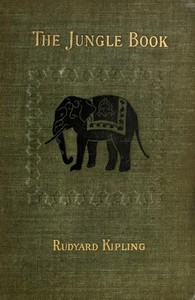
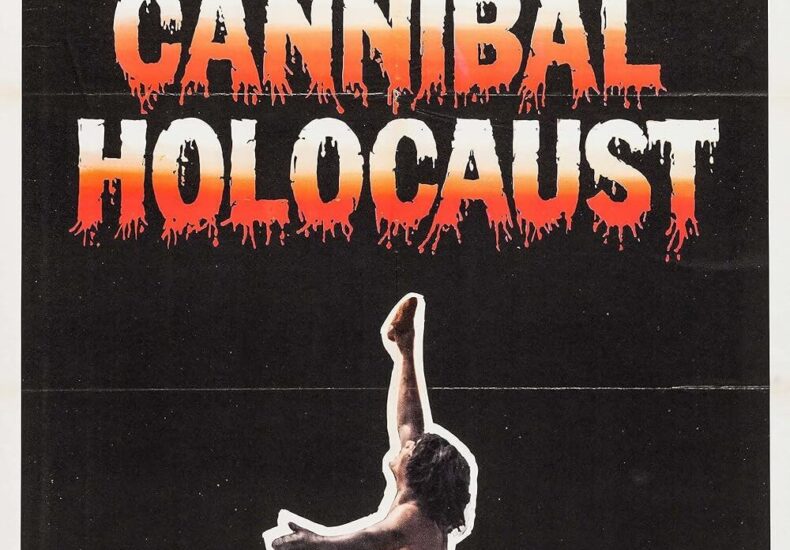
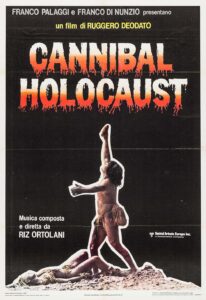
Much of the jungle’s absence in contemporary horror could be attributed to Western perspectives on the setting. With the colonization of Africa and the Americas came the European’s first encounters with the jungle, a realm that quickly became, in his eyes, the very antithesis to civilization. These frontiers challenged the European man’s burgeoning control, and more and more frequently, he saw them through a romantic lens. Far from the European’s tamed homeland, the jungle represented a rugged playground brimming with danger and mystery. Hallmark works of fiction such as Rudyard Kipling’s The Jungle Book (1894) and Edgar Rice Burroughs’s Tarzan (1914) solidified the jungle as a place of adventure within popular culture (Jones 2012). This long-held conception of the jungle makes its use within the horror genre a perfect opportunity for an inversion: those who come expecting adventure might instead find (previously) unimaginable horror. Adventure writer H. Rider Haggard turns to the Victorian Neo-Gothic and makes the African jungle a place of dark supernatural rituals in his novel She (1887), and literature such as Joseph Conrad’s 1899 masterpiece Heart of Darkness as well as films such as Cannibal Holocaust (1980) reconceptualize the jungle as an inhospitable nightmare in which outsiders are at a potentially deadly disadvantage.
Below are a few examples of short stories that make full use of the jungle as a nexus of fear.

“The Seed from the Sepulcher” – Clark Ashton Smith (1933)
In the uncharted wilds of South America, two orchid hunters search for yet undiscovered species of flowers. The two get their wish when they crack open an ancient burial pit. Unfortunately for them, the thing inside is very, very hungry. It’s classic pulp and an early example of inverting the romantic “lost world” trope.
“The Zombie of Alto Parana” – W. Stanley Moss (1950)
Clift and Emil, two expatriates, are situated in the Alto Parana region near the Paraguay border. Unlike Clift, Emil can – and plans to – eventually return to his home country, a freedom Clift deeply resents. Driven by this bitterness, Email coaxes the man into alcoholism, an act that sends both men spiraling into a stagnant, existential hell.
“How Spoilers Bleed” – Clive Barker (1985)
Mercenary leader Locke purchases a tract of remote Amazonian land, one that’s currently inhabited by an isolationist tribe. When the tribesfolk refuse to leave, Locke and his underlings attempt to evict them by force. This, as expected, leads to disastrous consequences for the mercenaries.
“Dad’s Famous Preserves” – Seras Nikita (2017)
A boy recounts his and his devout missionary family’s stay in an isolated village, located in the heart of the jungle. During the months there, Dad develops an infection in his foot. At first harmless, the infection blooms into a nauseating body horror nightmare. Be warned: this one does not shy away from graphic and detailed descriptions of bodily decay.
We can’t (yet) offer jungles, but if you want more horror beneath the trees, you’ll find it in these stories from the Horrific Scribes archive:

Read Pamela Love‘s short story “We Read by Rot” in Horrific Scribes March 2025.
Description: The few remaining members of a college choir struggle to survive as a monstrous Composer forces them to perform its works in a mystical swamp—with death the penalty for any mistake.

Read Iluka Chayan‘s short story “The December Booth” in Horrific Scribes December 2025.
Description: On the Night of the Unforgotten, a small town in the Western Ghats gathers to honour its dead—yet every year, something in the Devagiri forest listens too closely. When an old STD phone booth begins ringing again after decades of silence, a newly transferred inspector stumbles into a pattern of vanished names, whispered rituals, and a history the villagers refuse to speak aloud. Set across two Decembers twenty-one years apart, “The December Booth” slowly unravels the terrible cost of a community’s survival—and the question of who gets to be remembered at all.

Read Shawn Montgomery‘s “The Tree People” in Horrific Scribes, January 2026.
Description: A young boy returns home after going missing for twenty-four hours. Despite being relieved that he is safe, his family notices that something is wrong. Horribly wrong. Along with losing the ability to talk for several hours, the boy has also sustained serious injuries that he is seemingly unaffected by. Most disturbingly, he gradually reveals family secrets to his older brother…secrets he shouldn’t had known. And it’s these secrets that have awakened and angered the mysterious, “Tree People,” who steadily march closer through the forest to take the boy back with them…at a horrific cost.

Read Prince Kumar‘s short story “What the Hollow Keeps” in Horrific Scribes May 2026.
Description: “What the Hollow Keeps” is a haunting descent into silence, memory, and the things we try to bury. As the past begins to surface, something far more unsettling emerges—something that was never truly gone.
Work Cited
Jones, Howard Andrew. “Escape to the Jungle – Black Gate.” Black Gate Magazine, 6 Aug. 2012, https://www.blackgate.com/2012/08/06/escape-to-the-jungle/.