Four Stories About Plants
by H.J. Dutton
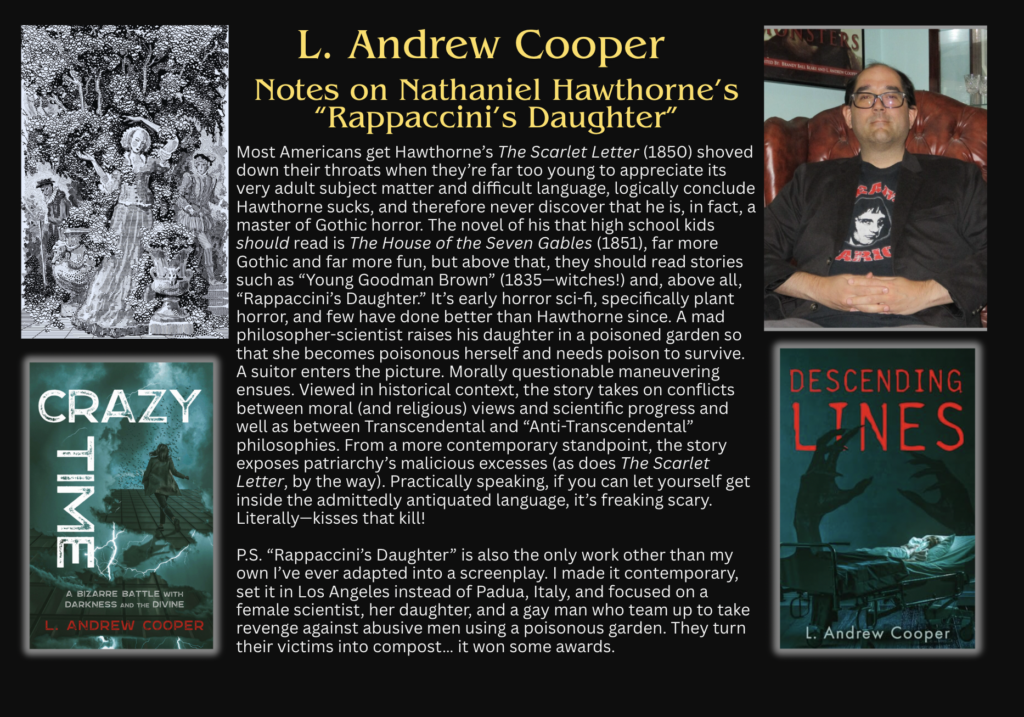
…with commentary on “Rappaccini’s Daughter” from L. Andrew Cooper
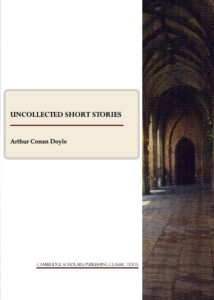
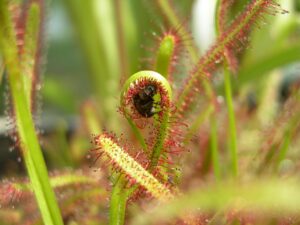
One of the earliest instances of botanical horror was Louisa May Alcott’s story “Lost in a Pyramid” (1869). The ancient species of flower in Alcott’s story functions like a leech, draining the life force of the one who planted it. It’s a stark inversion of our perception of the real-world plant as a lifegiver. In 1874, Edmund Spenser’s hoax newspaper insisted on the existence of the “Madagascar Tree,” a species of plant large and strong enough to devour a grown man (Galbraith 2020). Six years later, Sir Arthur Conan Doyle wrote and published “The American’s Tale,” in which an outlaw named Joe Hawkins falls prey to a giant venus flytrap. Doyle took inspiration from Charles Darwin’s science treatise Insectivorous Plants, published just five years prior (“The long reach of the monster plant” 2017).

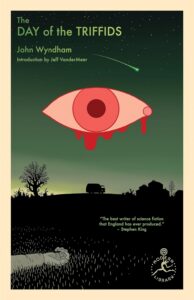
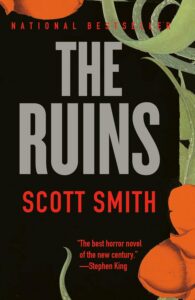
Both of these early stories and plant horror that followed – such as John Wyndham’s 1951 novel The Day of the Triffids and Scott Smith’s The Ruins (2006) – portray the often inactive and harmless real-world plant as a predator deadly enough to reconfigure the food chain.
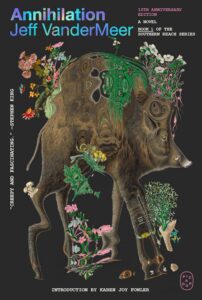
While Area X in Jeff VanderMeer’s 2014 magnum opus Annihilation is not technically a plant-centric anomaly, its acts of conquest are most often portrayed in the novel’s prose through depictions of plant overgrowth. For instance, this detail in the novel’s third chapter: “A purple flowering vine had colonized the lighthouse wall.” The word “colonized” occurs throughout the novel’s prose as a motif, characterizing nature itself as a force of annexation and consumption (VanderMeer, 2014, p. 66).
Below I’ve compiled two classic examples of plant horror, the first with commentary from author (and sometimes scholar) L. Andrew Cooper, with two modern examples.

“Rappaccini’s Daughter” – Nathaniel Hawthorne (1844)
In a bizarre act of abuse, Doctor Giacomo Rappaccini raises his only daughter among a garden’s poisonous plants to study the ensuing changes in her biology.
“The Flowering of the Strange Orchid” – H.G. Wells (1894)
Eager for something new, flower hobbyist Winter-Wedderburn purchases an unknown species of root at an auction after the collector who discovered it in a swamp was found dead, which, of course, proves to be a mistake.
“Bloom” – John Langan (2012)
On the side of a road, Rick and Connie recover an organ donor cooler and take it home with them, which proves to be the worst mistake of their lives.
“Growing Things” – Paul Tremblay (2019)
Stuck with their paranoid wreck of a father figure, sisters Marjorie and Merry are forced to fend for themselves in a world reclaimed by nature.
Find more botanical terrors in Horrific Scribes…
Read Amanda M. Blake‘s short story “Weed Killer” in Horrific Scribes February 2025.
Description: A large persistent weed grows outside a historical downtown donut shop.

Read Shawn Montgomery‘s “The Tree People” in Horrific Scribes, January 2026.
Description: A young boy returns home after going missing for twenty-four hours. Despite being relieved that he is safe, his family notices that something is wrong. Horribly wrong. Along with losing the ability to talk for several hours, the boy has also sustained serious injuries that he is seemingly unaffected by. Most disturbingly, he gradually reveals family secrets to his older brother…secrets he shouldn’t had known. And it’s these secrets that have awakened and angered the mysterious, “Tree People,” who steadily march closer through the forest to take the boy back with them…at a horrific cost.
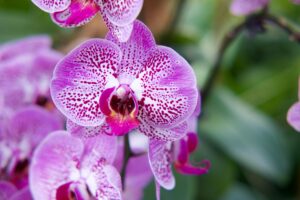
Read Lira Palmer‘s short story “Calypso” in Horrific Scribes June 2025.
Description: “Calypso” is a nightmarish story about a haunted woman’s search for a rare orchid, blending both botanical curiosity and ritual mysticism.

Read Jason Frederick Myers’s short story “Of Gnarled Roots and Rot” in Horrific Scribes April 2025.
Description: When two siblings encounter an ancient Oak tree in the forest behind their home, they soon discover that its sinister history may be more than just an urban legend.
And from the Horrific Scribblings anthology Extremely Weird Splatter…

Look for Maxim Volk‘s “My Love, Like Moss, Envelops You.”
Description: After the death of his lover, a man discovers new plants in his garden. Ones with familiar orifices.
Sources:
“The Long Reach of the Monster Plant.” Nature News, Nature Publishing Group, 9 Feb. 2017, www.nature.com/articles/542138b.
Galbraith, David. “Botanicult Fiction: The Man-Eating Tree of Madagascar.” Royal Botanical Gardens, 25 June 2020, www.rbg.ca/the-man-eating-tree-of-madagascar/.
VanderMeer, Jeff. “Chapter 3.” Annihilation, Paperback ed., HarperCollins, New York City, NY, 2014, p. 66.
Leave a Reply