Three Bully Stories
by H.J. Dutton
Bullies in horror are, in the majority of examples, the epitome of wasted potential. The issue isn’t as much authenticity – though that is a minor gripe in most cases – as it is focus. Even in a book or film with a plot that hinges on a conflict between bully and victim, the bully is often not the focal point of the story’s horror, or at least doesn’t remain so for very long. Instead, the bully serves as a rather simple justification for the protagonist’s bloody retribution. After the inciting bully event, such narratives shift focus from bullying to revenge. This approach isn’t necessarily bad – but it’s also not scary. In fact, I’d argue that once the storyteller goes down this road, the rest of the story is hardly horror. They’ve switched the emotional core of the story from the social dread and personal terror of bullying to the much-easier-to-evoke catharsis of vengeance.
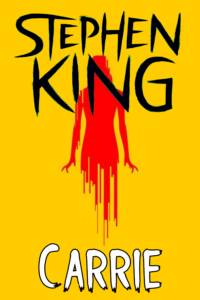
The list I’ve compiled below is as short as it is precisely because horror stories about the horrors of bullying are so few and far between. The most iconic example is, of course, Stephen King’s 1974 novel Carrie. While technically a bully revenge story, it doesn’t become one until its climax. It is, for that reason, the most famous and talked about aspect of the novel – and because the two-thirds of the book before it is such an agonizing (and therefore brilliant) experience. Up until that prom scene’s reversal of power, the film’s true horror comes solely from its portrayals of domestic hell and teenage social politics.
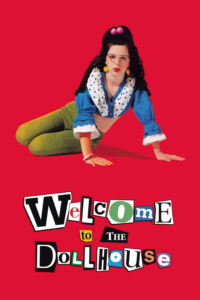
I would argue that most of the scariest depictions of bullying – be it on the page or on screen – have historically come from outside the horror genre. Todd Solondz’s 1995 black comedy masterpiece Welcome to the Dollhouse is the one of the ultimate examples of anti-nostalgia fiction and a near-perfect portrayal of the outcast experience. Dawn, the film’s lead, receives no moments of triumph in her school experience, no chances to make the most of her youth, and no just desserts for the peers who wrong her. From beginning to end the audience is forced to endure the cutthroat world of adolescent hierarchy. That the horror genre has so often failed to tap into the inherent social horror of childhood environments is a missed opportunity to say the very least.
Below I’ve listed and linked a few stories that I think do tap into that well of potential and do so quite well. I’ve also included a film recommendation.

“Sometimes They Come Back” – Stephen King (1974)
In his youth, English teacher Jim Norman’s brother died when a gang of greasers jumped them both on their way to a local library. Jim’s unresolved trauma quite literally comes back to haunt him when the thugs, who should be long dead, show up in his classroom.
“Blue Rose” – Peter Straub (1985)
Specifically the short story, not the trilogy of the same name to which the story is directly connected. The story follows Harry Beevers, a character from Straub’s 1988 novel Koko, as he discovers not only his capacity for cruelty but also his willingness to inflict it on his little brother Eddie.
“Bullied” – Junji Ito (1997)
Told in manga format, the narrative follows Kuriko, a girl forced by her parents to befriend a boy next-door named Nao. Kuriko’s resentment of the responsibility quickly escalates to intense physical and psychological abuse that results in a near-death incident. Decades later, the two “friends” reunite and have a son, a development that predictably results in disaster when Kuriko’s old habits resurface.
Film Rec: The Plague (2025)
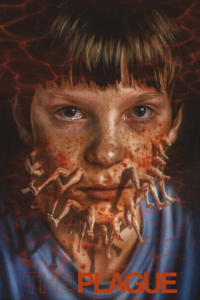
Charlie Polinger’s thriller belongs to the same class of teen film as Bo Burnham’s Eighth Grade (2018): its portrayal of adolescence is also so gritty and stripped of glamor that watching it becomes an endurance test. But where Eighth Grade’s hard-to-watch quality stems entirely from intentional awkwardness, The Plague torments viewers with an all-too-real depiction of social hierarchy among preteen boys. It is the most accurate portrayal of the capacity children possess for cruelty I’ve ever seen.
For more horror about bullying, consider these stories in the Horrific Scribes archive:

Read M. Brandon Robbins‘s short story “My Mother’s Way” in Horrific Scribes March 2025.
Description: This story is one that examines emotional and mental abuse from the point-of-view of a survivor. Anybody who has ever been victimized by a parent will be able to relate. Your mother and father are supposed to love you more than anyone, but when they don’t, there are few things that cause more pain. This is the struggle that the main character deals with as he cares for his ailing father and is confronted by the ghost of his abusive mother.

Read Shawn Montgomery‘s short story “When I Come Back” in Horrific Scribes, September 2025.
Description: A chance reunion… an invitation to “catch up” on old times… another game has begun. What happens when somebody has an opportunity to seek revenge on a childhood tormentor, many years later? What will it take to heal from years’ worth of trauma and grief? Sometimes, in order to free yourself from your demons, you must confront them head-on. And sometimes, you have to play one last game to end it all… forever…

Read Gerard J Waggett‘s short story “Paulsy” in Horrific Scribes July 2026.
Description: Danny blamed karma for his daughter’s cerebral palsy. In high school, he and his buddies used to bully a disabled student. At his tenth reunion, Danny discovers that his fellow bullies have also fathered children with c.p.
Leave a Reply