Four Stories About Dogs
by H.J. Dutton
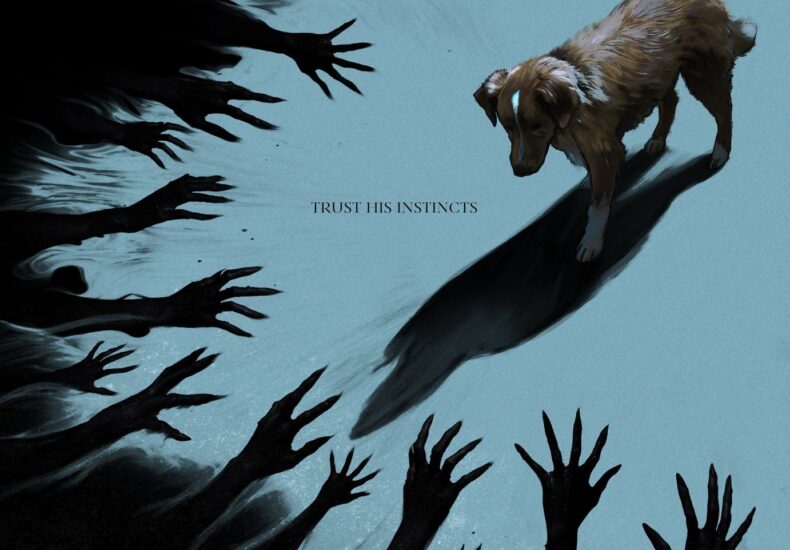
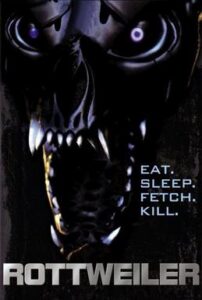
Dogs often enjoy more diverse roles in horror than cats. While the feline almost always plays a spooky set piece or antagonist, the canine might play victim, protagonist, tragic villain, or maybe an agent of evil. Of these options, the last is least common.
Historic and evolutionary connections between dogs and humans explain dogs’ relative immunity from evil roles. Around thirty to forty thousand years ago, both our ancestors and those of the modern dog began associating with each other for a multitude of reasons (safety, efficiency, access to food, etc.). This purely practical relationship would, over thousands of years, evolve into the mutualistic symbiotic relationship we enjoy today. Save for the horse, no other animal’s journey through history has been so intrinsically intertwined with ours.1 By comparison, cats share neither the same lengthy history nor dependence on humans for survival. The feline, even today, is considered only semi-domesticated, more akin to a roommate than a companion. Perhaps this lesser intimacy makes otherizing the cat easier than defamiliarizing the dog.
But the dog’s familiarity also makes the concept of the killer/evil canine particularly poignant and frightening. Take, for instance, the most culturally impactful canine horror tale of the modern age: Stephen King’s Cujo (1981).
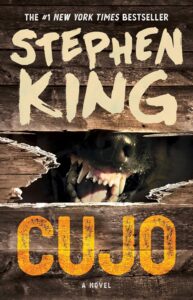
What makes Cujo so powerful is how it evokes two extremes of canine terror simultaneously: our sympathetic fear that a dog might come to harm and our defamiliarizing fear that a dog might one day turn on us. The titular Saint Bernard, though menacing, is the story’s ultimate victim, a role emphasized through his gut-wrenching POV scenes. “It would perhaps not be amiss to point out that he had always tried to be a good dog. He had never wanted to kill anybody. Free will was not a factor.” Far more common in the horror genre is the dog’s role as a pure (or potential) victim, an innocent party the audience can easily attach to. The film Good Boy (2025), for example.
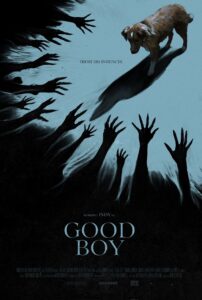
Below I’ve gathered a short list of stories in which canine characters play antagonistic roles, some far more villainous than others.

The Hounds of Tindalos – Frank Belknap Long (1946)
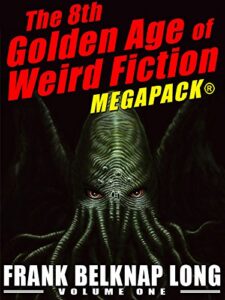
Halpin Chalmers claims that time, as humans understand it, is merely an illusion constructed by the human brain to make sense of the universe. To prove this theory, he takes an experimental drug that he believes will allow him to experience time in its natural, nonlinear state. In doing so, he attracts the attention of something old and hungry at the core of reality. This story is quintessential cosmic horror.
The Same Dog – Robert Aickman (1974)
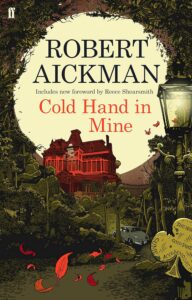
While exploring the landscapes of Southern England, two children come across an ominous gated property. Beyond the fence is an odd-looking dog that stares intently at the two. This seemingly inconsequential encounter will, in time, upend both their lives. Aickman’s trademark ambiguity works particularly well here, amplifying the sense of unease that so often pervades his fiction.
The Whining – Ramsey Campbell (1976)
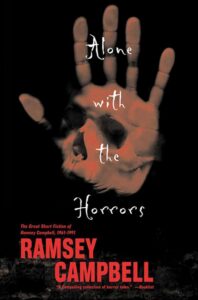
While outside his flat, a British journalist encounters a stray dog that quickly takes a liking to him. Once endearing, the stray’s presence soon becomes an annoyance, one the protagonist has an abnormally hard time ridding himself of. Campbell once again demonstrates his modern mastery of the classic ghost story.
The Sun Dog – Stephen King (1990)
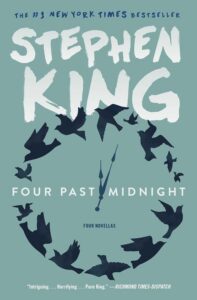
Though King’s Cujo is undoubtedly the most iconic piece of dog-centric horror fiction in the contemporary age, this novella is arguably far more frightening. While testing out his new polaroid camera, Kevin notices something odd. In the background of every photo is a black dog, one that wasn’t there when the photo was shot. Things go from merely odd to panic-inducing when the dog inches closer to the frame. Whereas Cujo presents a frightening yet tragic antagonist whose actions are beyond his control, The Sun Dog offers an unambiguous horror in its relentless supernatural predator.
For more tales of monstrous mammals, check out the following stories in our archive:

Read Sarina Dorie’s story “You Can’t Teach an Old Dog New Tricks—But You Can Give Her a Makeover” in Horrific Scribes, January 2026.
Description: When a vampire knocks on the protagonist’s door, she doesn’t know which is worse—that this vamp might want to suck her blood—or hypnotize her into buying makeup she doesn’t need.

Read H.J. Dutton’s short story “Family of Four” in Horrific Scribes September 2025.
Description: A single father’s kids bring something home with them.

Read Tracy Fritz‘s short story “Mr. Ears Comes to Dinner” in Horrific Scribes July 2025.
Description: A successful businesswoman turned homemaker finds purpose in feeding a pathetic raccoon—only to discover that the creature is not what he seems.

Read Thomas C. Mavroudis’s short story “From a Trail Cam Pointed at Our House” in Horrific Scribes, June 2025.
Description: A frustrated father gets tricked into watching a very unnerving “suggested for you” video online.

Read Andrew Nadolny’s short story “She Is Our Warmth, She Is Our Shelter” in Horrific Scribes May 2026.
Description: Sometimes that animal running out into the street has more to it than meets the eye.
- Hankinson, Shala. “The Evolution of Dogs, Accidental Best Friends.” Ohio Wesleyan University, 2024, www.owu.edu/alumni-family-friends/owu-magazine/spring-2024/the-evolution-of-dogs-accidental-best-friends/. ↩︎