Things that Mess with Your Head: Author Devin James Leonard on The Buddy Snatchers
by L. Andrew Cooper
I caught up with Horrific Scribes veteran author Devin James Leonard to talk about his debut novel just in time for its release…
About the Author
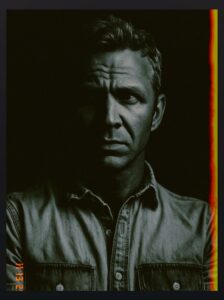
Devin James Leonard’s tales often take place in rural, blue-collar settings, featuring working-class characters who go to great lengths to avoid legitimate work. His writing has appeared in over forty magazines and anthologies, including Flash Fiction Magazine, Black Cat Weekly, BULL, Maudlin House, and Fiction on the Web. His debut novel, The Buddy Snatchers, released by Crystal Lake Publishing, infiltrated our world on October 9, 2026.
The Buddy Snatchers
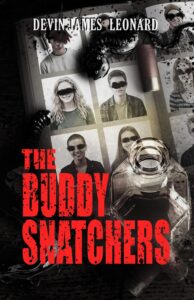
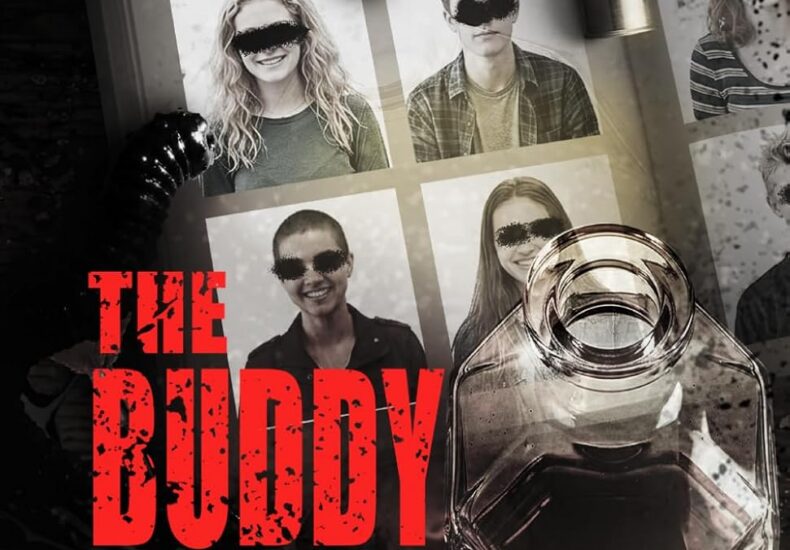
Alcoholic man-child Cal McCarthy wants one thing: to stay sober long enough at his ten-year reunion to win back his high school sweetheart.
But reconnecting with old friends reveals he isn’t the only one pretending to be someone he’s not—almost everyone in town seems different.
Something has infiltrated Cal’s tiny Adirondack village and found its way inside the residents, altering their minds and taking control of their bodies. After a decade apart, Cal must rely on fading memories of his friends to figure out who’s been infected, who’s simply lying—and who’s just grown into someone he no longer recognizes.
A paranoid, character-driven small-town horror novel about addiction, identity, and the terrifying possibility that the people you used to know might already be gone. Perfect for readers who love Invasion of the Body Snatchers-style dread, unreliable narrators, and horror that hits as hard emotionally as it does viscerally.
The Interview
The Legacy of The Body Snatchers, Part One: Communism and Other “Replacements.”
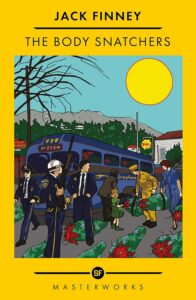
Jack Finney’s 1955 novel The Body Snatchers, better known as Invasion of the Body Snatchers thanks to its two most successful film adaptations (1956, 1978), successfully handles a metaphor that reflects on both sides of the controversy that defined his era. The alien pods that replace people with copies that move communally toward conquest links to fears of Communist infiltration of American society, but at the same time, it also reflects on demands for conformity made by anti-Communist McCarthyites. That your main character’s name is Cal McCarthy does not seem like a coincidence. What’s your take on Finney’s novel and the films that sprung from it? Right-wingers in 1955 seemed worried about Communist replacements, and I hear about another Replacement Theory now. How might that parallel, consciously or unconsciously, inform your book? Fears orbiting Communism are at the heart of The Body Snatchers. What holds together the fears at the heart of The Buddy Snatchers?
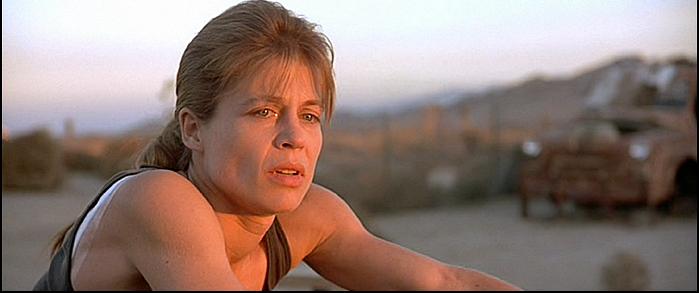
With naming my characters, I wanted to pay homage to films and actors within the genre. For instance, there’s Miles Sutherland. He gets his name from Donald Sutherland, the star of the 1978 Invasion of the Body Snatchers; Gina Weaver’s name comes from Sigourney Weaver, and Alicia Hamilton from Linda Hamilton. Cal McCarthy coincidentally… or maybe not so coincidentally… I named after Kevin McCarthy, the star of the original Body Snatchers. I’m sure there are more references sprinkled throughout the character names, but I wrote this over ten years ago and can’t recall. I hadn’t seen either film or read the novel until after, so I wasn’t aware of the McCarthyism themes until much later when I learned about the blacklisting in Hollywood in…what was it? The forties? It was either through screenwriter Dalton Trumbo or… I think director Elia Kazan had something to do with it, too, but… yeah… I see the link between “replacements” and “pod people,” infiltration and paranoia.
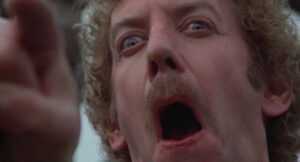
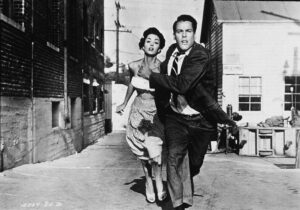
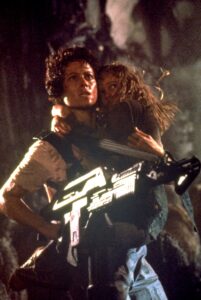
There aren’t any parallels, conscious or unconscious, in my book. I just love those kinds of films… Body Snatchers, The Thing, The Faculty…and Buddy Snatchers is my tribute to them… hopefully.
What holds together the fears at the heart of The Buddy Snatchers, I think, is social identity… the masks we wear, the performance we put on in social settings. Everybody tweaks their personality to fit into whatever public/social circumstance they’re in. Here, in this story, not only are there creatures inside people who are literally “playing” people, but the people themselves are lying, embellishing, pretending, playing roles to make themselves look more impressive.
Adulthood as Body/Buddy Snatching.
As Cal approaches his ten-year high school reunion, one fear certainly seems to be on his mind: adult identity and responsibility. Even before aliens get involved, his friends from high school seem alien, not like the kids they used to be… they’ve traveled farther into the adult world than he has. To what extent is “buddy snatching” a metaphor for a time of life—for many, the late 20s—when people often get married, have kids, etc.—and transition from relative freedom to responsibility? Fear of communism is usually fear of enforced conformity. Is fear of adulthood’s “snatching” of youthful freedom fear of what is really an unjust imposition of social norms? Why or why not? Is adulthood alien? Let me put it another way—is adulthood a condition of alienation?
Yeah, I don’t know. I think in a way, adulthood does represent an enforced conformity. Society has placed so many rules upon us, and we don’t even know where they came from, but the majority obeys them. “You graduate high school, go to college, find your career by this age, get married in this time, have children at this age… so on and so forth.” I haven’t had a full-time job in over a decade, but I have had and still have three part-time jobs. Someone once asked me why I didn’t just find one full-time job, as if I was doing the “career” thing all wrong. Why do I need one job? Because society says so? There is so much more flexibility and freedom in having multiple part-time gigs… Hey, maybe that’s the answer… too much freedom!
Look at Cal. He’s essentially Peter Pan. He refuses to grow up or do anything adult-like. Most of his friends left town long ago, and his only remaining friend is Alicia, who runs her own business, is married and has two kids. I think when we meet Cal, he’s only now becoming aware that he’s the last man… or I should say… man-child… still living like he’s in high school. The party ended a long time ago. Cal just hasn’t left it yet. But what would have happened to him if he had listened to “society?” Would he be in a hapless marriage with a couple of kids he never wanted, working a shit job and living a miserable existence? Sure, in a way, Cal already is kind of miserable at times, but at least he’s doing it his way. So, yeah, I think you’re onto something there, Andrew, Buddy Snatching being a metaphor for forced conformity.
The Legacy of The Body Snatchers, Part Two: The Weight of the Pods and Worms.
The two film adaptations I mentioned are the best known, but Finney’s novel also spawned Body Snatchers (1993), The Invasion (2007), arguably The Faculty (1998), and many others, especially if one acknowledges overlapping influence with Robert Heinlein’s 1951 classic, also oft-adapted and imitated, The Puppet Masters. Did the massive size of this tradition in sci-fi and horror affect you while creating your story? If so, in what ways, and if not, how did you evade the weight? Although your style isn’t particularly “meta,” your narrator still refers to situations as being comparable to films, especially sci-fi. Why do you make these comparisons? Do you think readers’ familiarity with body-snatching alien parasites allows you to concentrate more on developing other aspects of your story? Why or why not?
No, it didn’t affect my writing. Like I said, I love those movies. Um, I’m not sure why I made the comparisons. I don’t know why I write anything I write.
“I don’t know why I write anything I write.”
Alcoholism, Part One: Antiheroes, Transgressive Heroes, and Superheroes.
The description of The Buddy Snatchers I took from Amazon refers to Cal as an “alcoholic man-child,” which is kind of harsh… but kind of true. Why make your main character an irresponsible alcoholic and make his alcoholism so central to the storytelling? I found Cal likeable despite the general impression that he’s a screw-up. Do you think he’s a likeable character? Why or why not? His foibles don’t make him a traditional hero… is he an antihero? Or perhaps a transgressive hero, someone who gets to be in a heroic position despite defying wholesome “heroic” values? Comic books and movies have given us quite a few characters over the years who need drink or drugs to turn on superpowers (I’m particularly fond of Jackie Chan’s character in Drunken Master, 1978). Might drinking actually make Cal a superhero? Why or why not?

I wanted the main character a screw-up because it makes for more entertainment. If the narrator’s got no flaws, it would just be too straightforward and boring. I think it’s important for the protagonist to be likeable, if not sometimes annoying and frustrating, and Cal’s unhealthy habits tend to make him both most of the time. I believe he is likeable to us, the readers, but in real life he’d be the biggest sore on your ass. That makes for a pretty neat transgressive hero, if that’s what you want to call him. I don’t think he’s THAT heroic. There are far braver folks than him in this story.
Speaking of Transgression, Dogs are Buddies, Too.
Overall, The Buddy Snatchers wouldn’t get a high score on the Horrific Scribes extremity rating scale (I might go two hearts), but you break one taboo that will gut some readers: bad things happen to good dogs. Was making animals vulnerable a deliberate transgression? Either way, why did you decide to do it? Cal’s dog Merle is an important buddy. How does his dog buddy compare to his other buddies? In a book in some ways about the human, the inhuman, and difficulties telling the two apart, what might dogs reveal?
Man, did I do a Fail with that? I never realized it until my sister… she’s always the first person I send my writing to… and she pointed it out to me, that bad things happen to good dogs in A LOT of my stories. I swear I don’t mean to do it. I love dogs. I’ve loved my dogs and pets more than anything. Losses of pets have been the most heartbreaking moments of my life, and I think I write characters with pets as a way to deal with those moments.
Cal’s dog might be his most important buddy. Merle loves him unconditionally, as all dogs do. Alicia loves Cal, too, but she’s got her limits. I think Cal knows this at the start of the book… that Alicia is at wits’ end with him… and in some way, Cal impulsively adopting Merle is his last chance at having someone or something that will put up with his bullshit and never leave him.
Alcoholism, Part Two: Addiction as Mind Control / Replacement.
Cal’s drinking leads to memory loss, blackouts… and on top of that, he allegedly has chronic symptoms from a head injury (sustained while drunk) that could affect his perception. That drug addiction involves surrendering control of one’s mind to the drug is a commonplace, and for Cal, alcohol does seem to be in control, at least partially. What does the parallel between addiction’s relationship with mind control and the aliens’ use of mind control reveal—both about addiction and alien invasion? Is Cal “replaced” by his drinking, or is he his “true” self while drunk? The book’s description signals that Cal might be an “unreliable narrator.” To what extent might Cal’s lack of control of his own mind—or just his surrender to a transgressive lifestyle—mean that readers can’t trust the story he’s telling?
Cal thinks he’s happiest when he drinks, but really he’s just drinking to forget. To forget about society telling him to grow up, to forget about the girl who got away. Cal’s got a ton of regrets and flaws and stuff he does not and cannot deal with while sober. He uses alcohol to alter/numb/control his mind as opposed to facing them. The aliens’ use of mind control would probably make for a healthier alternative to booze. Hell, Cal would probably be happier if he were “replaced.”
Normalizing Conspiracy and Paranoia.
How does the existence in the world of The Buddy Snatchers of the sci-fi tradition that includes The Body Snatchers—and if not Finney’s book specifically, at least science fiction and science “fact” like the Roswell cover-up, etc.—affect characters’ ability to cope with what happens in the story? Does familiarity with the possibility of aliens taking over people’s bodies and minds make them initially less or more paranoid? Why? As the story unfolds, characters seem to adapt quickly, and as layers of conspiracies come to light, surprise seems… understated. Why? Are conspiracies, in 2026 as opposed to 1955, more familiar, more expected—possibly frighteningly normal? Why or why not?
This goes back to what you said about Cal referencing situations as being comparable to films and science fiction. If the characters are aware of aliens and government coverups, Men in Black… at least the idea of them, the possibility of their existence, then it only seems likely that they’d adapt to their predicament much faster and become far more paranoid. There are conspiracies nowadays about everything, especially about the government. At one point in the book, one character blames the government for what’s happening, and another character responds by shaking his head and saying all-too-knowingly, “Those sons of bitches,” as if, of course it’s the government’s fault.
Men Who Don’t Work.
Two major male characters, Cal and Marty, connected to the same woman, Alicia, act like they’re opposites, but they both avoid work responsibilities while relying on Alicia, who’s far more organized and financially productive. What does the dynamic between these men reveal about them and suggest about how men relate to women? Throughout The Buddy Snatchers, women tend to take positions of power while men prove to be ineffectual. Did you create this gendered contrast intentionally? If so, why? If not, do you think it’s there? When we look at these characters, are we looking at individuals with problems, or are we looking at a problem with masculinity in 2026?
Marty is a direct reflection of Cal, which Cal is blind to, and one could argue Alicia as well. Alicia has been jokingly referred to as the Mother Goose of the group ever since they were kids, always taking care of everyone else, and Cal and Marty are proof that it’s still the case. This has more to do with the themes of adulthood than with masculinity. Women mature much faster than men, and, in a way, Cal and Marty are both children who seem to have no interest in grown-up responsibilities. It only makes sense that the women take charge and get things done when the proverbial shit hits the fan. Sure, the women mess things up just as much as the men, but it’s not unintentional that while the girls are keeping a level head, contemplating their next move, thinking through the problem, the boys are grabbing weapons because their answer to everything is shoot-first-ask-questions-later.
The Legacy of The Body Snatchers, Part Three: Mind Control in 2026.
While we’re thinking about how The Buddy Snatchers reflects on the present moment, as your book’s description signals, it has “small-town horror” in common with The Body Snatchers. How has small-town horror changed since 1955? What has happened since 1955 that might make the horror of an invasion taking over a small town by replacing one person at a time register differently? What’s happening now that might make mind control and government conspiracies in small towns particularly scary?
It’s harder to make these small-town stories logical now, with our technology. Look at all the horror movies from the 80s… where a cell phone could solve almost any problem that has befallen a character. That’s why Northbrook, the town in Buddy Snatchers, is referenced to having “shoddy at best to non-existent cell reception.” You’d think that small towns would be easier for secret government organizations to get away with some weird business… you know… doing some shady shit right under people’s noses. These days, with everyone’s noses buried in their cell phones, an invasion could happen anywhere, and most would be none the wiser. Also, I grew up in a small town, and sometimes you just have to write what you know. Oddly enough, I wrote Buddy Snatchers in that small town with great cell reception; now I live in a city and the reception in my house is absolute garbage.
What’s Next?
You’ve published an impressive stack of short stories, and now you’ve debuted as a novelist. What’s next? What publications are in the pipeline? What plans are concrete? What projects are in the fantasy stage?
I’m revising the sequel to The Buddy Snatchers. It’s gargantuan. It’s epic. It needs a lot of work, but I’m excited to jump back into this universe. Buddy Snatchers came about over ten years ago, and the sequel I wrote in… I want to say 2018-2019, and I haven’t read it since then. I’m also revising and reworking a few other novels I wrote long ago. One novel I’m chopping down to novella-length. And I’m still writing short stories. About a year ago, I received an acceptance from Ellery Queen Mystery Magazine for a story called “Single Barrel Shakedown,” and I finally received word that it will be published in the March/April issue next year. That’s a big one.
Other than that, I’m an unmarried, childless thirty-nine-year-old, and I’m not looking to grow up… err… conform… anytime soon.
Thank you for sharing your work and for taking the time to answer these questions!
Thanks, Andrew. For everything.
Sample Leonard’s dark side in Horrific Scribes…
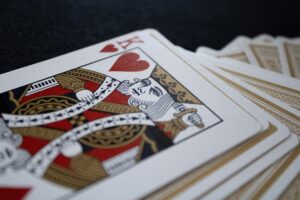
Read Leonard’s short story “King of Hearts” in Horrific Scribes, June 2025.
Description: King of Hearts… a children’s card game with adult—and inhumane—repercussions.
AND

Read Leonard’s short story “Squatters” in Horrific Scribes, January 2026.
Description: Strapped for cash, Ken Duffy takes a job removing squatters from a friend’s building. Little does he know, the squatters aren’t exactly human.
Leave a Reply