The Art of Horror ARGs
by H.J. Dutton
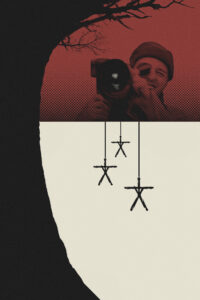
On July 30 of 1999, The Blair Witch Project opened in theaters. The found footage folk horror film follows three student filmmakers as they record a documentary about a small-town legend. Despite its tiny budget of around $45 thousand, the film became a legendary box office success, grossing $250 million worldwide. While the film’s success can be attributed to the clever filmmaking of directors Daniel Myrick and Eduardo Sanchez, a perhaps even more crucial contributor was the film’s marketing campaign (Rottenberg 2024).
Rather than relying solely on standard advertising, Myrick and Sanchez campaigned to convince the public that their film was not a fictional narrative but instead authentic recovered footage. The production used a combination of missing persons reports featuring the cast, fake police files, and message boards on an internet still in its infancy. Artisan Entertainment’s marketing team, headed by John Hegeman, further strengthened the ruse through the creation of blairwitch(dot)com, which compiled the aforementioned fake evidence on a free-to-access website. Before the film’s release, the website received upwards of three million visitors. Millions of moviegoers arrived at theaters with the impression that what they were about to witness was real evidence in an ongoing missing persons case (Rottenberg 2024).
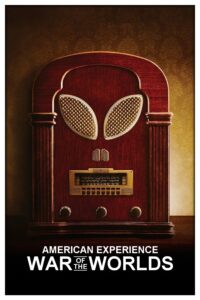
Today, The Blair Witch Project is considered an early example of an Alternate Reality Game (ARG). An ARG is a piece of fiction that not only poses as nonfiction but uses reality as a stage. By presenting itself as nonfiction, the storyteller encourages or even requires the audience to interact with them and/or with the story itself. For example, Orson Welles’s famous October 30, 1938 broadcast of H.G. Wells’s novel The War of the Worlds (1898) on the CBS Radio Network could be considered an accidental ARG. Because the narrative was delivered to listeners as breaking news, listeners who tuned in late interpreted the fictional narration as a real emergency and reacted with genuine panic (Schwartz 2015).
ARGs can take incredibly diverse shapes, and while many ARGs involve audience participation, it is not necessarily a requirement in order for a story to be classified as an ARG. For instance, an episode of reality TV in which a fake disaster “derails” everything does not invite audience participation in the same way many internet ARGs do, but it still uses reality as a mask to elevate its storytelling.
To illustrate what constitutes an ARG better, I’ve included five examples, all of which successfully used real-world stages to craft enthralling stories.

Ghostwatch (1992)
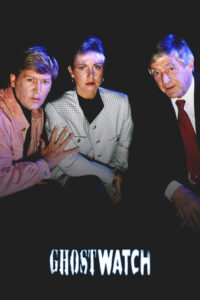
On Halloween night of 1992, 11 million viewers across the UK tuned in to BBC1 to witness a live paranormal investigation in Northolt, London. In Ghostwatch, a family of three is besieged by an entity living under their home; the two young girls refer to it as “Pipes.” Things go off the rails fast when Pipes proves to be more vicious than the family anticipates, going as far as to hijack the cameras. Among the 90-minute special’s cast are well-known and celebrated TV personalities such as Sarah Greene and Michael Parkinson. The cast essentially play themselves, adding to the film’s authenticity. For all the average viewer at the time knew, they were witnessing the maiming and deaths of beloved TV personalities. BBC1’s switchboard was flooded with over 30,000 calls during the broadcast, as well as thousands of complaints afterward from viewers who claimed the program traumatized their children. The program allegedly contributed to the suicide of 18-year-old Martin Denham, though no formal lawsuit was filed by his parents (Woods 2017). Ghostwatch remains a crucial pioneer in the mockumentary film subgenre and a testament to the power of media.
The Interface (2016)
On April 21, 2016, a Reddit user named _9MOTHER9HORSE9EYES9 replied to a comment in a discussion thread about the infamous MKUltra experiments. The comment detailed an unfounded theory regarding the experiments, presented as though it were fact, and it quickly spiraled into gibberish peppered with terms such as “restraint bed portals” and “flesh interfaces.” Fellow users were immediately intrigued, though most brushed this first comment off as elaborate engagement bait. However, those who clicked on the user’s profile after viewing their later posts discovered a sprawling cosmic horror narrative in the form of replies (Alexander 2016). It’s one of the most creative and innovative pieces of fiction on the internet, and it’s one few people are familiar with. You can read the full story via the link below:
“Dead Line” (2018)
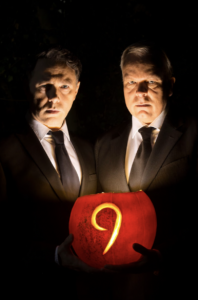
Creators Steve Pemberton and Reece Shearsmith of Inside No. 9 aired their legendary Halloween episode on Oct. 28, 2018. In preparation for the episode, Pemberton and Shearsmith advertised it as a supernatural horror story set in the supposedly haunted Granada Studio. Not long into the episode itself, the broadcast experienced technical difficulties before cutting out entirely. The remainder of the broadcast then transitioned to videotape and security camera footage, documenting the ghosts’ violent assault on production. Because the average viewer knew full well the twist was fiction, its strengths instead lay entirely in its risky meta-fictional brilliance. The show actually lost around 20% of its live audience that night, just before it revealed its clever twist (Harrison 2018).
“Weird Birds” (2023)
In September 2023, an account on Twitter named @Archesuchus began posting a series of unnerving photos. In captions, the user explained that over the past few days, they encountered an unknown species of large, flightless birds lingering outside their house at night. Unbeknownst to them, the “birds” outside his house are not birds at all, but dinosaurs. Worse yet, they’re raptors (Stuck 2023). This wonderfully creative story is best experienced unprepared.
If you want more stories that play games with “reality,” enjoy these selections from the Horrific Scribes archive:

Read Phoebe Barr’s short story “Final Confession from the One-Woman Department of Mind Control” in Horrific Scribes April 2025.
Description: As climate change and the rising tide of fascism plunge American society into chaos, one woman’s quest to save her best friend takes a dark turn. This is her confession.

Read Zary Fekete‘s short story “My Father, My Father” in Horrific Scribes December 2025.
Description: A speculative story of a father training a son for online life. What could go wrong?

Read Jan-Andrew Henderson‘s short story “Lake Fame” in Horrific Scribes, January 2026.
Description: Hiding in a deserted summer camp beside Lake Fame, a family tries to survive while they figure out why the world is slowly turning plastic.

Read Grigory Lukin‘s short story “To Dream of Better Worlds” in Horrific Scribes, January 2026.
Description: When two anthropologists come out of their time-capsule stasis, they find a dead planet… and some very unusual tools.

Read Fendy S. Tulodo‘s short story “Genesis in Reverse” in Horrific Scribes, November 2025.
Description: A mother waits for the crying to stop, but silence keeps changing shape. Something small learns how to breathe again, and the walls forget which side they belong to. What returns is not the same, and what stays behind starts to move.
Works Cited
Alexander, Leigh. “_9MOTHER9HORSE9EYES9: The Mysterious Tale Terrifying Reddit.” The Guardian, Guardian News and Media, 5 May 2016, www.theguardian.com/technology/2016/may/05/9mother9horse9eyes9-the-mysterious-tale-terrifying-reddit.
Harrison, Phil. “How Did Inside No 9 Spring the Biggest Live TV Surprise of the Year?” The Guardian, Guardian News and Media, 30 Oct. 2018, www.theguardian.com/tv-and-radio/2018/oct/30/how-did-inside-no-9-spring-the-biggest-live-tv-surprise-of-the-year.
Rottenberg, Josh. “How ‘the Blair Witch Project’ Revolutionized Movie Marketing.” Los Angeles Times, Los Angeles Times, 31 July 2024, www.latimes.com/entertainment-arts/movies/story/2024-07-30/the-blair-witch-project-marketing-25th-anniversary-1999-project.
Schwartz, A. Brad. “The Infamous ‘War of the Worlds’ Radio Broadcast Was a Magnificent Fluke.” Smithsonian.Com, Smithsonian Institution, 6 May 2015, www.smithsonianmag.com/history/infamous-war-worlds-radio-broadcast-was-magnificent-fluke-180955180/.
Stuck, Andrew. “Weird Birds.” Dino Dad Reviews, 8 Oct. 2023, dinodadreviews.com/2023/10/08/weird-birds/.
Woods, Rebecca. “Ghostwatch: The BBC Spoof That Duped a Nation.” BBC News, BBC, 30 Oct. 2017, www.bbc.com/news/uk-england-41740176.
Leave a Reply