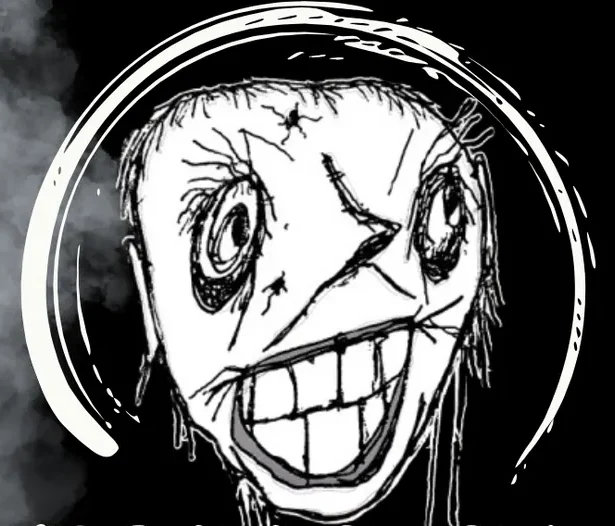

Uncanny Faces and Borderline Places: An Interview with Author Thomas C. Mavroudis
Periodically, as special features in Horrific Bloggings, Horrific Scribblings will host original, personalized, in-depth interviews with artists working in horror and horror-adjacent areas. We start with one of the most successful contributors to Horrific Scribes…
About the Author

Member of the Denver Horror Collective, as well as the Horror Writers Association, Thomas C. Mavroudis has an MFA from the University of CA, Riverside – Palm Desert under the direction of Stephen Graham Jones. His debut collection, Rabbit Face and Further Awful Encounters, was released in April 2025 from JournalStone. His short stories have recently appeared on Creepy-A Horror Podcast, The NoSleep Podcast, and in Cosmic Horror Monthly, NonBinary Review, Carpe Noctem, Frontiers of Fright, and the Shirley Jackson Award nominated anthology Mooncalves.
He has contributed three stories to the Horrific Scribes archive: “From a Trail Cam Pointed at Our House,” “Revelations of a Shadow Person,” and “In the Bleak Christmas Market.”
The Interview
Hi! I’m L. Andrew Cooper and, as owner of Horrific Scribblings and Editor of Horrific Scribes, I have the pleasure of interviewing Horrific Scribes favorite Thomas C. Mavroudis. My questions are monstrous, so I encourage everyone I interview to answer as selectively as they please. I base my questions for Mavroudis on the three stories he’s published in Horrific Scribes as well as the stories in his collection Rabbit Face and Further Awful Encounters, published less than a year ago. After the interview, I review the book.

1. Changing Horror Volume, Quiet to Loud.
- LAC: Would you describe yourself as an author of “quiet horror?” Why and/or why not?
- TCM: I would. Sometimes I worry my work is too quiet! Honestly, I think a good deal of my fiction overall is weird, and I believe weird fiction is analogous with quiet horror due to tone and pace. I recently read “The Hospice” by Robert Aickman for the first time and enjoyed how unnerved I felt by it. But it’s a slow mover, just like Blackwood’s “The Willows.” I don’t intentionally try to craft a slow burner, but I feel the impact in my work centers on placing my characters in very normal, relatively comfortable settings and then ruining their world by introducing something bizarre and awful.
- LAC: Your story in Horrific Scribes, “From a Trail Cam Pointed at Our House,” takes a bit to arrive at disturbing elements, and detachment mutes them at least somewhat. The story could be louder. Why isn’t it?
- TCM: This is an interesting question. I think it could have been louder told by a different narrator. What I wanted to do in this story is bring the reader right onto the bed with this guy’s son, watching all this strange video footage from the seeming safety of their house. I hope I do that to some degree in all the other stories.
- LAC: In the Rabbit Face collection, “Peymakilir” builds like a slow burn but climaxes with explicit imagery—does the climactic violence exclude it from “quiet” company? Why or why not? I doubt you’d call the taboo-breaking “My Love Burns with a Green Flame” and the all-out monster mash of “Terror from the 50-yard Line” quiet. What would you call them, and how does their relative loudness fit with the quieter fare of other tales in your catalogue?
- TCM: These three stories are certainly more Horror in the mid-range, I suppose, but I think they have their gentle moments, too. Ha… gentle. What, change in tempo, I guess? Especially “Terror from the 50-yard Line.” I think “The Bloody Cask of Rasputin” falls in line with these pieces as well. I was just thinking, it’s like the band The Jesus and Mary Chain: there are two types of JAMC songs, fast songs and slow songs. Or, my favorite band is The Cure. The Cure aren’t just heavy bass and brooding synth; they have their pop songs, too. That’s me. I’m the Robert Smith of weird fiction. Haha

_crop.jpg)
2. Family Drama / Trauma.
- LAC: During the opening pages of “Rabbit Face,” you develop several members of a family but focus on a potentially problematic father-son dynamic, a feature the story has in common with “From a Trail Cam Pointed at Our House,” though the fathers and sons as well as the contexts for their relationships are very different. What draws you to examine father-son dynamics in these stories?
- TCM: My dad was very important to me. My core was built around becoming as close to the man he was, the way that I knew him. This is as a friend, father, husband, professional; all aspects. He was my hero. He was the Best Man in my wedding! So, the father archetype is very dear to me. I pay close attention to “good” dad characters in others’ works when they happen. I feel like it’s rare, actually. Moms seem get all the heroic credit. Except Margaret White.
- LAC: What do you think the stories say about masculinity, male bonds, and family bonds more generally? Another one of your stories in Horrific Scribes, “In the Bleak Christmas Market,” also emphasizes family—in this case, a family rapidly diminished by a series of deaths—and the relationship between two sisters. Again, why the emphasis on family, particularly family and loss?
- TCM: Family and family traditions are very important to me and show up frequently in my work, usually in a good light. I had a very unlikely childhood and adolescence (and even early adulthood) in how wonderful it all was. When that all went away, much like the sisters in my Christmas story, I was devastated. I still haven’t recovered, decades later. So, I employ this loss, this devastation, this loneliness in my stories, because for me that is horror. Of course, there is also the horror of discovering that a great deal of one’s world is mythology, that there are stark differences between all you know and all you knew, and how to reconcile both.
- LAC: How does your approach to sisterhood differ from your approach to manhood?
- TCM: I didn’t really have a brother. I had brothers, but they were hardly involved in my life. I’m looking at you “Antumbra.” But I was very close to the sisters I grew up with, so when I write about siblings, there is usually a sister involved. I draw much of this development from my relationship with my older sister, and the relationship my wife has with her sister.

3. The Uncanny.
- LAC: Freud famously described “the uncanny” in art and literature as well as life as the feeling that comes from sensing the “un-homelike” within the “homelike,” the unfamiliar within the familiar. Experiencing the uncanny is often surreal and disturbing. The doppelganger or double, the copy of someone that still isn’t quite that person, is a classic source of the uncanny. “Rabbit Face” refers to “identical cousins,” doubles who, along with events that get doubled, shape the tale as well as its underlying psychological patterns and impact. Doubling appears to be one of your favorite devices: it appears in “Antumbra,” “Terror from the 50-yard Line,” and arguably others. What draws you to doubling?
- TCM: I love talking about this! The root of the doppelganger horror trope centers on false accusation. Can you imagine be accused of something horrible that the victim swears you committed? They saw you, heard you, maybe even recognized your scent, but how could it have been you? Was it you, though? The thing about doubles is, they can be so close to being exactly the same, and yet nothing is exactly the same as anything else. Even identical twins have different interests and quirks that individualize them. What I find eerie is in those differences. A double is… off. It’s so close and yet there is something definitely wrong with it. And, what if, horror of horrors, you are the double? This ties into false memories and leans into dementia as well. I think about this all the time.
- LAC: As a kind of corollary to doubles, Freud identifies puppets (along with robots and other human replicas) as sources of the uncanny, and you use puppet imagery more than once in Rabbit Face, especially in “Dinner and a Show” but also in the “mannequins” spotted in “Antumbra.” Why puppets?
- TCM: That fear of replicas is as old as time, and why, how? What sort of lizard brain reaction did cave people need to warn them against what looks almost like them? Scary. As for me, I’ve always been afraid of dolls and their ilk. I’m of the age that I experienced the trailer for Magic (1978) first hand on my living room television at 9:30 at night on my way to brush my teeth. That destroyed me. Go watch it if you haven’t in a while. The trailer, I mean. I’ve, naturally, never seen the movie.
- LAC: Do you deliberately seek to create uncanny reading experiences?
- TCM: Absolutely! If I don’t do that, then I’m not doing my part-time, weekend, sort of hobby job.
- LAC: Freud builds his theory of the uncanny on a reading of early 19th-century horror: why do you think the uncanny has been a salient feature of horror fiction for so long?
- TCM: I think this still goes back to our primitive ancestors. It’s something that is hard-wired into us. No matter the science the modern world equips us with, all the knowledge and understanding, it’s but a fraction of everything. And understanding, true understanding, I believe only leads to further questions. The uncanny is a hallway with doors that lead to understanding or more unknowing.
4. Folkloric, Archetypal, Mythic, Cosmic.
- LAC: The creepiness of your stories comes not only from classic sources of the uncanny but also from the resonance with which you endow your tales’ sources of the strange and scary. In your “Revelations of a Shadow Person,” published in Horrific Scribes, you narrate from the perspective of one of the title beings, validating and expanding on the lore surrounding those beings. Similarly, your stories “The Hat Check Lady” and “Rails” in Rabbit Face are supposedly based on phenomena from urban myth. How does lore—actual in the former tale, invented in the latter two (I think)—enhance your storytelling?
- TCM: Folklore and urban legends are very powerful because there is some tiny hint of truth to them. I would even extend this to cryptids. I’m always amazed when people relay an urban myth as true. Nowadays, of course, the entire world seems to read like a never-ending issue of The World Weekly News. And that is very frightening. People don’t just believe what they want to believe, but what they need to believe. I think this reaches back to the reason we have myths: to teach. The lessons are not always spot on, but there is that mote of understanding floating around. And on the note of authenticity in my work, “The Hatchet Lady of Red Rocks” is very real: the person she’s based on and the ghost stories us Denverites grew up with in the 70s and 80s. She’s pretty obscure now. That’s why I wanted to honor her by spinning a tale that my sister actually constructed. About 70% of that story is true. As for “rails,” that’s what my wife’s uncle calls flying rods, which are one of my very favorite cryptids.
- LAC: The power of the shadow person gives them almost mythic proportions, and of course the shadow is also a Jungian archetype; the rabbit of “Rabbit Face” appears like a totem, also mythic, perhaps cosmic, and certainly the cats of “Cats in the Walls” are a subject of local lore with cosmic significance. How do folklore, myth, and archetype relate in your work? What’s your relationship with “cosmic horror?”
- TCM: My first encounter with cosmic horror was in the GURPS (Generic Universal Role Playing System) Horror module. They had a monster type called Things Humans Are Not Meant to Know and in the sidebar about reading references, I was introduced to H. P. Lovecraft. After that, I was hooked. More by the concept, really, because my primary reading for about six months was Call of Cthulhu game supplements. I was too busy devouring the work of Clive Barker at the time to crack properly into the old pulp stories. I’m really enthralled by the ambivalence of the Great Old Ones and Outer Gods. I denounce the concept that they are evil—they simply are, and humans cannot possibly understand that. The ambivalence of the universe, of existence, is very horrifying.
![fir0002 flagstaffotos [at] gmail.com Canon 20D + Sigma 150mm f/2.8, GFDL 1.2 <http://www.gnu.org/licenses/old-licenses/fdl-1.2.html>, via Wikimedia Commons](https://commons.wikimedia.org/wiki/File:Moths_attracted_by_floodlight.jpg)
5. …and especially animals and shadows.
- LAC: While your archetypal and mythic imagery takes many forms, animal and shadow images recur with frequency: the Rabbit Face collection begins with a rabbit and ends with cats, and “From a Trail Cam” in Horrific Scribes is largely about someone witnessing a bizarre animal ritual. Likewise, significant shadow images appear in perhaps every story in Rabbit Face, and you’ve got a “Shadow Person” in Horrific Scribes. Consider the “birds that were not birds” in “A Pantheon of Trash.” Do animals have something intrinsically uncanny about them?
- TCM: Animals are really, really weird, and somehow, we live side by side with them, these predators roaming around in our house, even sleeping in our beds! They are unpredictable. Even the most faithful dog has primeval instincts inside them. Another thing, animals outnumber us! And that’s just the vertebrates. The cosmic horror of all things without a backbone would drive us to insanity if we stopped and thought about them too deeply. But joking aside, I’ve always been intrigued by animals and their astonishing variety across the kingdom. I could go on and on about animals in horror.
- LAC: Do shadows?
- TCM: Shadows are just another form of a double, another type of doppelganger, not to mention that it’s very difficult to separate them from yourself. As far as we know. Who’s to say, they may have an easy time pulling themselves away from our flesh.
- LAC: What other reasons might you have for specific fascinations with animals and shadows? In “The Bloody Cask of Rasputin,” shadows take human and animal forms—do you think something connects animals to shadows?
- TCM: In general, I think shadows have the tendency to trick us. Even the subtlest shadows can make our own appearances change to others and ourselves. That shadows can imitate other things is nefarious, be it animals or people or trees.

6. …and molds and fungi.
- LAC: While they’re not as prominent as animals and shadows, molds and fungi—the presence of which in horror happens to have been the subject of a recent Horrific Scribblings blog article—also pop up in your stories and seem to add something unnatural to the natural world. While the story is ambiguous, mold seems like the most likely culprit for the malady that seizes the main character in “My Love Burns with a Green Flame,” a malady that, among other things, supersizes his sex drive. Why might the introduction of a mold into his system explain such a thing? Assuming it is, why is mold… scary? In “Terror from the 50-yard Line” a creature has “fungal blooms,” and in “Cats in the Walls” a creature is likened to a fungus as its alien appearance is revealed. Why are fungi such useful images for characterizing the inhuman? What’s scary about fungus?
- TCM: There is something very alien about molds and fungi, and not just appearance alone. Are they alive or something else we don’t fully understand? The possibility that they may have some sort of intelligence puts them right there in the category of cosmic horror. The “mold” in “My Love Burns with a Green Flame” is very much a tribute to Lovecraft’s “The Colour Out of Space,” which I’ve always imagined as some type of fungoid from beyond our sphere.
7. Speaking of Hot Topics: Liminal Spaces.
“Strange things happen, they really do, but only in these little concentrated spaces. And these stories leech out, they decay and change, and become myths and urban legends and campfire stories.”
(“Block 12,” from Rabbit Face and Further Awful Encounters)
- LAC: We also had a recent blog article about liminal spaces, which appear in your stories quite often. For instance, the restaurant of “Dinner and a Show” certainly seems liminal, as does the green space of the urban-suburban area in “From a Trail Cam,” and so do the “necropolis,” the “uncannily empty streets,” and the “dead, alien city” of “Block 12.” Why do these sparse, underpopulated, transitional spaces fill your fiction?
- TCM: Something I like to play with is the horror next door. Why does there always have to be a lone, abandoned house on a hill or an altar in a secluded corner of forest? I like haunted buildings right on Main Street and ghost children in busy parks. The liminal space of occupied areas, the urban liminal spaces, are particularly unnerving because they are simultaneously familiar and alien.
- LAC: What effects do you seek to create with depictions of liminality?
- TCM: The effect I hope to create is not necessarily just unease, but of the otherworldly. I want the audience to think about what surrounds them that they can’t see. I want them to have a notion of the invisible all around them.
- LAC: In your stories, what might characters’ experiences with the liminal mean?
- TCM: These encounters with the liminal are my characters’ acceptance that the universe is beyond their comprehension. Not many people die in my stories, but they all are irrevocably changed by the experiences.
8. Queer Characters and/as Outsiders.
- LAC: The main characters of “Dinner and a Show” are gay newlyweds, and they are also very much fish out of water. Why did you choose gay leads for this tale, and does their sexuality relate to their predicament?
- TCM: Fish out of water, eh? I figured a Greek island holiday is one of the most predictable situations a gay couple might find themselves in. That said, this story could have easily been about a straight couple and be exactly the same. This couple in particular is a creative facsimile of one of my best friends and his husband, so I thought it would be fun to write a story about them getting into trouble on one of their European vacations I’m so jealous of.
- LAC: A gay character is also central at least to the backstory of “Peymakilir.” His sexuality certainly would have been taboo in the story’s historical setting—does it also relate to other transgressive, even villainous, aspects of his character? Why or why not?
- TCM: This is an interesting observation. At first, I thought you were asking about Garland, because he is very villainous; he’s the antagonist, after all. I had to skim the story over because I thought he’s not gay, the fellow Abbot replaces is gay, but it’s hardly mentioned. I think what’s more noteworthy about Mr. Eliot is that he was a company man on the take. Whether villain or not, Mr. Eliot, I feel, is portrayed as similar to Abbot in that they are both low-level agents for a wealthy firm representing even wealthier clients. However, Eliot was more or less intrigued/enthralled by the extra money the scheme would yield him. Desperation, as with Garland, more than anything I think characterizes this man.
- LAC: “Death Takes a Booty Call,” in which Death is the main character, gives Death some peculiarities with regard to gender, and I even feel like the shadow person narrator of “Revelations of a Shadow Person,” speaking as the feared antagonist of the normal, comes across as at least a bit queer in their outsider status.
- TCM: Again, an intriguing perspective I did not see regarding these two stories, which is great. After I write a story, there are few if any right answers to what the reader walks away with. I think the most important job for the reader is to take a story and make it mean something specifically for them. Death itself is fluid in all manner, it’s you, me, it’s everyone. While I’m sure there are other examples, I can’t think of a story at the moment where Death is uncategorized by gender, so that’s the way I portrayed it here. I suppose one could read my presentation as masculine, but to me, I wrote Death to be a lonely, all-encompassing every-human. I think the same goes for the shadow person, but in the opposite of Death; it’s not human, it’s barely anything the human mind can contemplate. Gender and sexuality, as we think of it, is not the same for the shadow person, if anything at all. Yet it has its desires the same as any cognizant or non-cognizant being.
- LAC: In what ways, and why, might queer outsiders be scary in your stories?
- TCM: Personally, someone’s sexuality is not important to me with regards to who they are as people. That’s the same way I write (or try to anyway) gay and lesbian characters—there is nothing about being same-sex attracted that makes them special or different from anyone else. At least not in this collection. My story in Mooncalves, “Sundered,” is about a closeted man with survivor’s guilt after the loss of his wife. So we can return to this when my next collection is published! But the Outsider… the Outsider in general is a monster to someone, and everyone is an Outsider to someone else. I don’t think humanity will ever get to a point where we accept everyone. That’s impossible, I’m afraid. We are witnessing mass intolerance across the board that I’ve never seen in my half a century of life. Until 2001, I thought I was living in the good times, the pinnacle of humanity. The internet, and our ability to use it effortlessly through our phones, has done nothing but worsen the sense of being an Outsider. How do we return to a level of mutual tolerance again? I have no idea.

9. Historical Settings and Cultural Frames of Reference.
- LAC: The first page of “Rabbit Face” refers to “Johnny Carson… finishing his monologue,” establishing the story’s setting as several decades ago; “Antumbra” refers to the original Twin Peaks soundtrack as if it were contemporary; and “Peymakilir” has characters refer to Dickens, Kipling, and Stoker as if they were closer to being contemporaries than classic authors, reinforcing the colonial timeframe. You sprinkle the stories with such cultural references yet rarely establish historical settings directly with dates—why?
- TCM: I prefer to sprinkle historic cultural references to establish time because I feel it’s just the right amount of information for the reader. Too much and I think it gets corny or may even makes the reader feel dumb. Like, alright I get it, we are in November 1985 on Friday at exactly 10:35. Also, the limited reference allows for me not to have to drill down to a specific year unless it is utterly necessary. In that case, accurate details are vital. I hate when I see something taking place in the 80’s and it is just plain incorrect. My wife and I watch a lot of shows and movies with our now adult daughter, and we are constantly telling her, that didn’t happen or that wouldn’t have happened when the production is set decades before. It makes me wonder if my dad felt that way when he watched WWII period shows in the 70’s like in Baa Baa Black Sheep.
- LAC: How do you think references to prose fiction, music, television, and movies help readers connect to your characters and their times?
- TCM: Some of these references are me revealing myself, letting the reader know, hey, this is me, Tom Mavroudis, this is where I come from. In that, I hope to make a connection as reader to author.
- LAC: Do you think constructing the historical and cultural contexts of your characters at least in part through fictional frames of reference weakens their “reality” and therefore perhaps strengthens their readiness for fantastic events? Why or why not?
- TCM: In short fiction especially, you only have so much time and space to get your setting down. So, a quick little detail, I feel, is just enough to hopefully strengthen the proper amount of attachment to reality. I think it’s important to establish that when things get weird, characters at certain points in modern time can’t just get on their computers or look at their phones. I make an effort to have my contemporary characters at least half the time have to work to find an answer. But it would be unrealistic if they didn’t use technology. They do in “Block 12,” but in “Rabbit Face,” they still have to dial long distance to call home. I think it’s vital to the story to make such distinctions.
10. “Literary” Horror.
- LAC: References to literary and cultural landmarks, such as the ones mentioned in the previous questions, are, according to some critics, hallmarks of “literary” fiction. What is “literary horror?” Is your horror “literary horror?” Why or why not?
- TCM: My wife says I write literary horror, and I’m good with that. Overall, there is something about the word “literary” that signals elevated, whether that is true to everyone or not. Yes, I have always loved monsters, but I’m not a big fan of mass market horror. At the end of high school, still wearing my black trench and army surplus combat boots, I got really into Tom Robbins. Still Life with Woodpecker was gold. In college, I became devoted to William T. Vollmann. The Rainbow Stories, tempered with Tom Robbins, was the formula I used for those four years. I still loved my Clive Barker and Lovecraft, and every single comic printed by the newly formed Vertigo imprint, but my writing was less and less in a horror or even supernatural vein. Not long after graduation, when I was working at a bookstore, I discovered Thomas Ligotti and Brian Evenson and was astounded. You could write elevated and still be creepy.
- LAC: All horror uses the genre’s conventions and tropes—without them, the work wouldn’t be horror—but do you make an effort to be self-conscious about conventions and tropes and to use them in a way that deviates from norms? If so, how do you do it?
- TCM: Yes, I think so. What I intend to do in writing is a remix of sorts. Not just the single 12-inch record, but the D.J.’s set. I take an idea, mix it up, drop in a sample from another idea and start dancing. “The Cats in the Walls” is the most glaring example in the book. Then there is “Peymakilir,” which is a vampire story, one far different from the more popular vampire stories. I quite like vampires, but not most of the genre’s offerings, so when I write a vampire story, I want to make it exceptionally unique.
- LAC: The language of some shorter stories, “Revelations of a Shadow Person,” for example, is so precise that it reads like prose poetry. How would you describe your writing process—do you think it approaches the poetic? Why or why not?
- TCM: I wouldn’t dare say my writing is poetic, but I am heavily influenced by music, if it wasn’t obvious elsewhere in this interview. A lot of the types of songs I like I view as stories. The Cure’s Pornography album, to me, is a collection of horror stories/poems. The work of Skinny Puppy informs a good deal of the atmosphere in my work. And Robyn Hitchcock’s surreal psychedelia also directs many of my ideas.
- LAC: In both “Rails” and “From a Trail Cam” your narrative style is very unusual, piling up description that creates engagement and tension while deferring revelation of the major narrative subject for quite a while (and perhaps leaving that subject permanently ambiguous). Do you consider this style experimental? Why or why not?
- TCM: I feel like my writing style is unconventional. It’s not something I strive for; it just comes out that way. You know, I mean, after I have worried over a sentence ten or eleven times until it’s right and then move on to constructing the next one, which may take twenty passes. It’s difficult to say things that have been said so many times over in different ways. Somehow, there are only so many musical notes, and yet people continue to craft new music, so that’s something I try to keep in mind. That said, I acknowledge that my way of telling stories is not going to be for every reader. Some people will want me to say more, to hand them answers, and that’s not what I think storytelling is about.

11. Next?
- LAC: What’s coming next from Thomas C. Mavroudis? Do you have anything already in the publication pipeline? What should we be watching for?
- TCM: Alas, there is nothing so far on the horizon publication-wise. Yet. It’s still early in the year, and not all my story submissions in the aether have been rejected. I try to keep ten pieces or so going out at a time. I need to get in my stable of embryotic stories and wrap up a few so I have a fresh batch of options to rotate through. But before that, I am just about to complete the second novella in my Bergdorf & Associates trilogy. Unfortunately, or maybe fortunately, the first book is out of print, so I’m hoping to bundle the second book with an updated and expanded reprint of the first, with an option for the third.
- LAC: What are your plans for the longer term?
- TCM: Long term, I have a number of full-length novels in various stages of completion, none of them close. I think upon basking in the satisfaction of finishing another long work, it will give me the rush to keep carving away at one of the other long pieces. Looking at late 2027, hopefully, I think I’ll have my next collection sorted out and ready to go to a nice home, maybe one that offers an advance. I don’t know, I might try to get a literary agent to help me achieve all my hopes and dreams. It worked for Stephen Graham Jones. I remember when I asked him why he changed agents, he said something like, “Well, I was looking at my driveway, and I didn’t have all the trucks I wanted.” I think he has them now.

Thank you, Thomas C. Mavroudis for such insightful answers!
Review: Rabbit Face and Further Awful Encounters
by L. Andrew Cooper
“The shadow swelled and stretched, then shriveled, growing arms, then tentacles, then static, nothing but a bleary absence of light and form. The black wall of pines above it was solid and unmoving. Yet even through the haze and the distance, Gordon saw that the shadow was himself.”
In Thomas C. Mavroudis’s Rabbit Face and Further Awful Encounters, the shadows are at least as vivid as people, perhaps more vivid in their undulations and transformations. The stories collected differ from one another a great deal in the ways they approach the horror genre, providing an assortment of flavors, but a distinct voice with coherent thematic interests and imagery unites them, taking us along different paths into uncanny realms of shadowy indeterminacy constructed from well-wrought prose and genuine horror found inside the essence of humanity.
The quote above might have come from several stories in the book, but it comes from the first, the title story, “Rabbit Face,” which, if I must choose, is my favorite, which is kind of weird because it’s very much not “my” kind of story. The beginning is very slow, lavishing pages on characterization without providing many hints about what, if any, action the story will involve. The haunting brutality of nature hovers, however, and when the action erupts, what on the surface seems like a conflict worthy of Jack London (tagged in the story) flows more like a surreal nightmare that got my heart racing like few stories do. I don’t know if the seemingly leisurely, quiet beginning increases the power of what follows, but what Mavroudis does works, showing mastery of his craft.
“Rabbit Face” is a period piece, and Mavroudis is quite good at using spare details to suggest fully realized moments in history. He displays this strength especially well in “Peymakilir,” set in India during Britain’s colonial supremacy. Beyond the Victorian attitudes it shares with so much other good fiction—Dickens, Kipling, and Stoker, for example (all tagged)—the story shares, for most of its duration, a slow burn feel comparable to the quiet horror of “Rabbit Face,” languorous like the sweltering setting. However, as discussed in the interview, it eventually takes a turn away from the quiet. A very satisfying turn that adds to the book’s rich diversity of stylistic flourishes.
For stylistic flourishes, I also have to call out “My Love Burns with a Green Flame.” Told with too much tact to qualify as extreme horror, this story nonetheless qualifies as transgressive, and it’s anything but quiet. I don’t want to spoil too much, so I’ll say that rape fantasies are only one of the taboo territories that this story traverses. Mavroudis is generally pretty reserved, and his style here is still relatively reserved, but he proves with this story that being reserved doesn’t mean not being nasty.
I can’t cover the whole collection in a review of reasonable length, so I’ll only mention a couple more. “Dinner and a Show” features a queer couple who end up in a liminal space that does—at least for this queer reader—highlight a connection between the queer and the liminal, a connection central to Clive Barker’s visions of cosmic horror, and this story, too, is cosmic, but in a manner distinguished by gentle hopelessness. “The Cats in the Walls” is a joyful finish for the book, at once an engrossing tale of the weird and perhaps a mild satire, with a delightfully bizarre concept at its core and imagery that blends the classic with the innovative.
The other stories are all worth talking about. All aren’t equally strong, but they’re all rewarding, and your favorites are likely to differ depending on your personal tastes in horror. Overall, Rabbit Face and Further Awful Encounters ranks highly among the top collections I’ve read in recent years. Thomas C. Mavroudis is a talent to follow.