Interview with Author SJ Townend
by Camille McCullough
As an avid reader and writer of horror, I am especially drawn to authors who use the genre not only to create fear but also to explore complex social and personal themes. SJ Townend’s writing speaks to these interests in several ways. I was drawn to her focus on feminism and women’s stories, which she weaves into her work to show how gender shapes her characters’ experiences. Her writing also demonstrates how horror can serve as a form of social commentary, such as in her story “QVC,” which blends commentary with unsettling horrific elements. I also appreciate Townend’s ability to build tension gradually rather than relying only on immediate shock or fear. She allows unease to grow over time, creating an atmosphere of suspense and pulling the reader further into the narrative. These qualities, among others, make Townend an especially compelling author for this interview.
About the Author
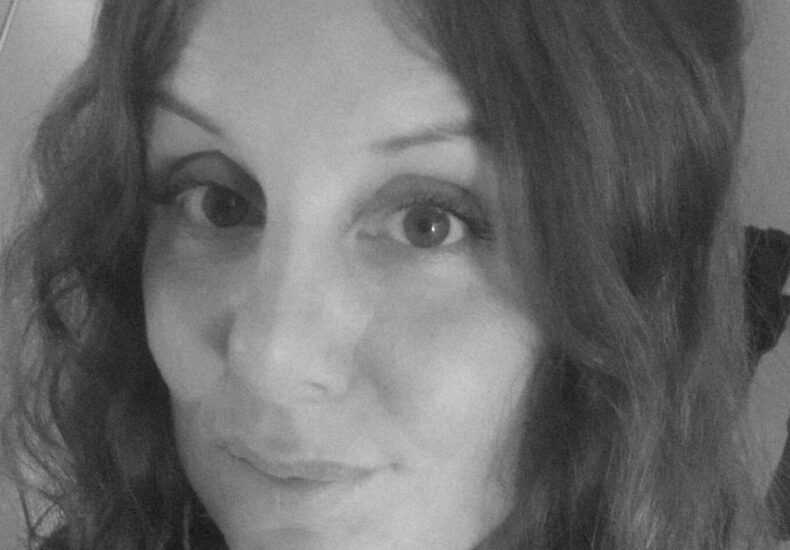
SJ Townend writes dark fiction and lives with her two children and three cats in Bristol, UK. She’s had stories published through Tenebrous Press, Crypsis Press, Hellbound Books, Vastarien, Eerie River Publishing, Dark Matter Magazine, Penumbric Magazine, and a few other places. Her first horror collection, Sick Girl Screams, introduced by Robert Shearman, was published in 2024 by Brigid’s Gate Press, and her second horror collection, Your Final Sunset, was published in 2025 (Sley House Press). Unfamiliar Tales, her third collection, is currently on hold with a very exciting press.
Twitter: @SJTownend
Stories in Horrific Scribes:

“QVC”
A woman becomes obsessed with purchasing an air fryer in order to try to fit in at work. But why is she trying so hard to fit in, and will it help?

A man has an issue with the doors in his house: his back door, front door, oven door, and even the doors on his Advent calendar are playing up. But is the quandary with the doors his only issue?
He wants to lure her into the bedroom. She wants to play poo sticks. Will either of them get what they want?
Notable Publications
Sick Girl Screams

Woven together by the black ribbon of grief, with whispers of haunted children, feminism, and the unnerving concept of infinity, this inaugural collection of dark fiction by SJ Townend is an eclectic mixture of reprints and original material.
Your Final Sunset

In this chilling second collection of short horror stories, SJ Townend delves deep into the darkness which lurks beneath everyday life, where the familiar turns terrifying, and home turf is never truly safe. With an eye for the eerie and an unflinching exploration of human pain, Townend’s stories are as psychologically haunting as they are horrifying. These tales expose the raw, uncomfortable emotions concealed within family dynamics and relationships, and confront the intersection of trauma, fear, and the strange forces that exist just beyond the realm of the normal. Sometimes, the greatest horrors are those closest to home.
The Interview
- Both “QVC”and “When One Door Closes” begin with problems that could almost belong in literary realism—a desire to fit in at work, an irritating issue with household doors. At what point does an ordinary inconvenience become horror for you?
I believe an ordinary inconvenience crosses the threshold and becomes horrifying the moment the mundane issue becomes inescapable by the protagonist. Once the concern becomes all-consuming and causes our character to lose control, then we step into the horrorverse. What makes these run-of-the-mill situations disturbing is not the quandary itself, but the underlying sense that *something* is wrong and is becoming more and more wrong by the hour. But we are not exactly sure what it is that is truly wrong, what is lurking beneath the surface of whatever is malfunctioning. The tipping point is uncertainty. No one is happy… or perhaps safe… when uncertainty is nibbling at their sense of norm.
- Follow-up: When you’re writing these types of stories, do you begin with a mundane situation and then find ways to corrupt it? What are your techniques for introducing horror into the everyday?
A lot of my inspiration for stories comes from the peculiar things my children say to me on a daily basis while we carry out rather beige activities together – I have some mild parental anxiety and a somewhat overactive imagination (which my smalls appear to have inherited) but found an outlet for both of these factors with creative writing.
The responsibility and anxiety that comes with parenthood (Am I doing a good enough job? Are they safe? Do their shoes still fit properly? Is it okay to tell them the ice-cream van tune blasting down our cul-de-sac means the ice-cream van has run out of ice-cream so I can spend my loose change on another book or would that make me a terrible mother meaning they’ll both end up in psychotherapy?) means my brain tends to extrapolate everyday situations to the nth degree. Perhaps this is some sort of (flawed) survival technique? Who knows. I just try to have fun with it via my creative outlet when I get a moment to myself to write.
With respect to “When One Door Closes,” my youngest received an advent calendar from a family friend. “Who’s this strange man behind door number seven, Mummy?” (It’s Balthazar) “Why are his eyes so wide?” My mind ran off with this statement and raked through the best and worst possible scenarios of a slightly more unhinged individual undoing each tiny flap, and out came something quite odd.
With “QVC,” I simply got tired of the conversations at the school gates about bloody air fryers. They’re just tiny ovens, right? And I’ve already been press ganged into getting a microwave and a slow cooker and a bread machine. There are far more pressing issues in the world than how fast you can cook a nugget. Then – ‘ping’ – out popped that pretty dark tale.
- Neither of your stories in Horrific Scribes depends on the “traditional” monster. Do you think contemporary horror readers depend more on situations that expose uncomfortable truths about themselves? Why or why not?
There’s room for everything in contemporary horror. Different strokes for different folks. But personally, I love to read stories that are relatable in some manner. If I really want to freak myself out, nothing works better than a dark take on something routine, something we all do or use or witness every day. I’ve never actually seen a vampire or a killer clown from outer space, but I have used doors (—often with some proficiency and minimal bruising!) and I have also opened advent calendars before. So why not make the ordinary creepy?
- In “QVC,” buying an air fryer is about far more than buying the appliance. It feels tied to belonging, identity, and fitting into society. How interested are you in consumer culture as a source of horror? How might modern marketing create new anxieties?
Personally, I’m anti-capitalist, very un-materialistic, and am not a fan of buying new things. I try to recycle or repair items I already own, but unfortunately, the world in which we reside is one where advertising is rammed down our throats at every opportunity. I think we will see a rapid increase in targeted marketing in our lives. You’ll enter a supermarket and screens will flash up with items you, just you, *need* based on the data collected by your loyalty card. Images of products you simply can’t *live* without will bombard your eyes. It’ll be vile, of course. But people will fall for it. People will ignore the fact our planet is on fire and we are consuming resources at a ridiculous rate because of the power of marketing and the illusion of need and the ridiculous pressure to keep up with the Joneses. If you don’t purchase this electric nasal hair trimmer, what will the neighbours think? Your colleagues will blacklist you from the annual barbecue and you’ll never fall in love and the hair will just keep on growing until you drown in a knotted nest of keratin.
If you haven’t already, look into Earth Overshoot Day. It’s depressing but important. It’s a date given each year formulated by the Global Footprint Network and based on data collected by the UN, by which the planet has used up its available ecological resources for the year. Currently, this date falls in the summer, just 6 months into the year. We can’t keep using resources at this rate. Boo to advertising and marketing. Boo to disposable everything. There is plenty of scope for consumer culture as a source of horror, in real life and in fiction.
Few people want to feel left out, and isolation is a key factor in creating dread, so I believe there is much scope for consumer culture in horror.
In “QVC,” however, I use the connotations of consumer culture and obsession with materialism and fitting in to create a sense of disturbance and isolation that actually represents the far deeper sense of overwhelming guilt that our protagonist carries.
- Your writing emphasizes fascinating, quiet shifts of alignment in domestic spaces. Why does domestic horror appeal to you? Why do you think horror that invades the home is so unsettling?
The simple answer is probably that I’m a homebody, a body that largely resides in a home. As a single mother, I spend a lot of time surrounded by the same four walls. The hours I’ve spent in my kitchen chair, sipping earl grey, with my laptop in front of me on the kitchen table, staring at the space where an air fryer would sit if I had one, pondering over story seeds my children have sown… So for me, horror set in the home is where a lot of my stories start. I use my own life experiences to build stories upon.
For a lot of people, home is their safe place. For many though, it isn’t. On either side of this coin, writing centered around the home is easy pickings: make a safe place scary as Hell, or make an already unsettling place even more petrifying.
- Neither of your Horrific Scribes stories relies on immediate violence; tension accumulates almost imperceptibly. What’s your secret for creating pacing that feels like a gradual tightening of the screws? How do you know when you’ve applied the right amount of pressure before the big reveal?
There’s far too much actual violence out there in the world. Writing violence has never really been my thing (well, maybe a tiny bit of my thing, sometimes, if a body is needed in a cellar, for example). Instead, I like to create metaphorical violence. I like to attempt to violate the subconscious of the reader without ever lifting a fictional fist – that’s a lot more fun.
As a reader, I like to feel consistently engaged and try to reflect that in my own writing. I enjoy sprinkling breadcrumbs and the occasional red herring here and there to keep the reader on board and guessing, but always try to save the big reveal to the end. Giving the reader the opportunity to believe they know where a story is going and then proving them wrong is a skill I am constantly focusing on developing. Readers like to think they’ve sussed it out. You’ve given them enough info to solve the case. But then… oh no! It appears you haven’t! You’ve led them down the garden path, you naughty writer, you. Everyone loves a dark twist of a surprise.
If I have time, I like to leave a first draft to rest for a few weeks so I can read it again with fresh eyes. Then I jiggle things about so the route down which I am trying to lead the reader isn’t totally obvious from the start.
- One of the things that keeps us guessing is never being entirely certain whether something is supernatural or if the characters are unraveling psychologically. Do you feel like this question, whether phenomena in your stories are supernatural or psychological, has an answer, even if you don’t share it with readers? Why or why not? What might your stories gain from leaving readers uncertain?
I like to let the reader decide. And, quite often, even I’m not entirely sure. It’s what we read between the lines that scares us most anyway, isn’t it? The bleak image we individually paint in our mind from the words on the page? A good, dark story, in my opinion, is one that you feel you might want to (need to) read again, to try to make more sense of it. Because your first attempt of making sense of it, of understanding what just occurred, has left you feeling sick. Slightly unraveled. Utterly messed with. Or, momentarily, not quite right in the head. You’re welcome.
- Obsession reshapes reality for your protagonists. What interests you about narratives driven by obsession? Why might horror be particularly well suited to exploring the things we cannot stop thinking about?
We’ve all been obsessed with something in our lives, haven’t we? I think it’s the relatable nature of an obsessive mindset that I love to toy with. We’re all one step away from making a kill for that final first edition Charizard card we need for our Pokemon collection, one midnight, bloody sacrifice away from of getting our hands on that missing Spode’s Blue plate for our blue-and-white transferware china set. Horror allows us to take such obsessions to the extreme and makes us all feel a little better about the humble restraining orders we have in our own lives.
- In “QVC,” humor gradually gives way to genuine discomfort. How important is comedic horror to your writing? Can laughter make horror more effective?
I’m a big fan of comedy and go to open mic nights regularly to watch local comics try out new material. Comedy and horror are not so far removed as far as storytelling genres go. They often both rely on a build-up, call-backs, metaphor, and a big reveal. I’d like to think that I’ve learnt quite a lot about storytelling from listening to stand-up comedy. I’m also a big fan of any form of art that makes me feel something. Evocative, emotive art is the best, in my opinion. And art that takes its observer from one extreme to the other can be a powerful force.
With respect to including humour in my writing, if I can make a reader smile before disturbing them, great. Because if I can make a reader laugh, their shoulders might drop a little. If a quick quip or a well-timed pun makes them giggle, they might soften in their seat and think life is good, all is well, isn’t this a fun tale? The reader might then let their guard down. They might, for a long blink, become disarmed and defenceless. And relaxed prey is far easier to snare, after all.
- As a teacher and writer, you spend a lot of time thinking about language and stories. Has teaching changed the way you write? On the opposite side, has writing horror changed your approach to literature in the classroom?
As a Biology graduate with a PGCE teaching qualification, I actually teach maths and science to trainee medics, not literature, so in all honesty, I rarely get the chance to think about language and stories at work. In my day job, I’m too busy thinking about words like isomorphism and sphygmomaneter and thermodynamics and whether I’ve spelt them correctly on my Powerpoints. There’s very little discourse about fictional literature at all. Although I do chat about great horror books and movies with the students that are that way inclined after a lecture, and occasionally I hear some gruesome stories from the trainee paramedics…
I wouldn’t say teaching has changed the way I write, but having the regularity of a teaching job that I enjoy means I have the financial security to be able to write fiction when I have time.
- You have two published collections, Sick Girl Screams and Your Final Sunset, and are querying your third collection Unfamiliar Stories. When you assemble a collection, how do you hope the stories will speak to one another?
Very quietly. In almost a library-voice whisper. If they shout across the pages, they might scare their neighbours and cause the words to jump out of the book. And then there’d be words everywhere: scattered across the reader’s lap, in their mug of tea, and god-forbid, all over the floor. And if the words get on the floor and weave their way through the gaps between the floorboards, then we’re all in trouble. Run!
I jest. On a serious note, I actually chose the overarching theme of feminist rage for my first collection (Sick Girl Screams) and collated some of my personal favourites and stories that were popular on their first publication for that book. I had around 100 stories to consider on my hard drive, and many of them fell under this umbrella, so into Sick Girl Screams my favourites were swept. The outstanding Robert Shearman and the editor at Brigids Gate Press, the wonderful Steve Ventura-Vassallo, both gave me huge amounts of advice and guidance on story order and structure, and I’m extremely grateful to them both for the help they gave me.
For Your Final Sunset, I decided to submit a handful of my stories that all had the shared theme of personal sacrifice. Be it a life, a moral, or an individual’s freedom. Most of the stories I hope come across as connected by the theme of someone being backed into a corner and having to give something up, sometimes for the greater good, often not, and sometimes because there simply is no other option. This will be their last day on earth with things the way they have always been, their final business-as-usual sunset. Sley House Publishing’s editor Karen Hough worked alongside me to help shape and order these stories and what an asset her advice and encouragement and diligence was!
The order in which the stories were placed in each collection was very much based on lengthy discussions between myself and the respective publishing houses about flow and balance. It’s nice to pack a slightly softer, upbeat story after something truly disgusting or horrific to give the reader time to breathe. It also creates a more eventful journey for the reader. My more verbose literary pieces were spaced out with quick, easy read pieces.
In both collections, I hope each stand-alone story manifests some sort of reflective response in the reader, and on completion of an entire book, like a piece of abstract art, I hope the reader is left with a sense that something deep within their soul has been shifted or tickled or tortured slightly, but they’re not exactly sure how or why. But they’ll need to read my other work. Immediately.
- Sick Girl Screams and Your Final Sunset suggest an ongoing interest in women’s experiences. How do you approach writing female protagonists whose fears emerge from social pressures? Do you feel horror offers more freedoms than literary realism? Why or why not?
I’m interested in the ways social pressures can become internalised – particularly for women, being a woman myself and having always been encouraged to write what you know – until those pressures begin to shape how we see ourselves and the choices we feel able to make. In Sick Girl Screams and Your Final Sunset, the characters’ fears aren’t often simply external threats; they’re connected to (patriarchal) expectations about how women should behave, look, age, or make themselves acceptable to others. Horror allows those pressures to become literal and sometimes physical, which can be a powerful way of exploring something that’s often difficult to articulate in everyday life.
And yes, I do think that horror can offer freedoms that literary realism can’t. Anxieties and fears can be exaggerated and distorted and taken to the most extreme or surreal conclusion. Which is fun to write. And liberating.
- Without giving away anything, what aspects of Unfamiliar Stories represent new directions for your writing?
Unfamiliar Stories is a collection of stories about relationships, families, and those ties that try to bind us, whether we like it or not. And although there is still an undercurrent of angry feminism within its pages (which resonates strongly in both of my other collections), these stories focus more on dysfunctional family dynamics. We all have that one perma-half-cut Uncle we don’t appreciate having to sit next to for Christmas dinner, don’t we? That one elderly aunt who we’re told to treat just like a second mother, but a mother who is considerably weaker and hairier and collects miniature glass pigs? That myriad of half-formed babies we collectively birthed by the river last week that insist on crawling back up all of our shower drains each evening to wave at us with whips and blades in their hands? (Disclaimer: absolutely none of those shocking tropes appears in Unfamiliar Stories.) No one has a perfect family. But things could be so, so much worse! So I’ve been mulling over family life and writing about that. I’m sure most of us would agree, there’s plenty of scope for horror there.
- Horror lends itself to a reflection of the anxieties of its historical moment. What contemporary fear currently feels richest to you as a horror writer?
The climate crisis. It truly should be everyone’s greatest fear. If we continue to disrespect our planet, global devastation will ensue. I rarely read or write eco-horror, though, because realistic thoughts of our potential future alone scare me too much. Plenty of rich-pickings there for those brave enough, though.
Thank you for your time and effort in answering my questions!
This experience reinforced the value of speaking directly with an author, revealing ideas and intentions that may not be immediately apparent to a casual reader. Gaining insight into Townend’s approach to writing and her perspective helps to look beyond the finished stories and consider how individual elements, such as building gradual tension, are intentionally developed through the writing process. Ultimately, the interview strengthened my appreciation for Townend’s process and finished works.
Leave a Reply