Horrors that Know Your Name: Interview with Author Raymond Brunell
by L. Andrew Cooper
About the Author
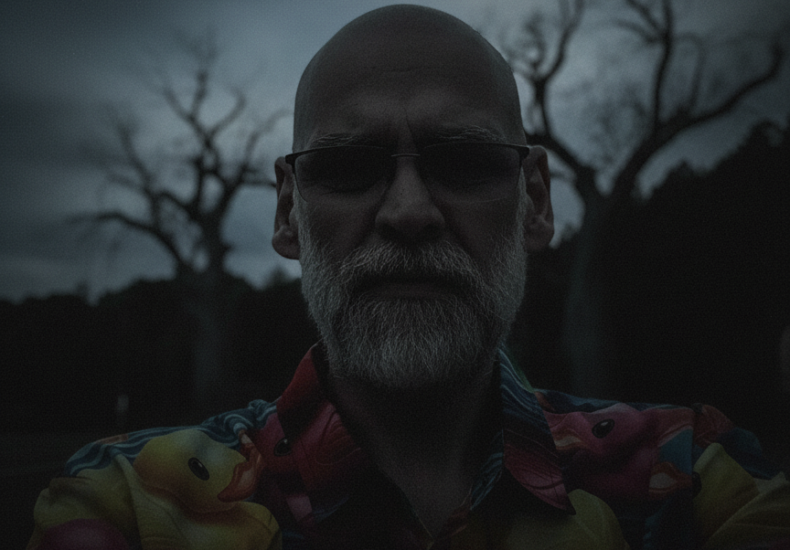
Raymond Brunell writes literary and speculative horror from Michigan’s Upper Peninsula, where the mines closed but the paperwork never did. His short fiction has appeared in Horrific Scribes, Skeleton Flowers Press, Moss Puppy Magazine, TrashLight Press, and Across the Margin, among others; he holds a Best American Science Fiction & Fantasy nomination and has work forthcoming in 34 Orchard. He is an MFA candidate in Creative Writing and has just completed No Exceptions: Stories, a collection about the records other people open in your name.
Stories for Discussion
Uncollected Tales
- “We Have Not Died Yet” — A tar-pit dig turns up impossibly preserved bodies from eight hundred years in the future, and a dental record the archaeologist knows.
- “File 2847” — Three stories beneath the city morgue, an archivist tends the folder holding his family’s guilt — and learns preservation’s darkest skill: knowing which parts to let die.
- “The Warden Observes” — A meticulous warden approves an inmate’s manuscript for publication: a text that rewrites the records, then the timeline, then the warden.
- “Preliminary Screening” — In her 847th automated screening interview, a candidate is asked to defend a career the system insists she lived.
- “Did You Wish for Me?” — A school committee, a stack of reports, and a child who needs the rules to blink.
- “The Archive Cylinder” — In a sub-basement of forgotten wax cylinders, a linguist plays the one labeled “dialect unknown”—and the language begins un-learning itself into everyone who listens.
No Exceptions: Stories
- “No Exceptions” — A DMV annex that appears only during blackouts, a form that cannot be withdrawn, and a man learning which side of the counter he has been standing on for years.
- “No Further Action Required” — An eligibility examiner, a written no-rounding rule, and a score of 89.98 wearing a name she owes everything to.
- “The Line Was Straight” — A claims reviewer who owes everything to one human exception spends his career ensuring the machine never allows another—until the queue serves him a name.
- “What Lives in Her Hands Now” — A girl learns the household’s most serious procedure: soap to the elbows, count to sixty, read the bag by lamplight.
- “Two Floors” — A daughter becomes fluent in a hospital’s visitation system while her mother’s window narrows. Two floors. Six a.m. No exceptions.
- “The Kindness Layer” — She writes the warmth-tested scripts that soften license revocations, polishing every “I understand” legal will allow—until one is delivered, at the 71st percentile, to her mother.
- “Not Medically Necessary” — A terminal year told entirely in explanations of benefits; the only page that tells the truth says THIS IS NOT A BILL.
- “Halvorsen Wood” — A man buries his father and inherits the wood: the standing, the schedule, the ledger a town keeps in place of grief.
- “The Fondness Without Complication” — At the town’s October census, some names are counted twice, and some are counted zero, and everyone in line knows which they are.
- “Truer Than Any Stamp” — On scheduled-outage Thursdays, the records go gray, and one clerk files the corrections that daylight refuses.
- “The Physics of the Everyday” — Thirty years after his last class, a man learns the college never closed his enrollment. There is a balance. There are options.
- “The Source Was the Artifact” — Thirty-one saved voicemails, an upload screen, and an app that promises to give a voice back.
- “Washed and Upright, Waiting” — A life in care told through its paperwork — leaking pens, curling admission forms, and a final courtesy statement reflecting a zero balance.
The Interview
Literary Realism, Literary Horror.
Coming from your stories in Horrific Scribes (“We Have Not Died Yet” and “No Exceptions”) I was surprised by the relative absence of fantastic/speculative elements in these tales. Would you consider any/many of these stories to be literary realism? Literary horror? Are those categories mutually exclusive? What, in your view, makes horror “literary?” Is the time-warping, apocalypse-threatening strangeness in “We Have Not Died Yet” the same sort of writing as the heart-rending social commentary in “Did You Wish for Me?” Why or why not? You’ve used the term “quiet horror.” What’s that? What advantages might lie in making horror quiet? Do you ever worry about making the horror so quiet that readers might miss it? Why or why not?
I think you caught me. Most of the collection is realism—patiently, deliberately, almost stubbornly. The annex in “No Exceptions” is the exception (I did that on purpose, and I’ll accept the groan). The rest of these stories could be depositions. Nothing happens in “No Further Action Required” that doesn’t happen in a county office every December.
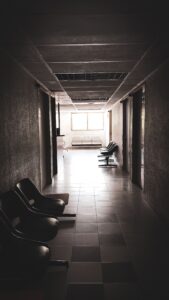
So no, I don’t think the categories are mutually exclusive—I think literary horror is what happens when realism refuses to look away at the moment politeness says it should. For me, what makes horror “literary” isn’t vocabulary or pedigree. It’s where the dread is stored. If the dread lives in the event—the thing that jumps—you can film it. If it lives in the sentence, in the order the facts arrive and the temperature of the prose that delivers them, it’s literary, because only prose can do it.
Is “We Have Not Died Yet” the same sort of writing as “Did You Wish for Me?” I’d argue yes, at the only level I care about. Both are stories about reading a record and realizing it describes someone you love. In one, the record is a tar pit, and the scale is apocalyptic; in the other it’s a manila folder in a conference room. The speculative dial is set differently. The transaction—document, recognition, grief—is identical. That transaction is my whole subject.
“Quiet horror” I’d define as horror at the volume life actually happens at. Nobody screams when the denial letter comes. They read it twice, put it down, and wash their hands like it’s a procedure. The advantage of quiet is fidelity—and one other thing: restraint stores force. A story that holds its voice level for four thousand words gets one moment where a single raised sentence lands like a scream.
Do I worry readers might miss it? Honestly—yes, and I’ve decided to pay that price. I ration the loud moments the way the stories’ own institutions ration mercy: rarely, so it counts. Readers who’ve stood at these counters don’t miss it. They recognize the room before the first paragraph ends. The quieter end of what I do lives in pieces like “The Hold” at Kelp Journal and “The Taste of Ancestral Sorrow” at Spillwords, and readers found those just fine.


Bureaucracy, the Absurd, Existential Alienation, and Dehumanization: The Kafkaesque circa 2026.
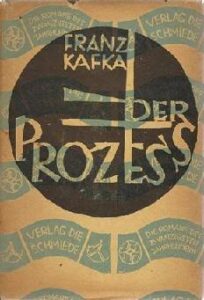
As we’ve briefly discussed, I thought of Franz Kafka’s treatment of bureaucracy, especially his novels The Trial (Der Prozess), 1915, and The Castle, 1922, two of literature’s greatest depictions of the Absurd and Alienation from an Existentialist perspective (capital letters meant for haughty emphasis). What’s your read on Kafka and bureaucracy, and how does your take on bureaucracy relate to his? How does the Absurd manifest in your stories—how does it affect people? Is bureaucracy necessarily alienating and/or dehumanizing? Why or why not? Taken together, “No Exceptions, “No Further Action Required,” “The Line Was Straight,” and other stories show people dehumanized both by bureaucratic systems and by working within them. If that’s the case, who, or what, if anything, drives bureaucracy’s alienating or dehumanizing force in the universe(s) of your tales? If you accept the description of your work as “Kafkaesque,” where does the Kafkaesque stand in 2026?
My read on Kafka is that his systems have perfect logic and missing purpose — you can appeal every ruling except the ruling that you are the kind of thing that gets ruled on. What I take from him is the procedural surface, the patience, the deference the sentences perform while the trap closes. Where I part from him—and it took a scholar’s note on “No Exceptions” to make me see it clearly — is at the signature line. Josef K. never gets there. The Castle never answers. Kafka’s horror is permanent deferral. My people reach the line and sign—and the signing is simultaneously self-erasure and the only authorship the system offers. I’m interested in what it costs to close a file yourself, which means my stories have to grant what Kafka refused: an ending you’re allowed to hold the pen for.
How does the Absurd manifest? As kindness. That’s my honest answer. The systems in my stories aren’t cruel; they are courteous, consistent, well-documented, and impassable—care’s outward form with no one inside it. That is also my answer to your best question: who drives the dehumanizing force. Nobody does. That’s the update the Kafkaesque needs in 2026. Kafka’s courts still had faces behind the doors—corrupt, absurd, but human. Ours have a layer of trained politeness over a process nobody authored, and nobody can stop, because stopping requires a signature no one holds. In “The Line Was Straight,” the reviewer discovers the system’s denial letters speak in a “we”—authorless, collective—that he himself helped train, precedent by precedent. The force that drives it is the accumulated weight of everyone who was doing their part—which is to say, us. The scariest sentence in my universe is per our records, in first person plural, when there’s no one left inside the our.
Is bureaucracy necessarily dehumanizing? No—and the collection lives or dies on that no. A form can be an act of love. Somebody files the appeal. Somebody keeps the schedule, renews the consent, gets the record corrected. Bureaucracy dehumanizes at exactly the moment the record stops serving the person and starts replacing them. Both things are true in the same office, sometimes in the same hour, and that’s where I set my stories.
Where does the Kafkaesque stand in 2026? It moved out of the courthouse and into the portal. Deferral got automated. PENDING is The Trial refactored to run at scale, unattended, forever—and unlike K., we’re all also somewhere on the staff.
Workplace Horror 1: Facing the Process / Being the Process.
Even though his most famous story is about a guy who turns into a bug, a lot of “literary” scholars would not call Kafka’s writing “horror.” Nevertheless, I am going to connect your workplace-set depictions of bureaucracy, the DMV and insurance offices and other places where people are “processed,” to workplace horror, a category and trend within horror, stories deriving fear from workplace (usually corporate) settings and activities. What makes the workplaces such as the historical archives in “File 2847” and “Truer Than Any Stamp” potentially horrifying? What makes being processed by a college bureaucracy potentially horrifying in “The Physics of the Everyday?” What is horrifying about having to do the sort of bureaucratic work in “The Kindness Layer?” What is the horror of the word “PENDING,” which appears throughout your collection of No Exceptions tales?
The archives are horrifying because they outrank memory. In “Truer Than Any Stamp,” the premise is right there in the title—we’ve built systems where the record of a thing is more durable, more legible, and more believed than the thing itself. Corinne knows her sister; the field knows otherwise; the field wins every morning. That’s not an office inconvenience. That’s a metaphysical demotion, administered in twelve-point sans serif.
“The Physics of the Everyday” runs the same horror through time: an institution that never closed a file owns a version of you that kept accruing without your participation. Thirty years of a self you didn’t live, carried on someone’s books, with interest. Everyone who has ever gotten a letter that begins our records indicate has felt the shadow of that—the discovery that there is another you, the administrative you, and it has been busy.
Being the process is the darker half, and “The Kindness Layer” is where I went at it directly. The horror of doing the work is fluency. You learn the language—adverse determination, care pathway, not medically necessary—because learning it is the job, and the language is a mask, and the mask fits better every year, and one day you reach for your own face and find the layer. I spent a long career inside large systems, and I’ll testify: nobody becomes the process on purpose. You become it the way a hand becomes cold—gradually, while you’re busy.

And PENDING. You asked what’s horrifying about the word, and I’ve thought about this more than is probably healthy: PENDING is a promise the system makes to itself, not to you. It means the file is safe; the file is in the queue; the file will be processed in the order received. It says nothing about you. You can live years inside someone else’s PENDING—a diagnosis, an appeal, an apology that never finishes drafting. It accumulates like water in a barrel nobody empties, one drop per day, silent, until the day it isn’t. Grief has no status field. PENDING is what the machine says instead of I’m sorry—and instead of no, which at least would let you put the folder down.
Workplace Horror 2: Ethics.
At least some of the horror in these stories—and others—comes from the moral and ethical issues raised by working within bureaucratic norms and constraints. If the historical archive is subject to manipulation, as in “File 2847,” what ethical burden do archivists and historiographers bear—is there an absolute truth to which they owe fidelity? Do people in bureaucracies have a duty to be consistent with, and therefore fair to, everyone, so that they can say “The Line Was Straight” even when doing so leads to tragic deaths? Why or why not? Quite movingly, you stage the battle at the heart of bureaucratic decision-making through a school committee meeting in “Did You Wish for Me?” with a group of teachers who must use reports to determine whether to follow rules applicable to all—and deny a child what he needs—or to make an exception and lie on his behalf. It’s a war between deontological, categorical ethics, to which bureaucracies almost adhere by necessity, and a utilitarian alternative. Do you favor utilitarian ethics over rule-based governance or some other approach to ethical decision-making?
You’ve read the collection exactly right: it’s an argument between the rulebook and the exception, staged over and over, and I should confess where I land—I don’t fully trust either side, and the stories are how I interrogate both.
Here’s my position, as plainly as I can state it. Rules are how institutions remember to be fair. Exceptions are how people remember to be good. A system needs both, and every tragedy in this collection happens at a counter where one of them has been surrendered entirely. “The Line Was Straight” is what pure consistency costs—the clerk can defend every individual decision and cannot defend the sum. But I refuse to let the exception off cheap, either. Look closely at “No Further Action Required”: the only mercy the system permits Renata is a falsification—to save the woman who nursed her mother, she has to make the record say that woman never cared for anyone. The exception isn’t free. It costs the file’s truth. In my stories, both ethics fail; what doesn’t fail is attention—the decision to read the person and not just the paper. If that has a name in the philosophy departments, I believe it’s closest to an ethics of care, and I came to it decades before I knew it had a literature.
So with the teachers in “Did You Wish for Me?” you called it a war between deontology and utilitarianism, and structurally it is. But watch what converts the room. Not a principle—a reading. Someone finally reads the child instead of the reports about the child. The lie they tell is utilitarian in form, but its engine is witness. I trust witness further than I trust either calculus.
As for the archivists in “File 2847” and “Truer Than Any Stamp”—I don’t think they owe fidelity to an absolute truth because I don’t think the archive can hold one. I think they owe fidelity to the difference between the record and the person. The archivist’s sin is never the error. It’s forgetting that the map is not the territory—or worse, preferring the map because the map files flat.
Locating the Human in the Record (Letters, Files, Wax Cylinders, Digital Fields, etc.).
Anyone who’s ever been close to a battle with an insurance company over coverage will recognize the type of correspondence in “Not Medically Necessary,” an epistolary horror story mostly consisting of E.O.B.s (explanations of benefits). Why did you take the epistolary approach? Where, if anywhere, does the human lie in that story? What about other stories of records—such as the more fantastic tale “The Archive Cylinder?” “Washed and Upright, Waiting” is also a story of papers, forms that spell out slow decline and death, and the recorded manner of death in a digital record is at the heart of “Truer Than Any Stamp.” What interests you about the relationship between paperwork/recordkeeping and mortality? Do you think the “process” of death has become too inhuman? Why or why not?
I took the epistolary approach in “Not Medically Necessary” because, for the families who live it, the documents aren’t about the fight—they’re the terrain the fight happens on. Anyone who has managed a loved one’s coverage knows the strange bilingualism it demands: you learn to read a CPT code the way you’d read a face. I wanted the reader conscripted into exactly that literacy. By the fourth EOB you’re doing what caregivers do—scanning the codes for the person—and the fact that you can’t quite find her is the story.
Where does the human lie in it? In the margins, literally. A handwritten note on a scanned page. A date of service that is also an anniversary. The patient-responsibility column, which is the most honestly named field in American paperwork. And in the final document—the zero-balance letter stamped THIS IS NOT A BILL—which I consider the only page in the story that tells the whole truth, and it arrives, as truth tends to, after.
“The Archive Cylinder” and “The Source Was the Artifact” are the same meditation run through different machines—the wax cylinder and the upload screen, a century apart, both promising the same impossible custody: that the voice can be kept after the person. What interests me about recordkeeping and mortality is that paperwork is how institutions grieve. They can’t mourn, so they document. Every death generates a paper bloom—certificates, notices, transfers, closures—and somewhere inside that bloom, a family tries to have a human experience while feeding the machine its forms in the order received.
Has the process of death become too inhuman? I’d sharpen the question: the process was never human—the danger is substitution. When the record of a death replaces the witnessing of it, when the manner-of-death field gets more attention than the manner of the life, we’ve filed the person instead of keeping them. “Washed and Upright, Waiting” is my answer in story form: the forms spell out the decline, but the title is the body—outside every form, still deserving of tenderness, still waiting to be seen and not just processed.
Recurring Images: Hands, Temperatures….
While the word “PENDING” might be the most salient recurrence in your No Exceptions stories, you also come back repeatedly to images of hands (not just in “What Lives in Her Hands Now”), descriptions of the warmth or coolness of rooms, and descriptions of hands’ temperatures in relations to rooms. Why are hands—and tactile sensory information—so important? Do you think touch has a special relationship to human experience? Why or why not? What significance do hands and touching have in your stories, particularly the images of loved ones letting go? Likewise, what significance do you associate with coolness and warmth, of hands, of places? Your repetition of these images seems very deliberate—what other images do you hope leap out at your readers?
Caught, again—and delighted about it. Yes: deliberate. There are exactly three images I allowed to recur across the collection—PENDING, hands, and temperature—and I policed everything else, because a motif you didn’t choose is just a habit wearing your name.
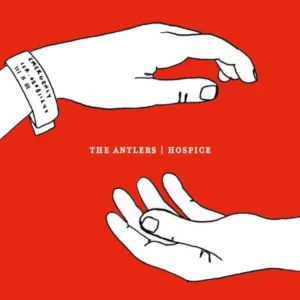
Hands, because the first hands that ever hold you will let go. Every hand image in the book is that one, transposed. Hands are also the body’s signature—the thing the forms keep asking us to reduce to a mark on a line. When I write a hand resting beside a child’s on a soap pump, or going still on a keyboard over a name, or letting go in a hospice bed, I’m writing the same sentence each time: this is what the paperwork is actually about. And yes—touch has a special status in my universe, precisely because it’s the one channel bureaucracy cannot process. There is no field for it. Nothing in any system I’ve ever worked in could record the pressure of a hand, which is why my characters trust it more than anything written down.
Temperature is intimacy’s instrument. A room’s warmth is how a body learns whether it’s welcome; cold laminate, warm fluid, and a hand’s heat against a cool counter tell you who is being cared for and who is being processed faster than any dialogue could. Institutions in my stories are cold not as a cliché but as a diagnosis—heat is attention, and attention is what gets rationed.
You ask what other images I hope readers find, and since you found all three I planted, I’ll give away the fourth, the one hiding in plain sight: folding. Paper folds, hands fold, laundry, napkins, tickets folded and unfolded and folded again—watch for it. Folding is the one act paper and love have in common: repetition that makes a shape. Somebody in nearly every story is folding something, and it is never only the thing they’re folding. (Readers who want the coldest version of the temperature motif can find “Frostwork” in Soul Poetry, Prose & Arts; the fold at its most domestic is in “Stacking Chairs” at Wild Willow Magazine.)

From Process to Ritual: Folk Horror and Domestic Horror.
While many of your stories make bureaucracy seem huge (I would say sublime), some of your stories bring bureaucracy-like processes down to a smaller level, approaching community and domestic rituals and, through those depictions of process, folk and domestic horror. The most direct connection I can make is to the town census in “The Fondness Without Complication,” one of the uncanniest stories in the No Exceptions collection. In that story, why does being counted in the community ritual seem to relate to erasure? In a very different way, the idea that community ritual has the potential to devour animates “Halvorsen Wood,” in which the death of a man’s father leads the man to inherit community status and responsibilities that seem to fill volumes. Do you see horror in ritualistic community “tradition?” Why or why not? Finally, I’ll mention “What Lives in Her Hands Now,” in which a girl must learn a domestic caregiving ritual and ends up facing a kind of “ghost.” You do use the g-word: is the girl haunted by the life-or-death responsibility suddenly thrust upon her shoulders? Do you agree with calling this slice of life domestic horror?
I’m glad you used the word sublime for the big bureaucracies, because the small ones scare me more—and yes, I think what you’ve spotted is the same machinery de-governmentalized. Take away the state and the software, and a town will still administrate. It just calls the database everyone knows.
In “The Fondness Without Complication,” being counted relates to erasure because a community’s records are its affections, formalized—and the census makes the formalization visible once a year, out loud, in a gym. To be counted twice is to be loved in absence; to be counted zero while standing in line is to be loved wrongly on paper by people who would swear they love you fine. The horror isn’t the ritual’s strangeness. It’s its accuracy. The count is a covenant, and the covenant is more legible than the love—that’s the uncanny you’re feeling, I think: bookkeeping where the heart should be, kept by people who do have hearts, which is worse.
Do I see horror in community tradition? I see a double charge, and “Halvorsen Wood” is built on both poles at once. The wood is love—the last place that held his father’s standing, the town’s way of saying you belong to us. And the wood is a file—obligations, schedules, feuds, a name entered on lists he never signed. Ritual is love’s container, and ritual is love’s costume, and from inside you genuinely cannot always tell which you’re holding. That ambivalence is the region I grew up in. I won’t pretend to resolve it in fiction; I try to weigh it honestly. As for Nell in “What Lives in Her Hands Now”—I’ll accept domestic horror, and I’ll tell you what the ghost is. It isn’t the dead. Nothing in that story haunts her from beyond anything. What haunts her is competence. The moment a child learns she can hold a life in her clean, counted hands, she can never again not be holding it. That knowledge doesn’t expire, doesn’t transfer, and doesn’t care that she’s nine. The home is the one institution you can never be discharged from. If that’s not a haunting, I don’t know what qualifies.
The DMV and Elder Care.
One of the reasons I was very happy to publish “No Exceptions” is the story’s strange combination of the perfect setting for Kafkaesque meditation on bureaucracy—the DMV—with unexpected emotion, tender reflection on elder care and the loss of loved ones (Kafka wrote about his father, but not with tenderness). But as “Two Floors” and “Washed and Upright, Waiting” demonstrate, facilities for elder care, including hospice, involve their own bureaucracies. Are all these bureaucracies fundamentally the same? If so, what do you think has led to their uniformity? If not, what distinguishes them from each other? “Two Floors” and “Washed and Upright, Waiting” seem to emphasize separation of the people in care from their family members (in the former, it’s enforced, while in the latter, it’s ambiguous). Why? What do you think of the norms for elder care in the U.S.?
Fundamentally the same? At the root, yes—and here’s the root: every filing system is somebody’s parent. Strip any of these institutions to the studs—DMV, insurer, hospice, memory ward—and you find the same two ledgers: custody and standing. Who may hold whom. Who counts, and how much. Those are a family’s questions. Bureaucracies are families with the love surgically removed and the recordkeeping retained, which is why walking into one feels so eerily familiar to anyone who grew up being measured.
What distinguishes them is liturgy, not theology. The DMV is the civic church—queues, tickets, renewal as sacrament. Elder care is the harder house, because it’s the one bureaucracy that admits death exists—and then hands death an intake packet. As for the uniformity: partly they all bought the same software, which I mean as a joke that stopped being one. The truer answer is that somewhere in the last half-century, liability replaced trust as the design constraint. Systems stopped being built for the person at the counter and started being built for the auditor who might someday read the file. Every strangeness in American elder care follows from that substitution.
The separation in “Two Floors” and “Washed and Upright, Waiting” is there because it’s the truth. Our norm is proximity without access: the institution holds your person and lends them back during posted hours. Families become experts in systems—release schedules, kinship codes, visitation scores—and the expertise itself is a theft, because every hour spent mastering the portal is an hour of the finite supply the portal was rationing. I wrote “Two Floors” with the daughter winning by every metric the system offers, and I trust readers to feel what that winning weighs.
What do I think of our norms? That we’ve optimized elder care for legibility instead of presence. I’d flip the default: design the system so the family in the room is the assumption and the paperwork happens around them—instead of a system where the paperwork is the resident and the family is an appointment.
Familial Loss, Especially Parents.
On a more personal note, I really connected with “No Exceptions” on first read because, even though it’s quiet in all respects, it’s poignant in its evocation of the slipping and the loss of parents, and my husband and I both lost parents in 2025. Loss of family, especially of parents, runs throughout the stories you’ve shared with me, and the emotions strike me as authentic, so either you’ve got strongly empathic writing abilities—in which case, awesome!—or you’re writing what you know. Be as vague or specific as you want to be. What’s your inspiration for the background of loss in so many of these stories? Likewise, what’s your inspiration for the portrayal of bureaucracy, such as struggles with insurance, the DMV, and other notoriously dehumanizing agencies? Given what life has taught you about bureaucracy, what changes would you like to see?
First—I’m sorry for your losses, yours and your husband’s. 2025 sounds like it collected from your house twice, and I don’t take it lightly that you opened your own doors before asking me to open mine. So I’ll be more specific than vague. The emotions in these stories are authentic because they’re mine; the events are transposed, but the temperature is documentary.
The parents who counted, in my life, were my grandparents. My grandfather died when I was ten. Before he died, I helped care for him—young enough that the procedures felt like a kind of church, and I was proud to be trusted with them. Readers of “What Lives in Her Hands Now” can guess how directly that story runs on those memories: the counted washing, the warmth of things prepared by hands that loved you, the pride and the weight arriving together. My grandmother was the steadiness after—the one who showed up, held the line, said the names. She was the glue in every sense a child can register and most of the ones an adult can. I lost her five years ago. The end came during the restriction years, through schedules and policies and permitted hours, and some of what I needed to say to her waited in a parking lot and never got inside. The people enforcing the rules were kind. That’s the part that stays with you—how kind the machinery was. Anyone looking for the autobiography in “Two Floors” can stop looking now.
My biological parents are a different kind of answer, and I’ll give it in the collection’s own language: I was administered more than I was raised. Measured against a sibling baseline, findings issued, no appeals process. I spent a childhood being asked why I wasn’t like the other kids by the two people whose job description was to find out. As an adult, I did what my characters keep doing—I signed myself out of that system. I cut ties, more than nine years ago now, not in rage but the way you close an account: deliberately, so the debt wouldn’t transfer. My daughter will never stand in that particular line, and that’s the whole reason. Blood is a record. Records aren’t love. I learned the difference from my grandparents, and everything I write is, one way or another, a certified copy of that lesson.
The bureaucracy came from the same life—decades on both sides of the counter, including years working inside large systems, plus the paperwork that trails every caregiving story in America. What would I change? I’d give every system an exceptions clause for mercy: one human being at every counter with the authority to say this rule was not written for this moment—and protection for saying it. I named the collection after the placard I’ve been reading my whole life. What I’d change is simple. I want the sign to be wrong.
REPORT!
What’s next? How close is the No Exceptions collection to a form you want to send out to agents and/or publishers? What are your goals? What are you working on? Tell us EVERYTHING!!!
The collection is real and close: No Exceptions: Stories—thirteen stories, about 47,000 words, the ones you’ve just read. Your questions have already changed it, which I suspect you knew they would. You grouped “Did You Wish for Me?” so naturally with the collection’s ethical core that I’m now weighing whether it belongs inside the book rather than beside it—and you handed me the word sublime for what the big bureaucracies do, which I intend to steal for the pitch letter with full attribution. The plan is indie publishers who love this exact seam—the literary houses where horror and realism share a spine—and I’m assembling that submission list now. The collection exists in part because a publication note from you called the title story a worthy heir to Kafka, and I took the assignment seriously.
The larger project is embracing exactly what you named when you took “No Exceptions”: Kafka with an emotional center isn’t an accident of one story anymore—it’s the job description. Finding the audience for it is the other half of the work: the readers who’ve held the folder in the waiting room. They exist; the mail I get says so; I intend to find the rest.
Beyond the collection: I’m an MFA candidate, and this year I begin finalizing Caving Grounds, my thesis novel. My novel The Fifteenth Station—set inside the Vatican Apostolic Archive, an institution that preserves testimony by deciding who may read it—is out in the world looking for its home. New short fiction is coming that this very interview has shaped; you’ve shown me corners of my own rooms I hadn’t inventoried, and a few of those corners are already becoming stories. Readers who want more before any of that lands can find recent work at Necessary Fiction (“Ballast“), Bowery Gothic (“The Voice Coach“), Moss Puppy Magazine (“The Wolf’s Tributary“), and TrashLight (“The Welfare Queen’s Molotov“) — and “The M-Mode Trace” arrives in 34 Orchard this November.
And the standing goal, the one under all of it: keep the promise the work keeps making—that the intellect and the emotion aren’t rivals. You wrote recently that some stories are more emotionally powerful because of their intellectual intrepidity. That’s the flag I’m marching under. Thank you for planting it where I could see it.
Leave a Reply